
Rugs from Persia – hand-knotted
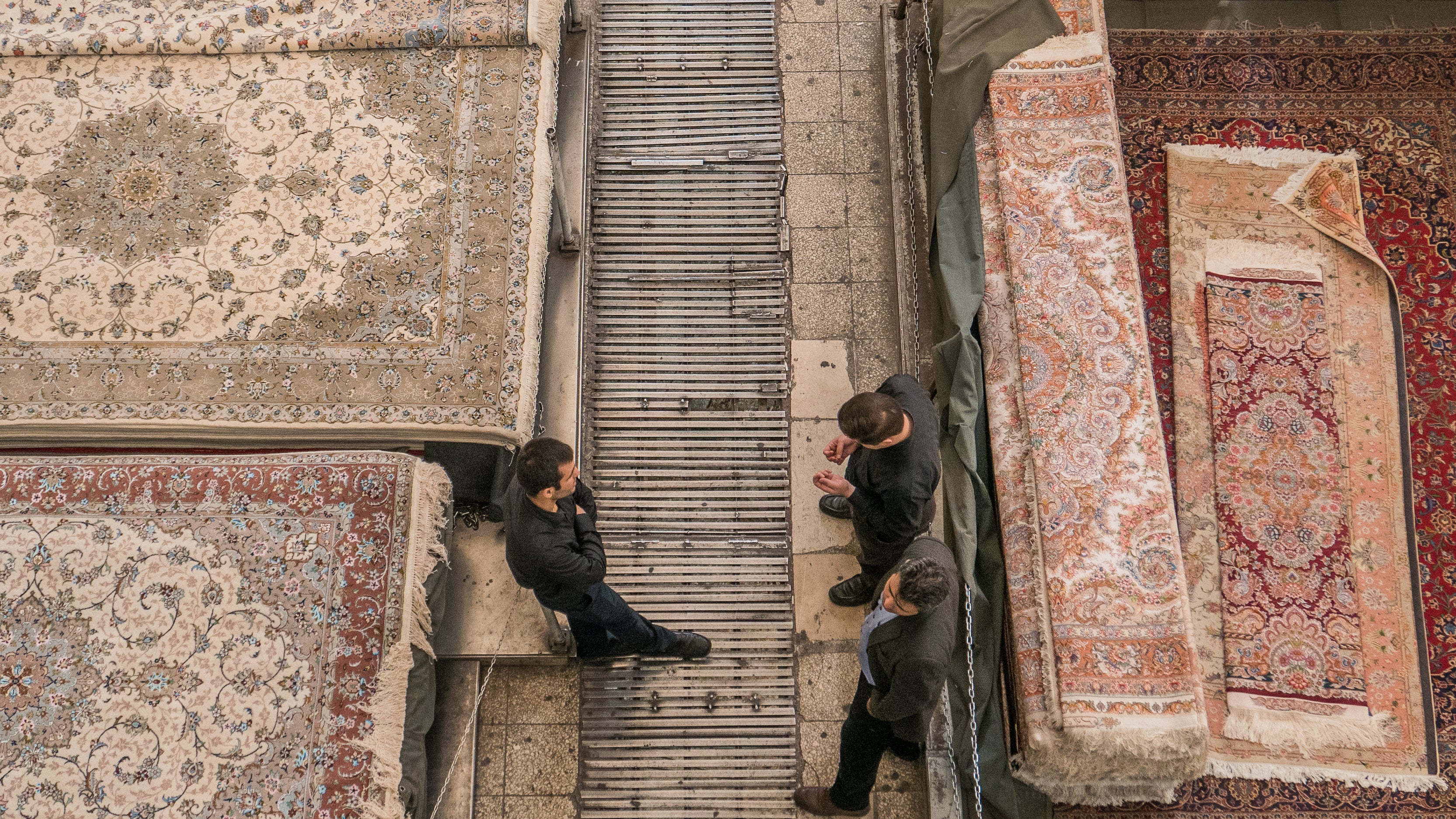
Classic Persian rugs
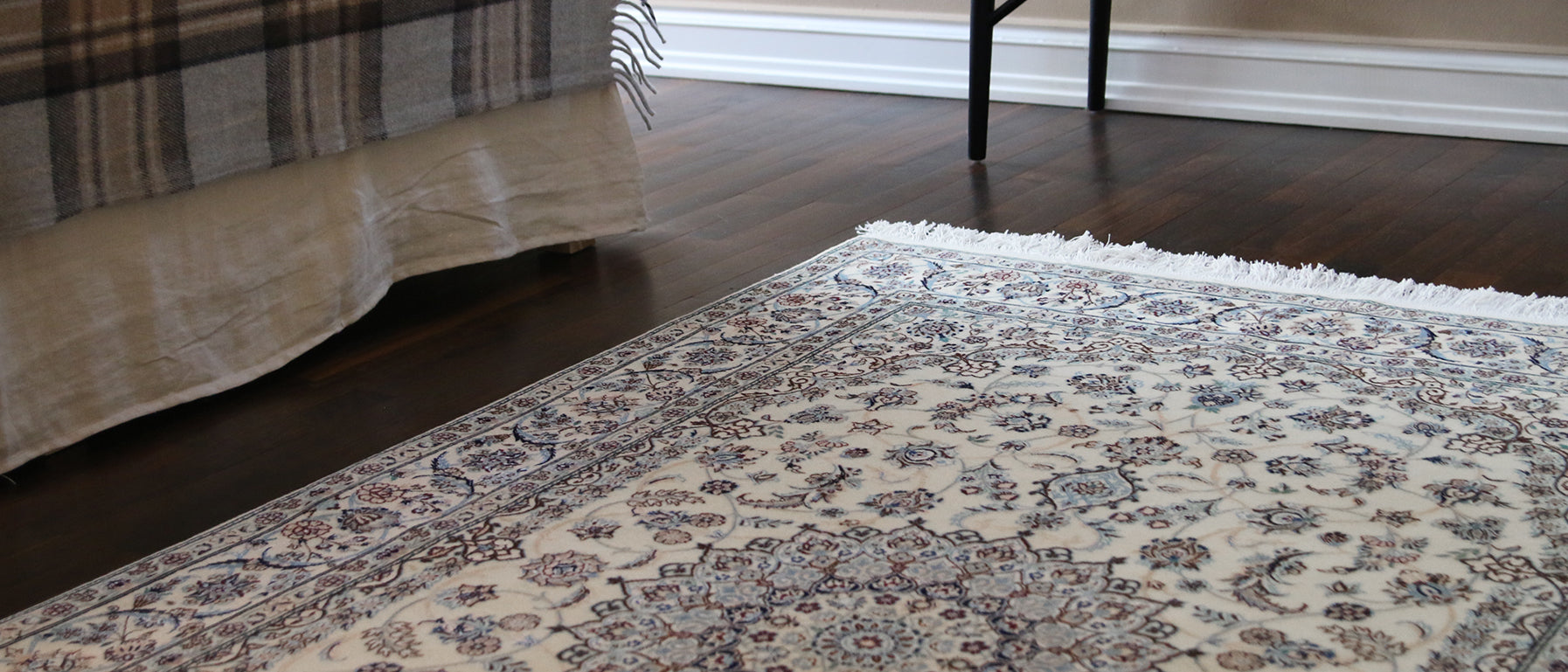
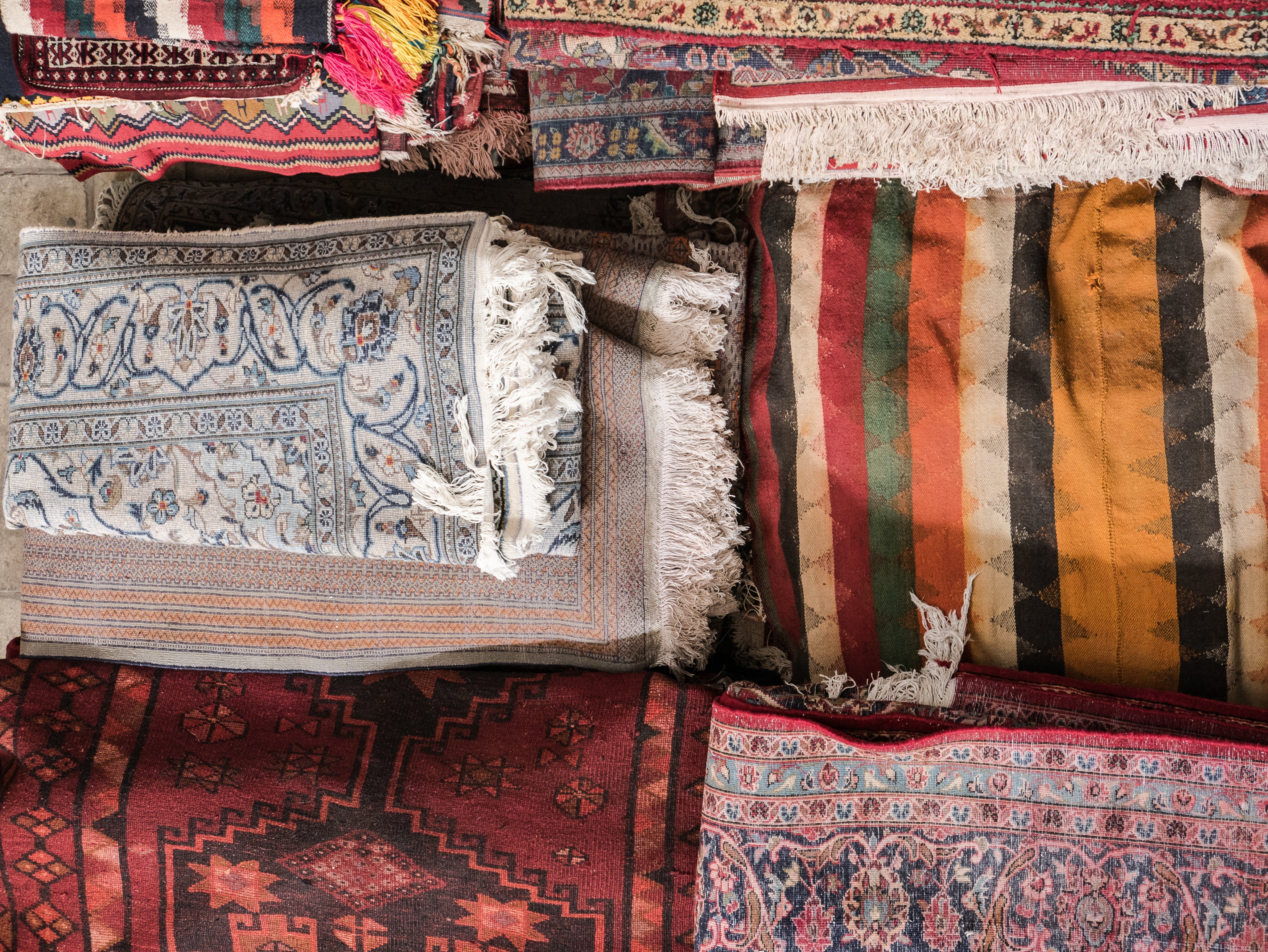
Iran (Persia) is the home of the classic Persian rugs. They are the traditional, finely hand-made rugs from the famous Iranian provenances such as Isfahan, Nain, Tabriz, Qom, Keshan, Mashad or Sarough.
They have always been regarded as the most splendid and most significant of all Oriental rugs.
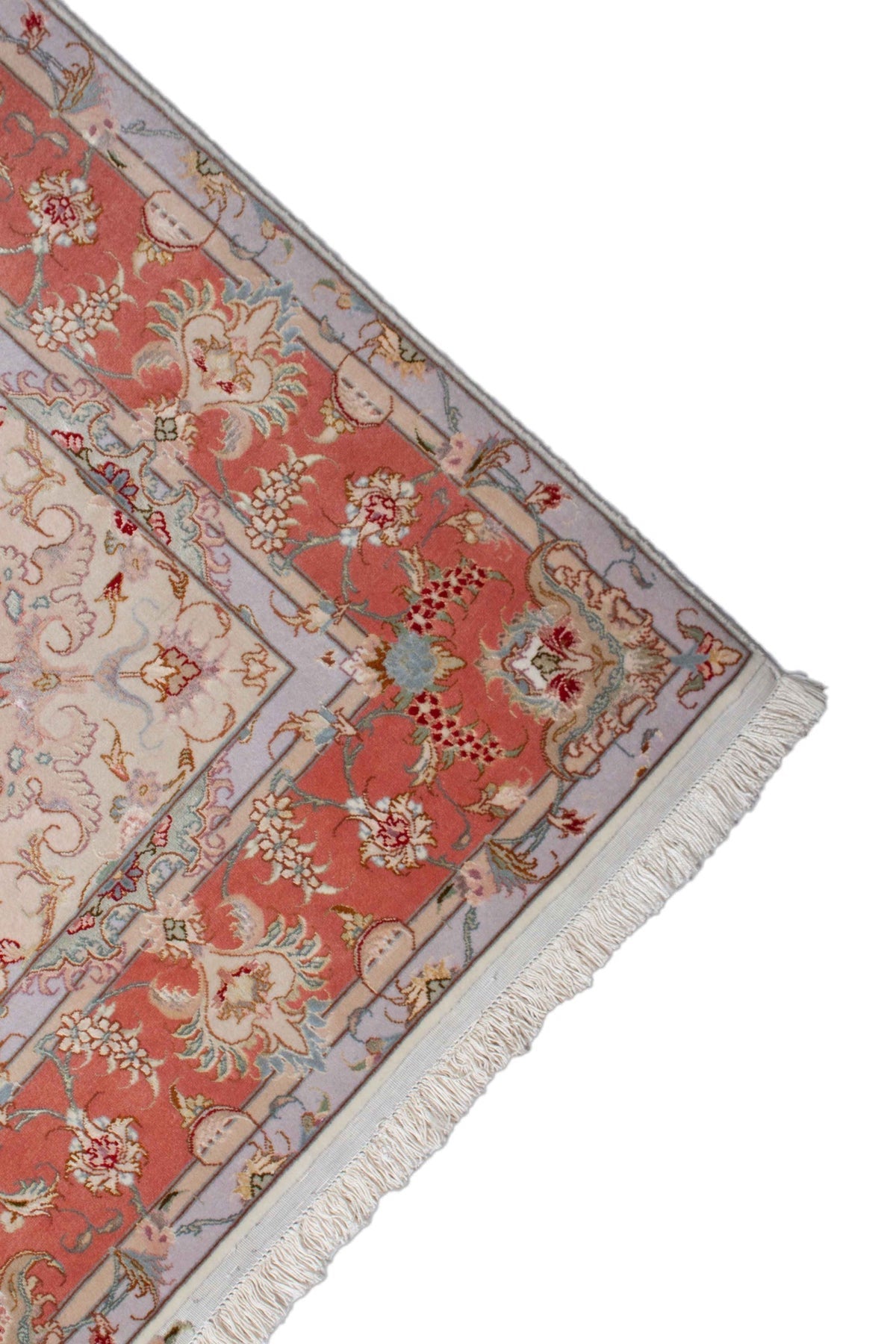
Floral masterpieces from
Tabriz
Iran, or Persia, is where the classic Persian rugs come from: the term refers to the traditional, fine rugs that originate in the historic Iranian provenances such as Isfahan, Nain, Tabriz, Qom, Keshan, Mashad or Sarough. A Persian rug has always been regarded as one of the most splendid and most significant of all Oriental rugs. If you'd like to buy such a masterpiece, you can look forward to intricate arabesques, striking medallions and lavish borders that make any room something special.
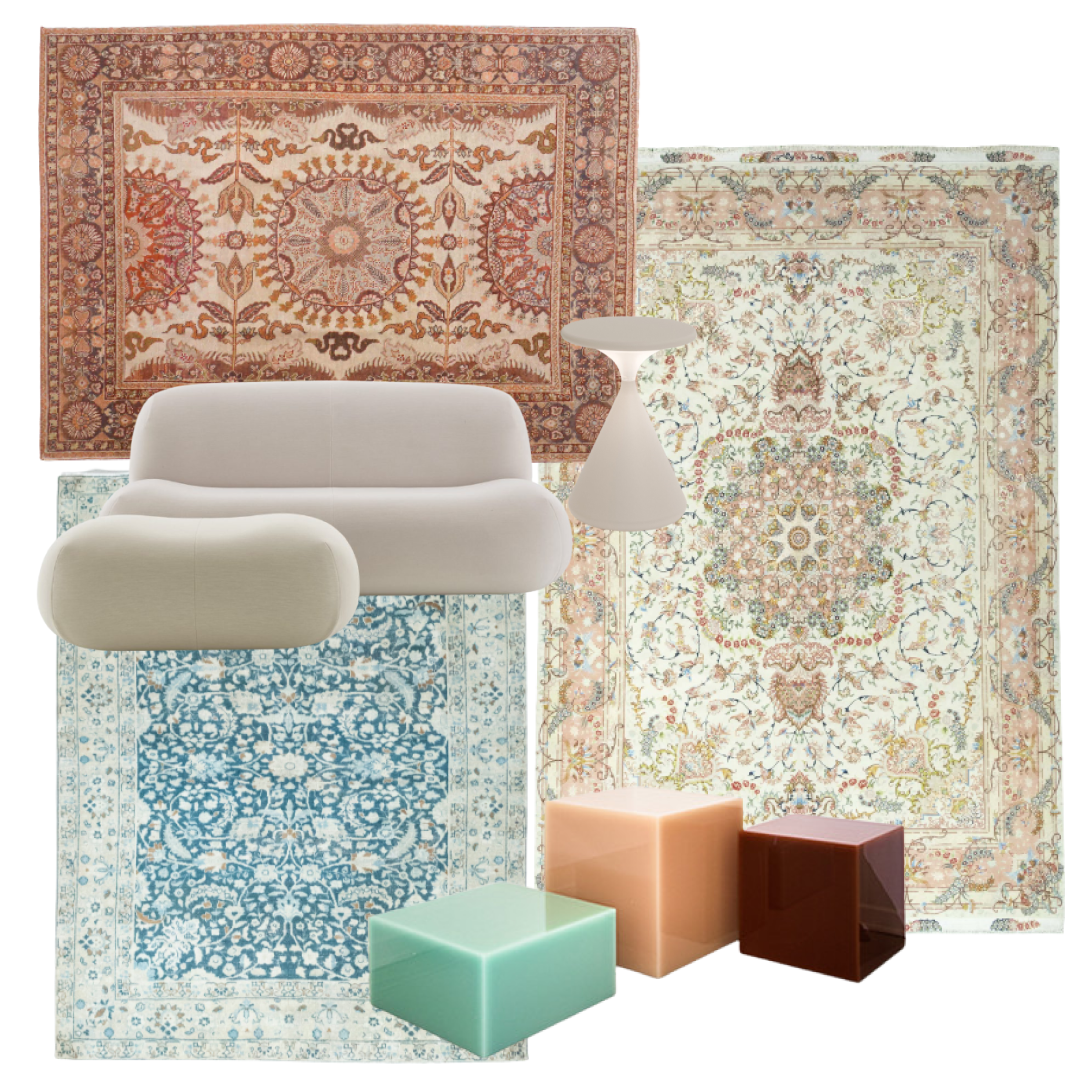
Persian rugs that make you feel at home
Yes? Or is it...?
NAIN
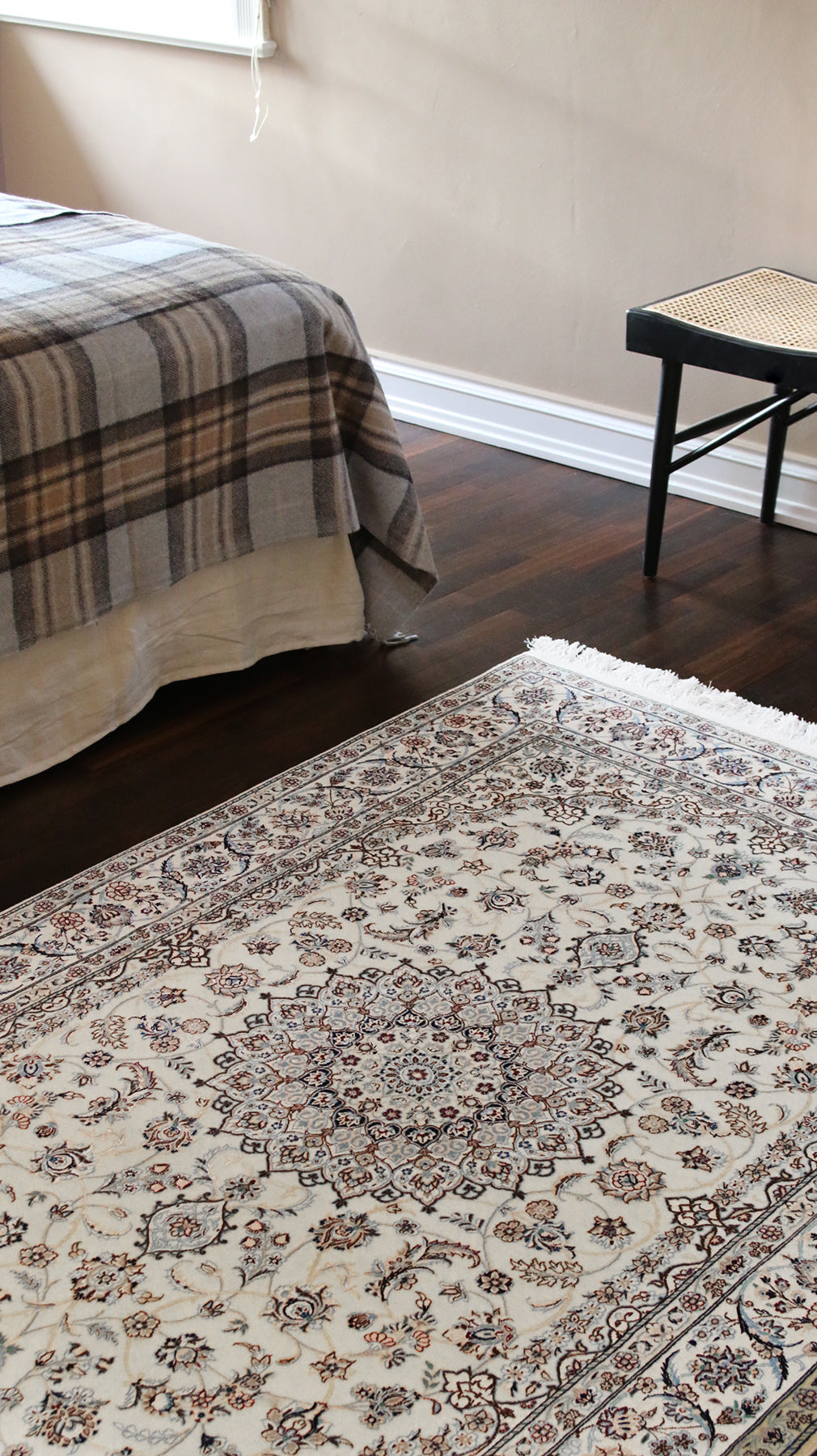
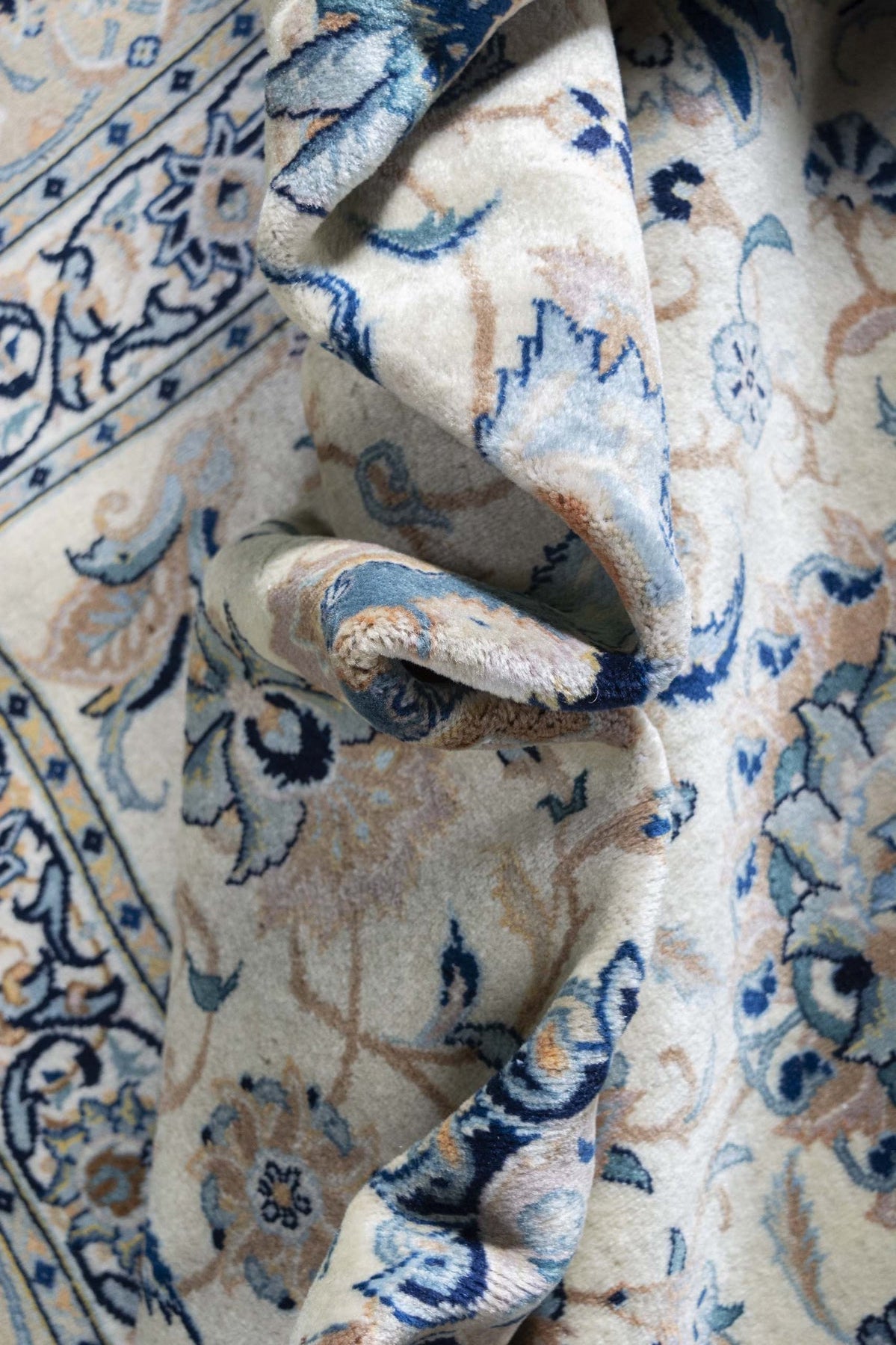
Nain is one of the best-known rug provenances (origin, place of production) in Iran. The town of Nain lies north-west of Isfahan and has a long weaving tradition. Before the Qajar dynasty (1794 - 1925), the finest cloaks for noblemen – known as abas – were made here. Under the influence of Western culture, the suit displaced the traditional cloak as everyday dress. The weavers shifted their trade and began knotting rugs.
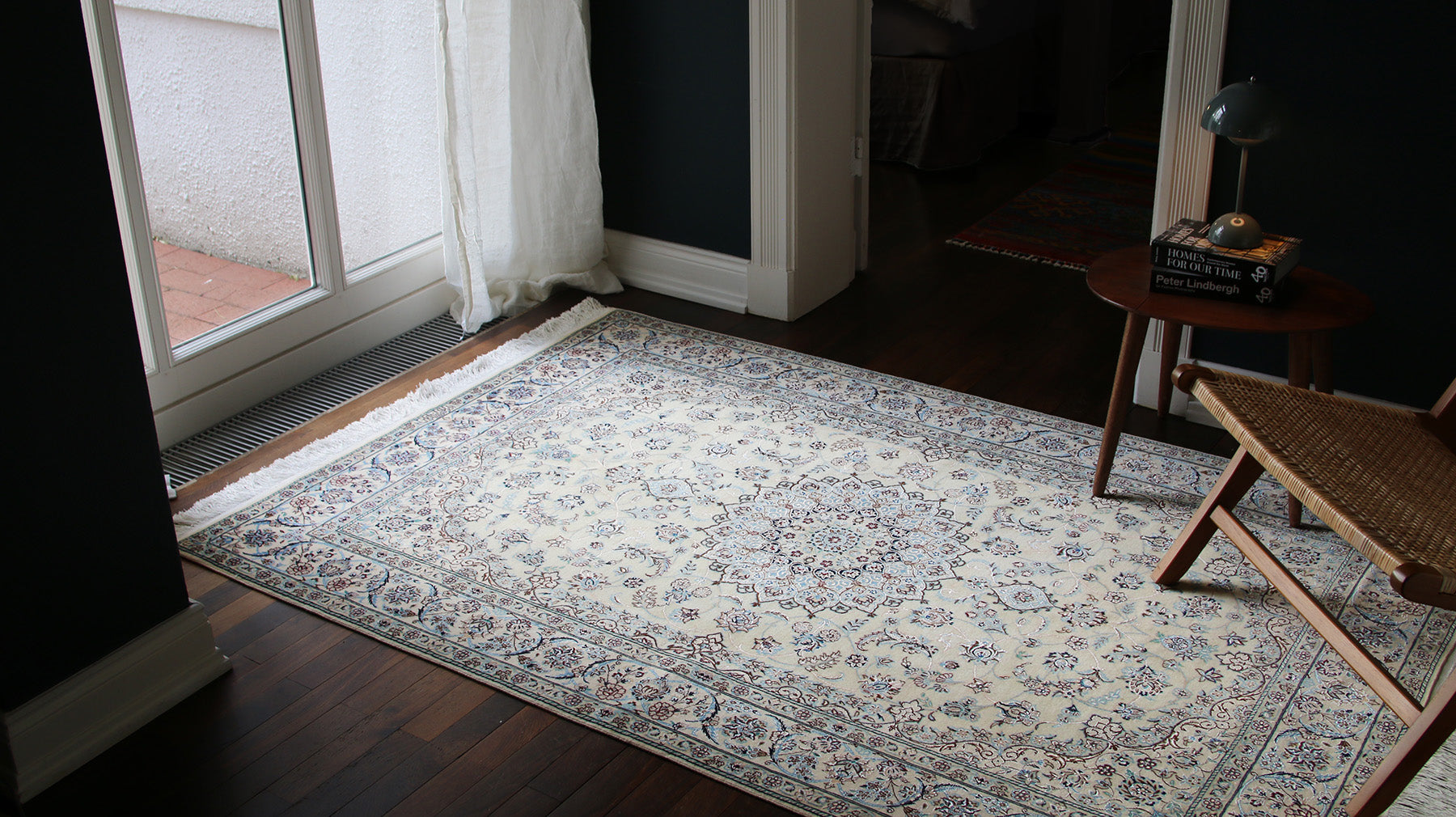
Today's rugs from Nain owe their unmistakable patterns and colour combinations above all to the master weaver Hadj Fatollah Habibian Naiini. When knotting, he limited himself to fewer than ten colours, laying the foundation for the colour composition of the Nain rugs that remain so popular today. The Base colours are still mostly white or beige and blue, though Nain rugs in red, green and yellow are appearing more and more often. Floral patterns are typical, their contours accentuated in silk. Thanks to their understated elegance, Nain rugs also work beautifully in modern interiors.
Nain rugs are grouped into four quality grades, which are given in Lah (the Persian word for layer). Lah describes the number of threads twisted together to form the warp. The more threads used, the thicker the warp and therefore the knots — and the lower the knot density.
Fine wool & silk rugs from
Qom
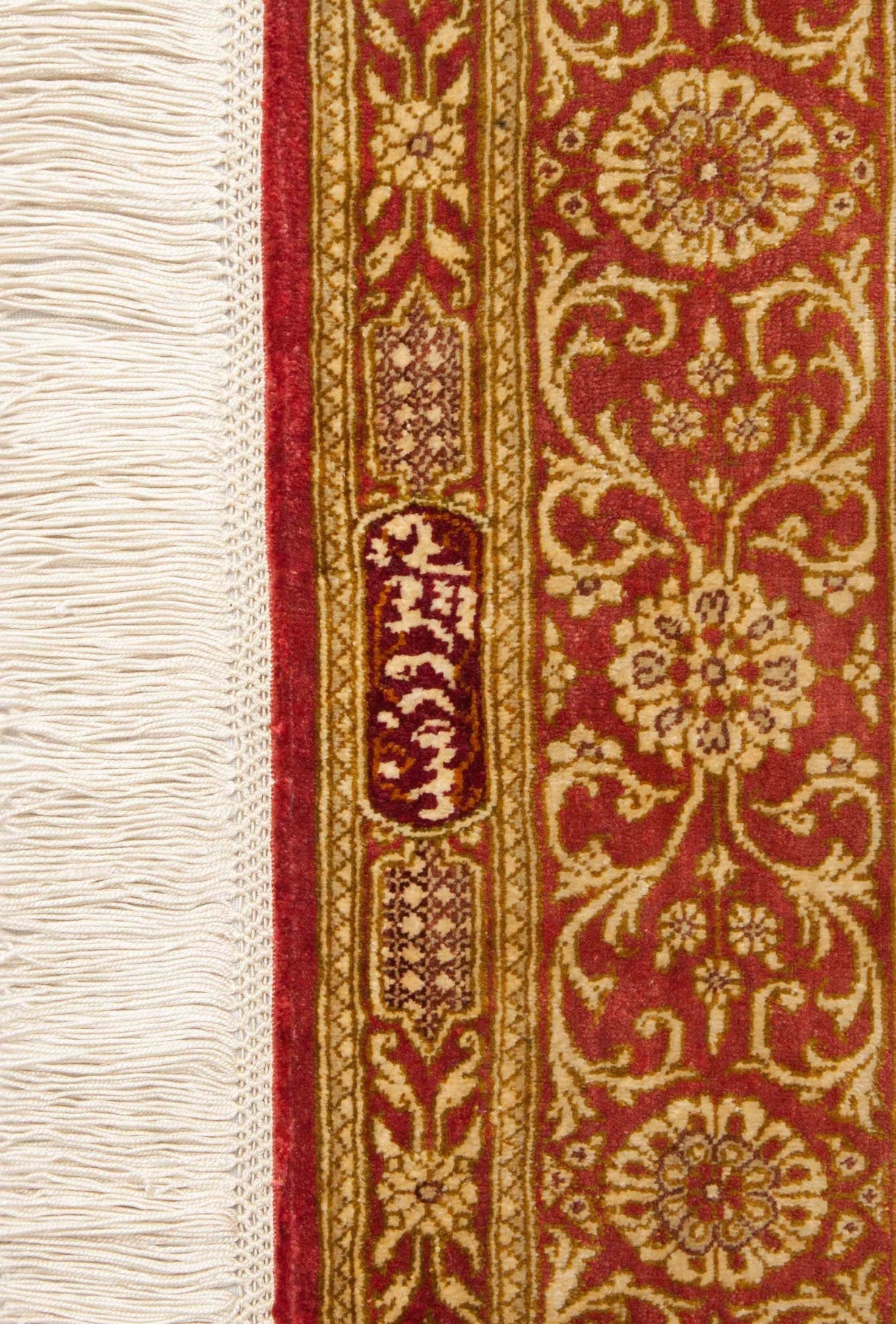
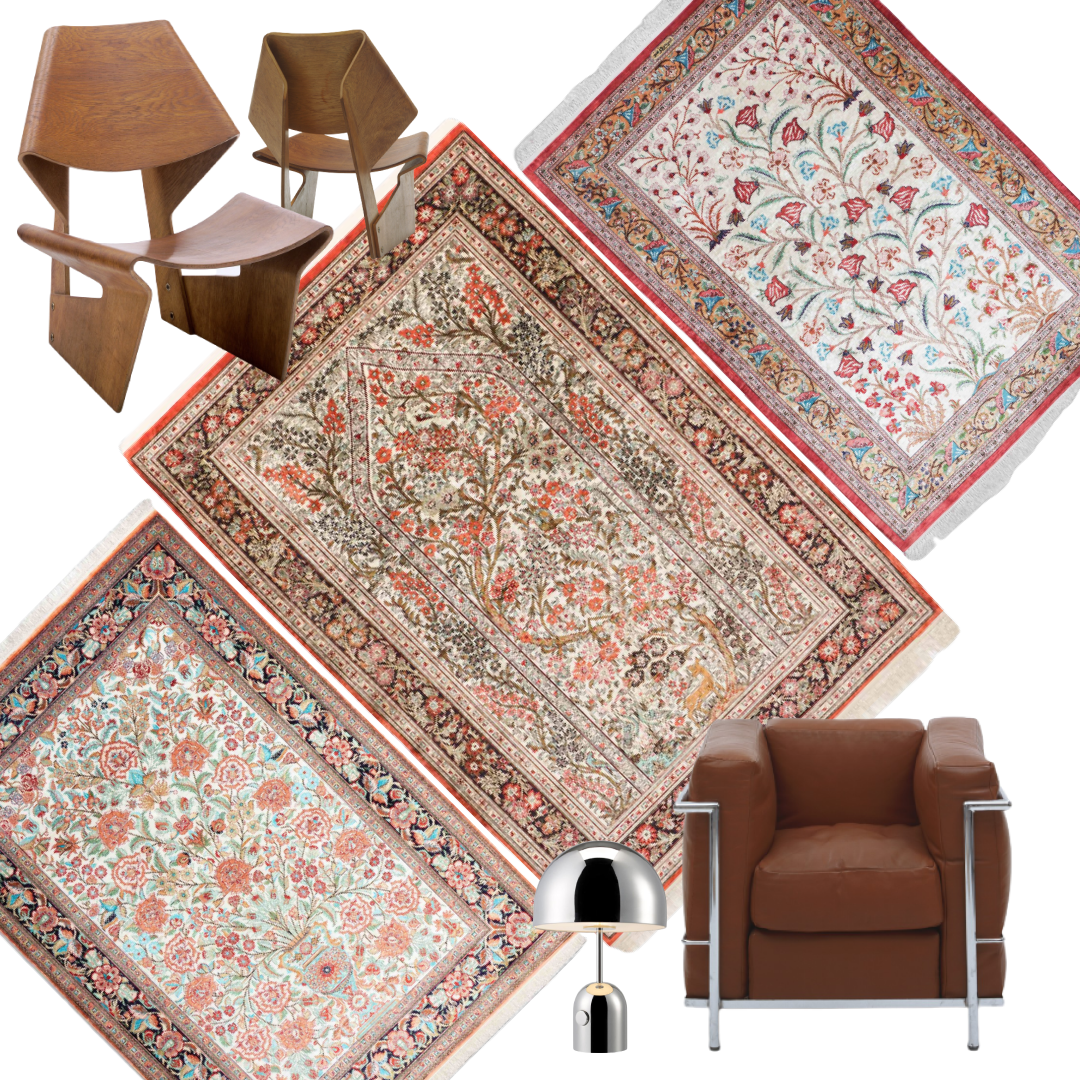
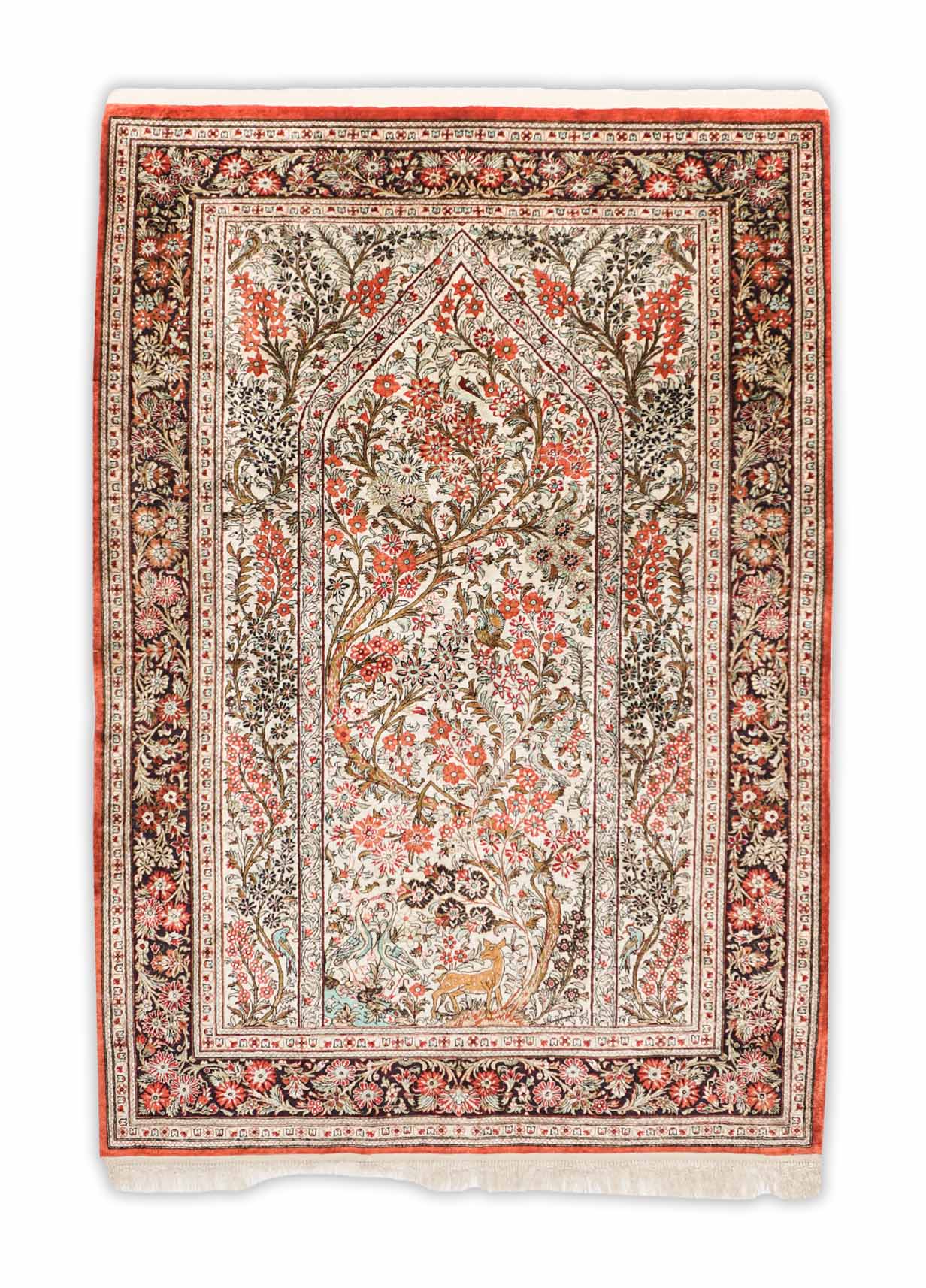
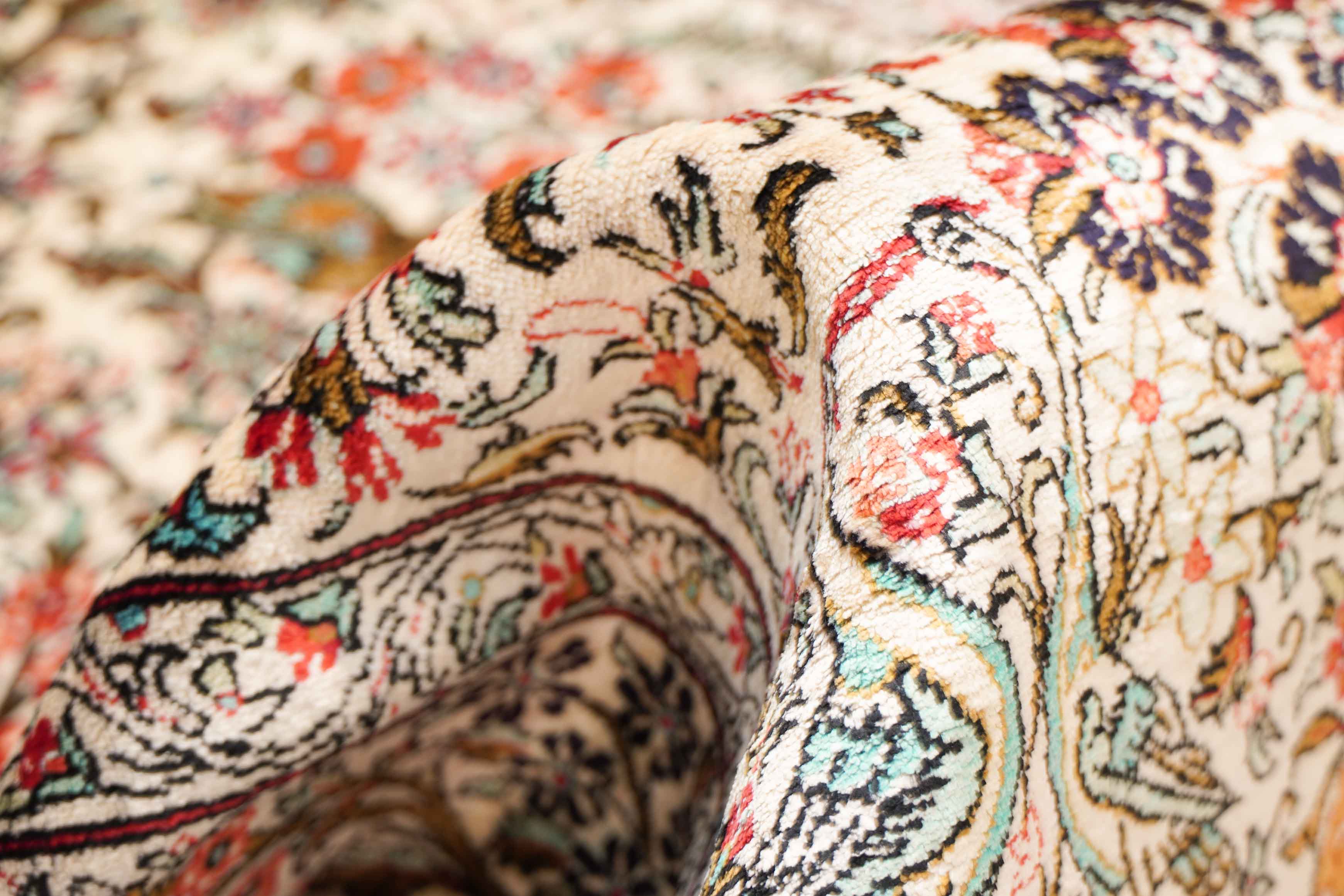
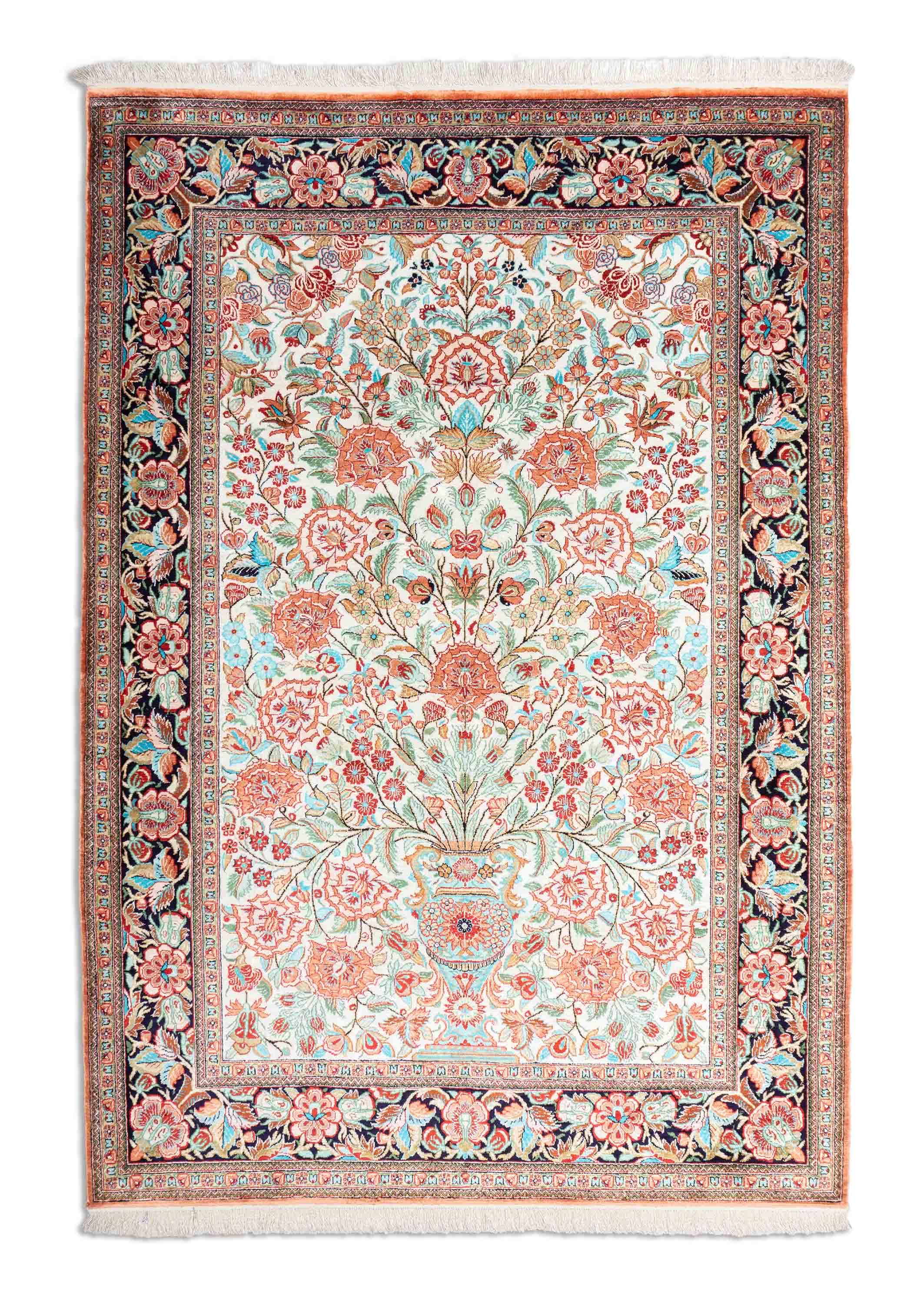
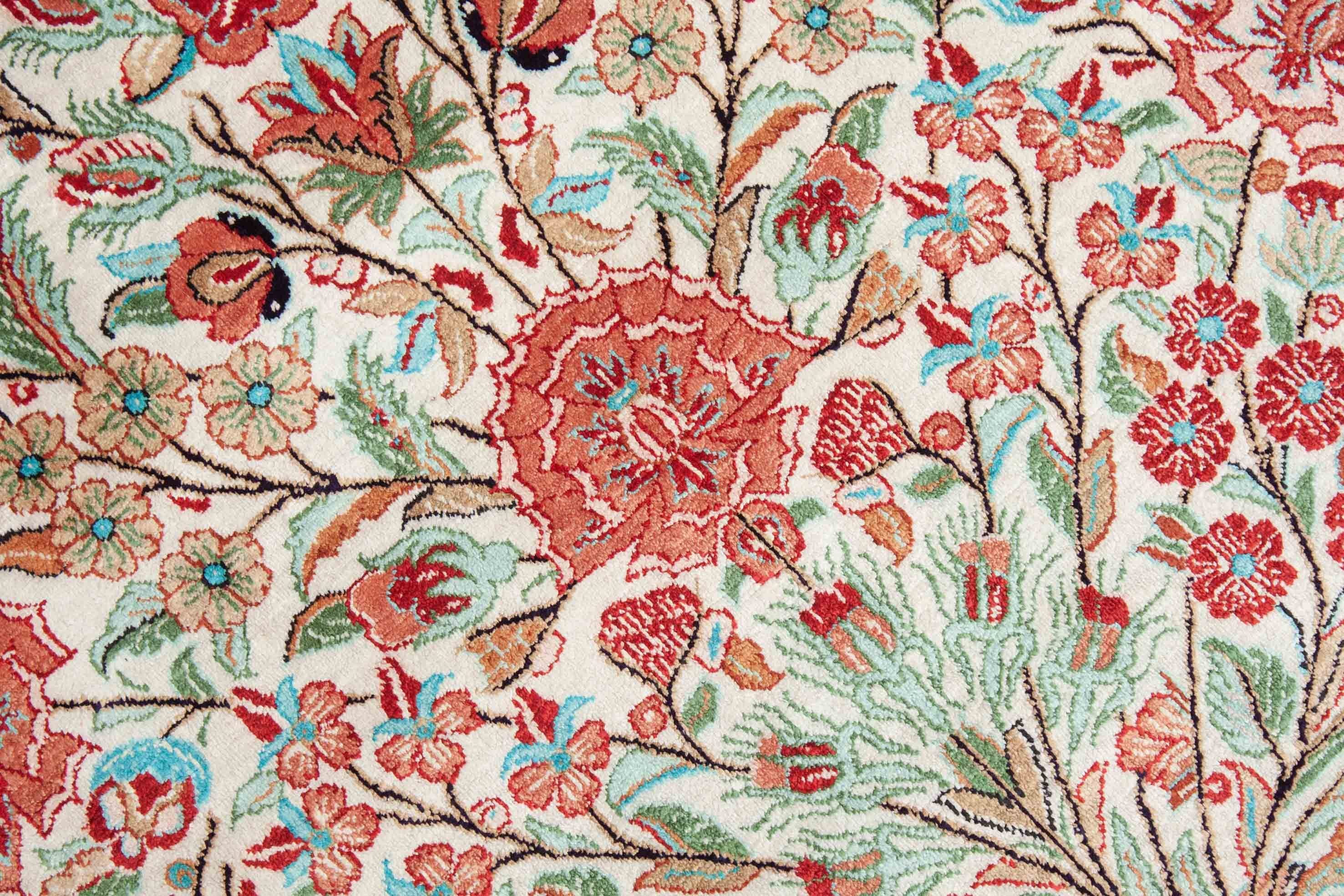
Qom is a relatively young provenance for Persian rugs. The city Qom (also Gom, Ghoum, Goum) lies in the centre of Iran, some 100 km south of the capital, Tehran. As Qom had no long rug-knotting tradition of its own to build on, its patterns were — and still are — adopted from other weaving regions. Over time, however, a distinctive style has grown out of this, one that captivates with its unmistakable beauty. The silk rugs from Qom are among the most celebrated and finest rugs in the world today. The field of a Qom rug often has a light ground, decorated with finely drawn medallion patterns or all-over boteh or vase designs.
Ghom with the Wind
Ghom with the Wind
The Thriving Metropolis
Keshan
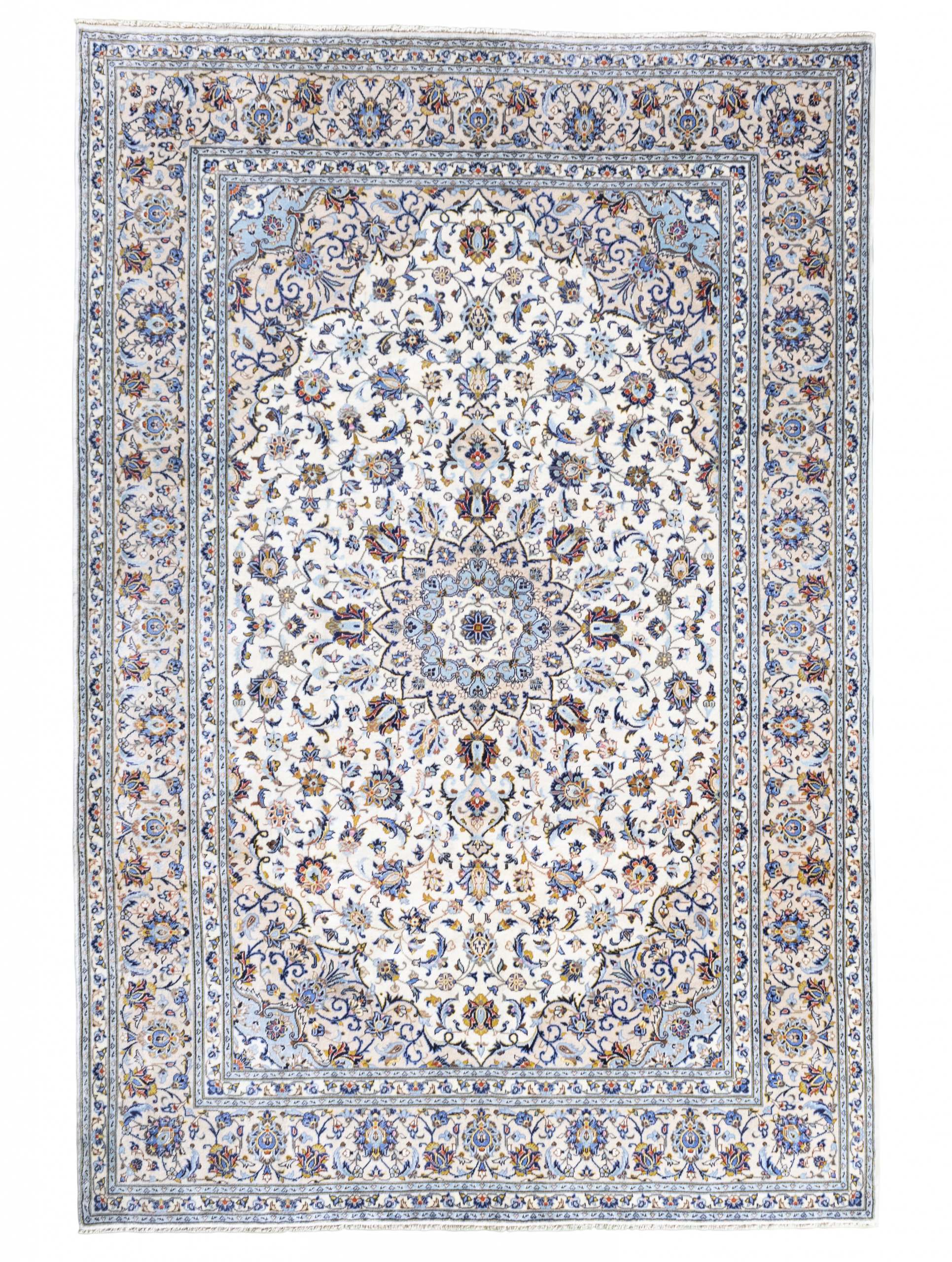
The central Persian city of Keshan (also Kashan or Keschan) sits between the slopes of the Zagros mountains and the Persian deserts.
Thanks to its climate and the caravans that crossed the country, it was — at least until the Safavids moved their seat of government to Isfahan — a thriving metropolis, known above all for its fabric and rug production. To this day it is marked by the elegance and splendour of that era.
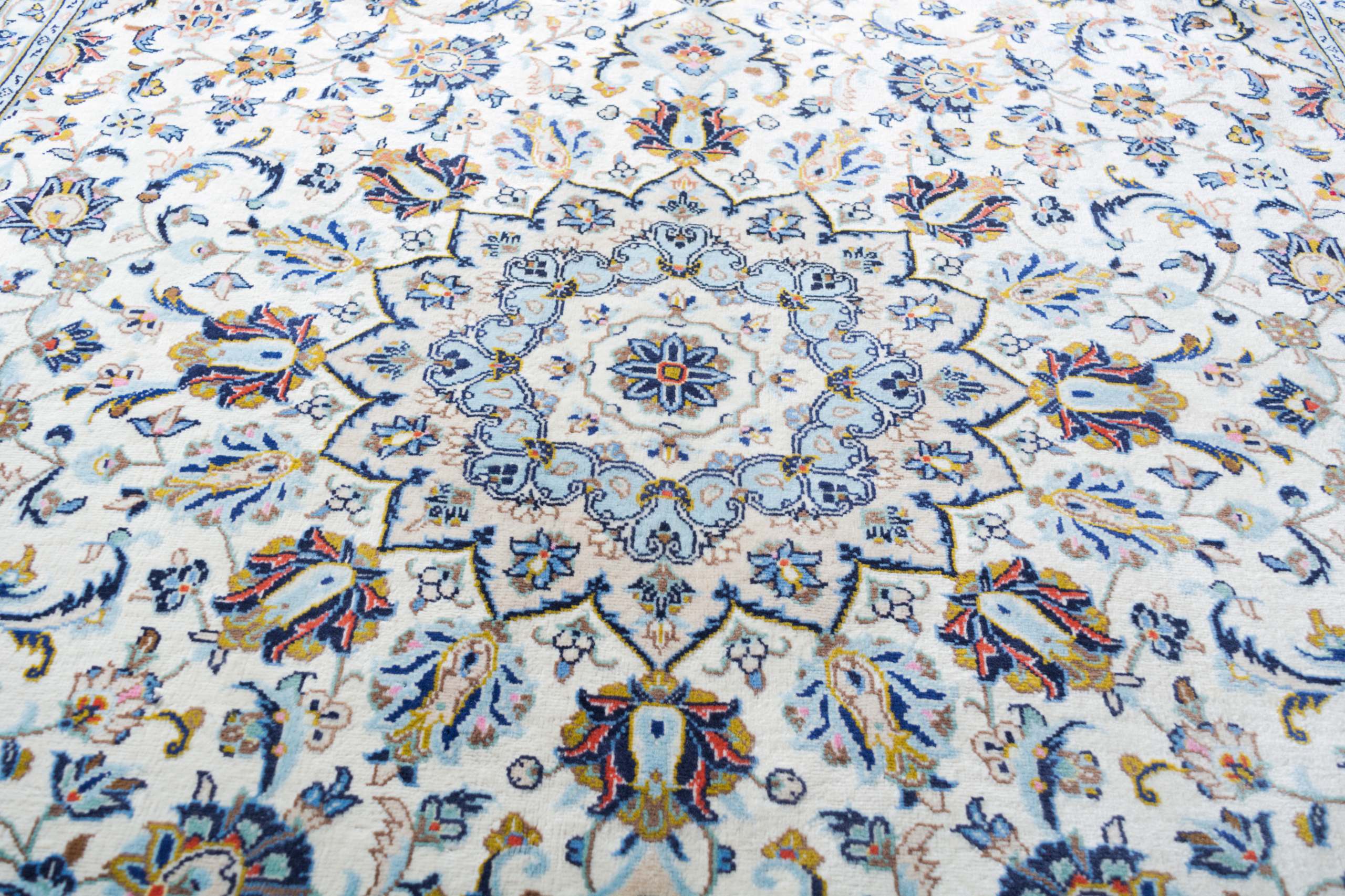
Keshan rugs are made in an age-old tradition and are artful textile creations. In Keshan, production traditionally took place in the homes of the knotters. The pile is typically knotted from exceptionally soft wool , which makes it especially dense and compact.
Indestructible rugs from
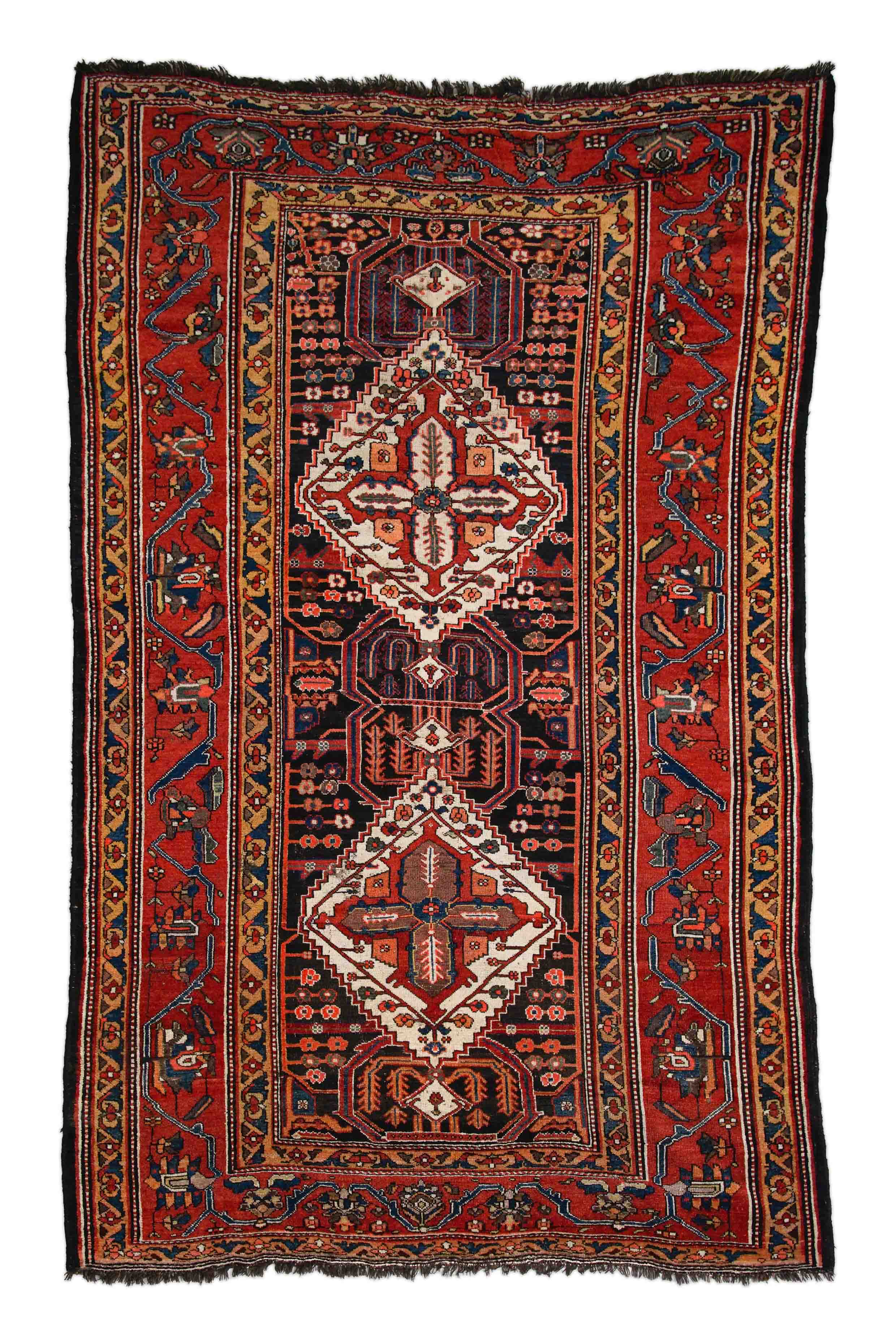
Bijar
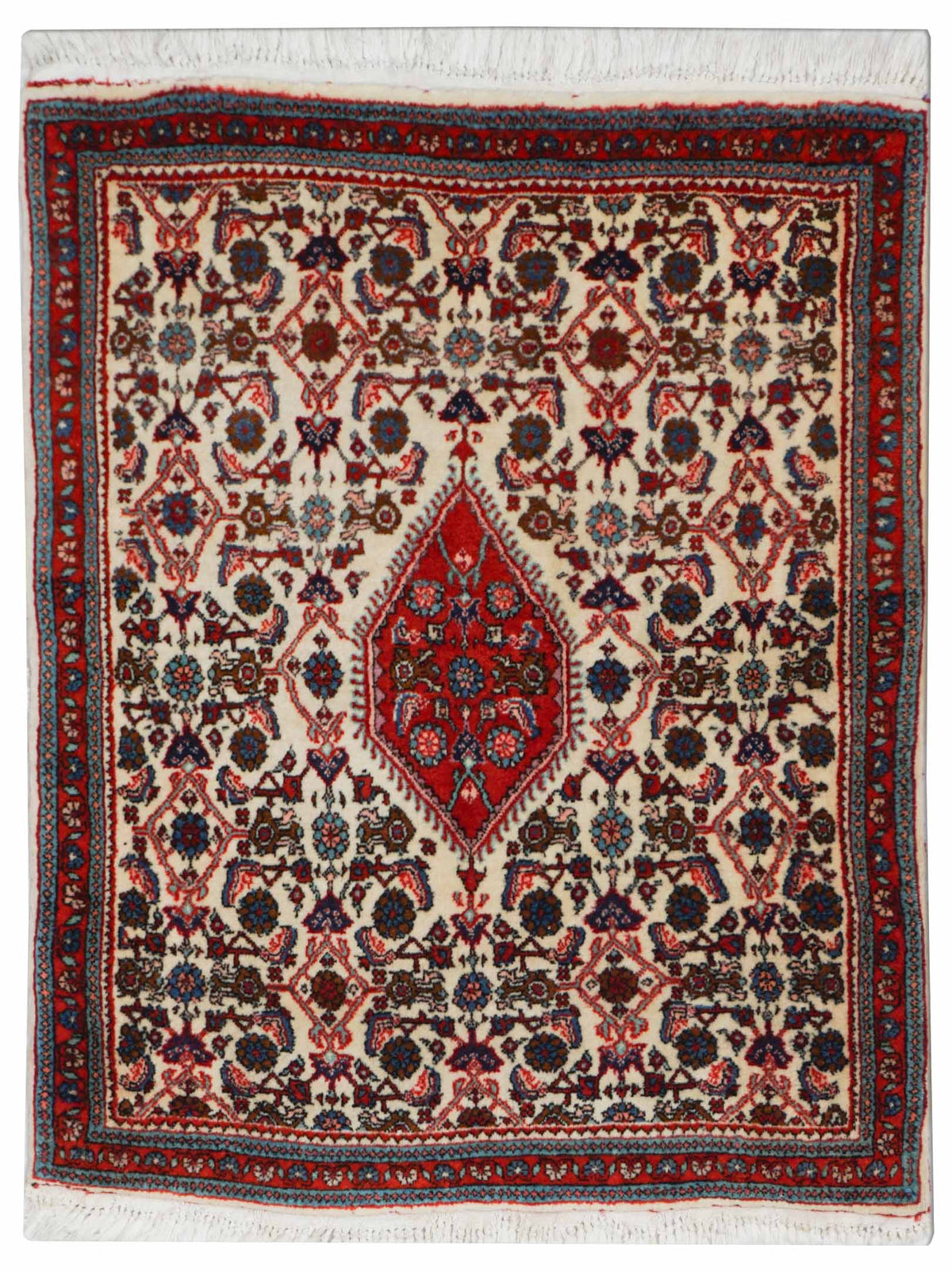
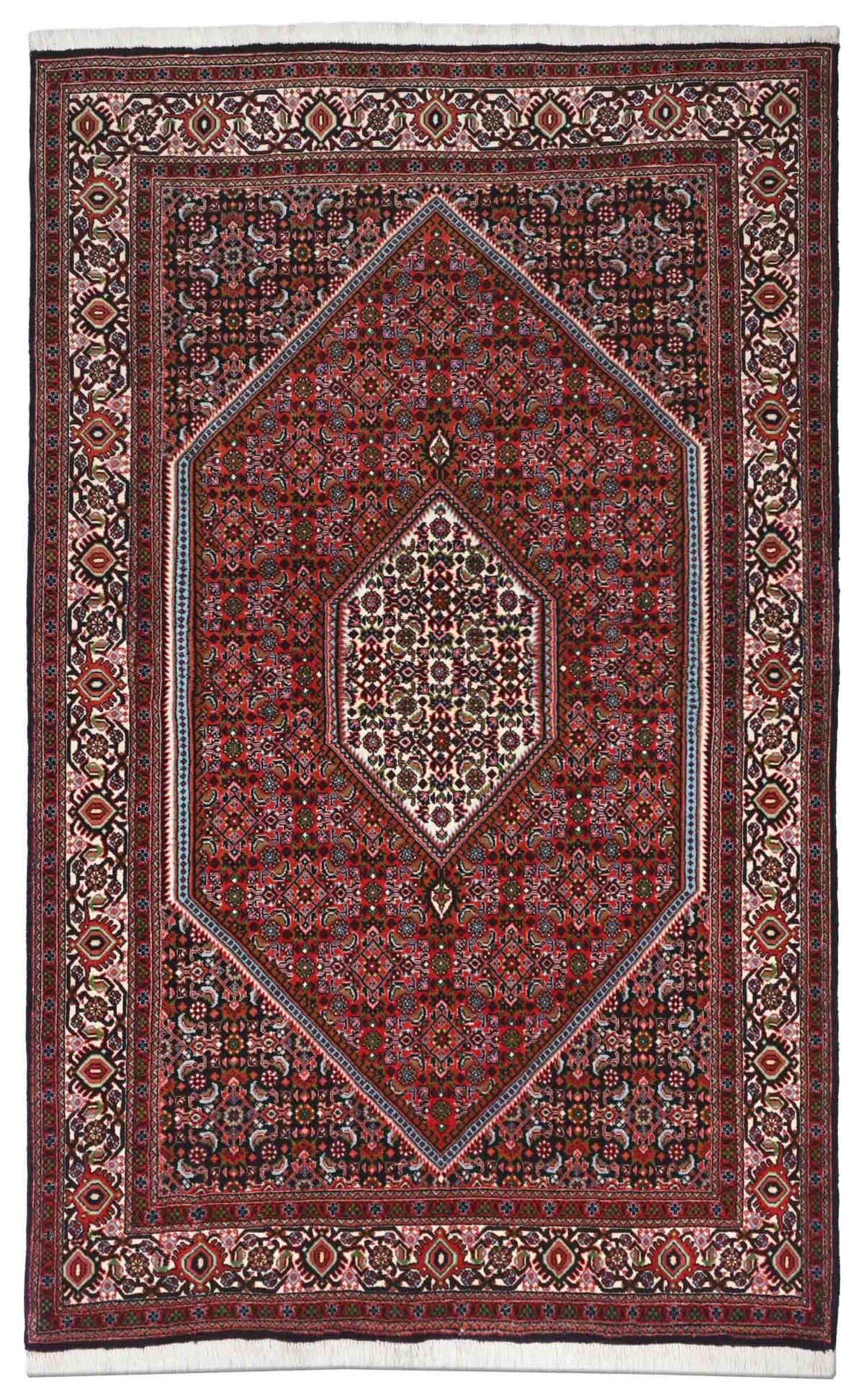
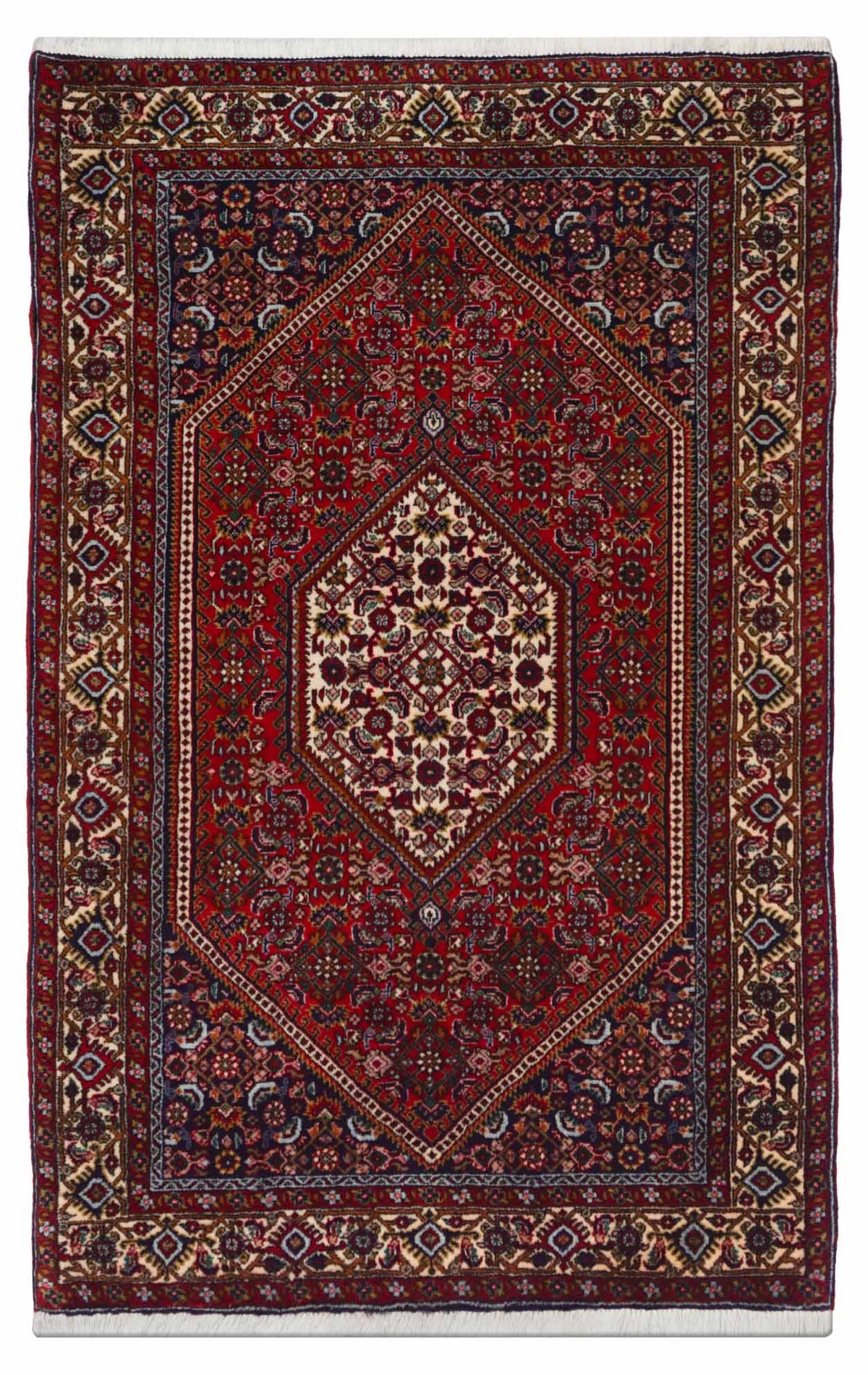
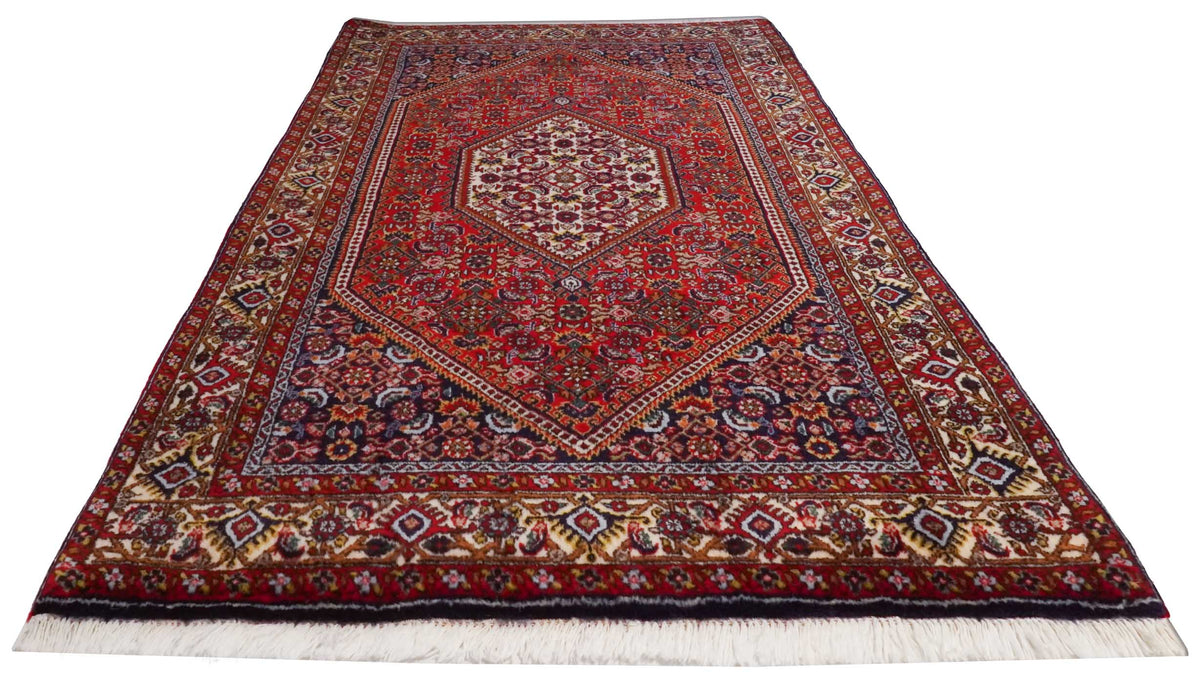
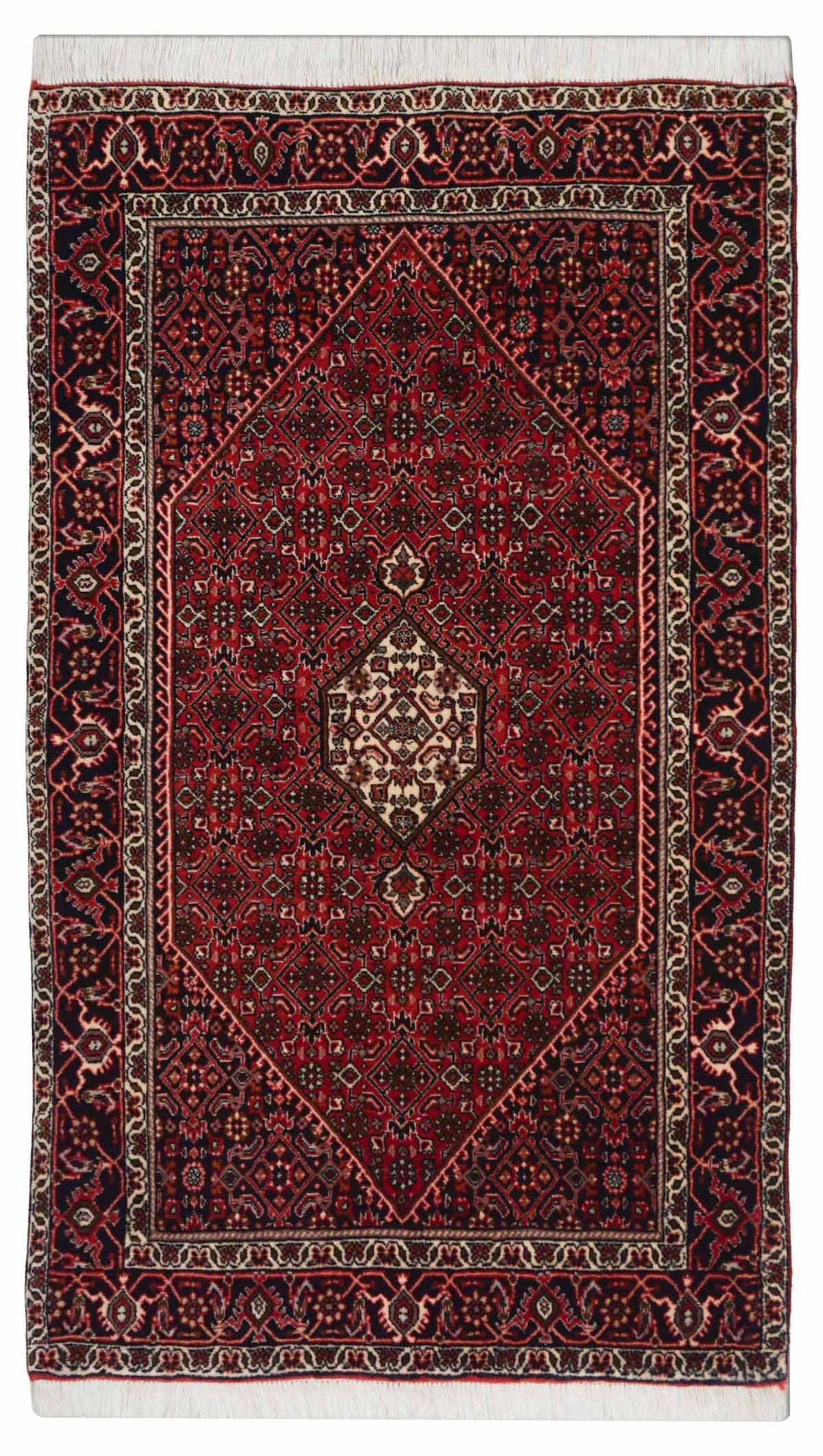
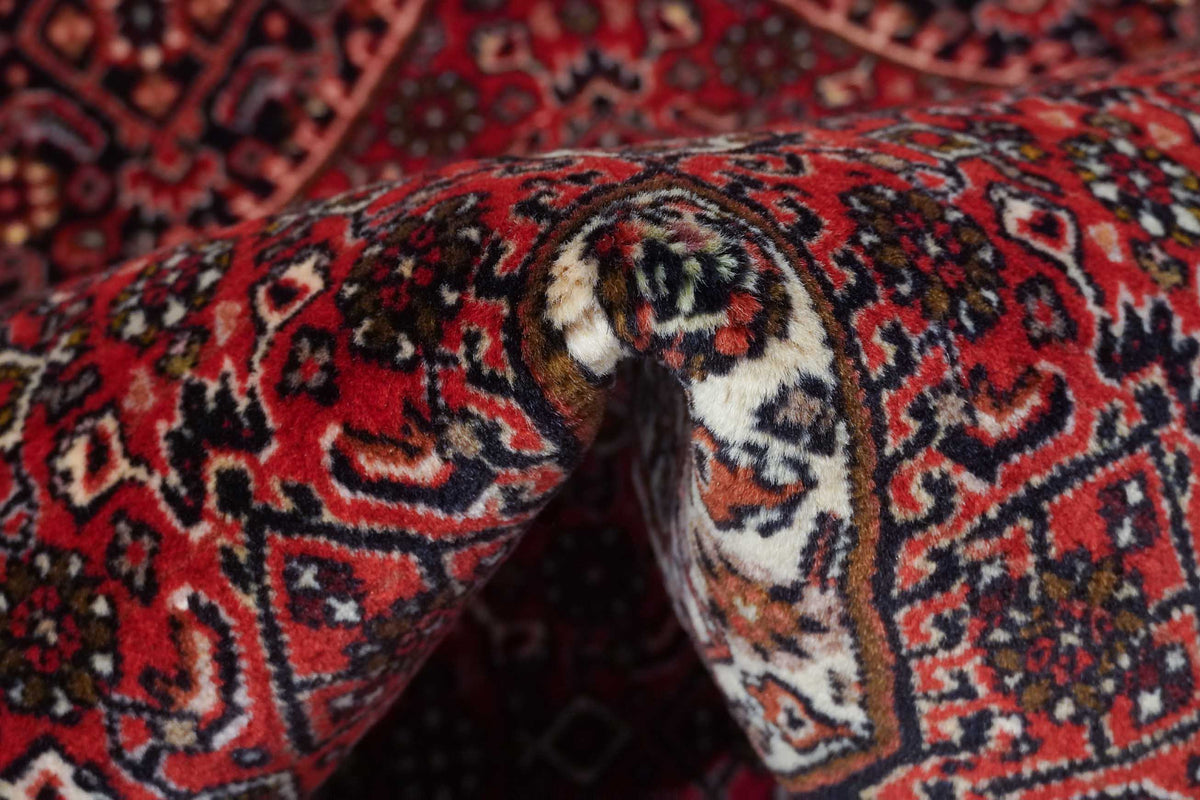
Bijar lies in the province of Kermanshah in north-western Iran. Bijar rugs are among the sturdiest and finest Oriental rugs. Most of the people in Bijar are Kurds.
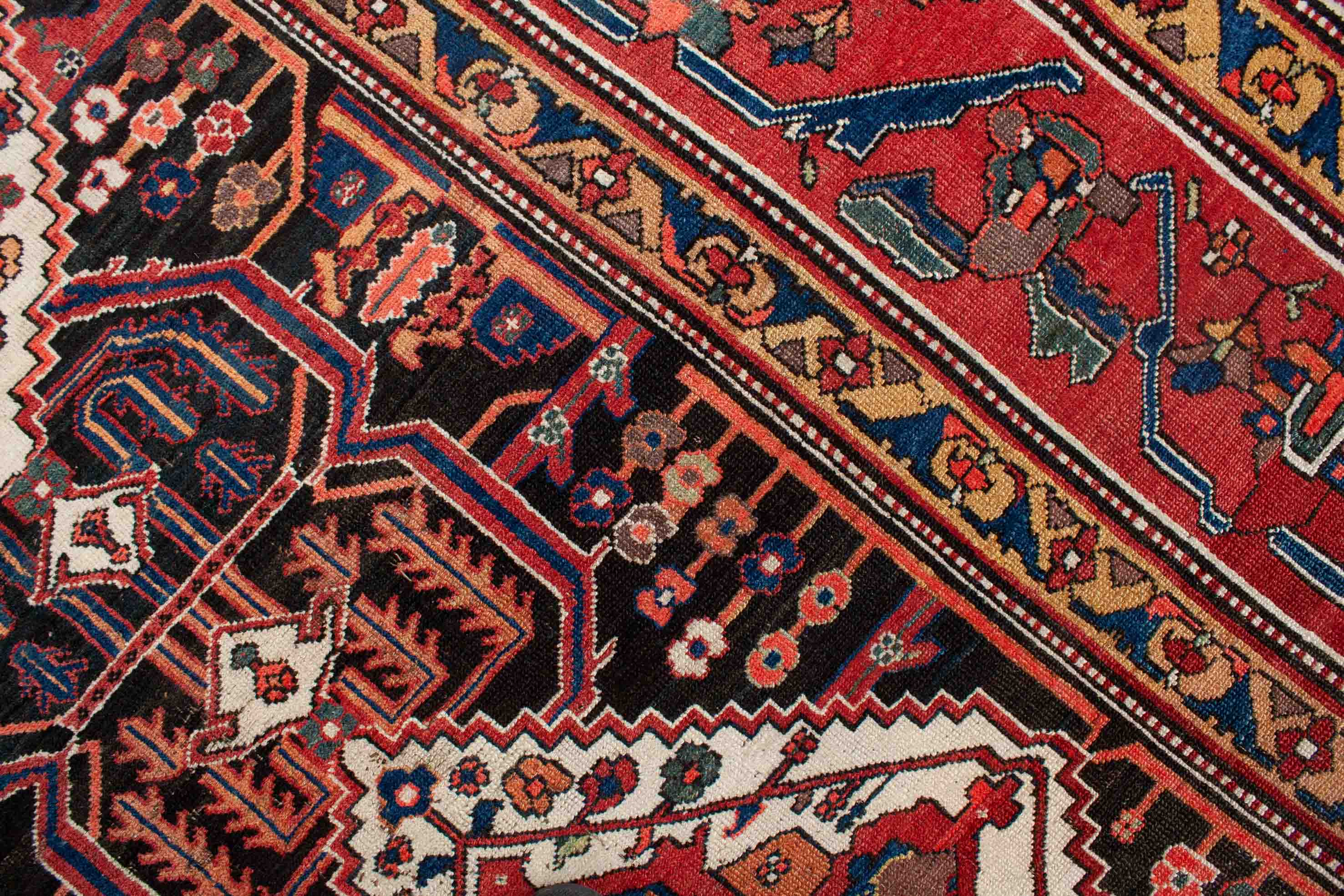
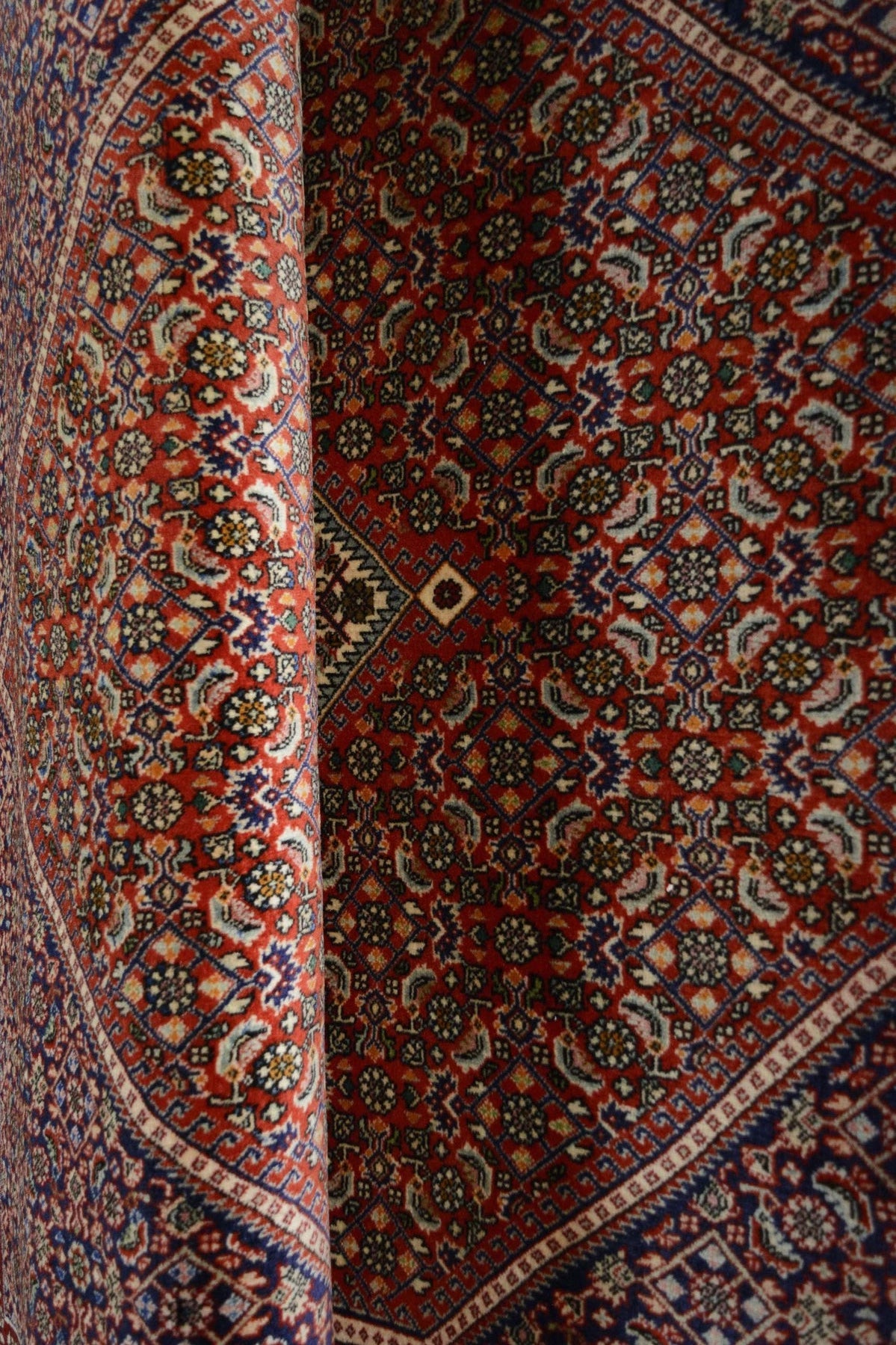
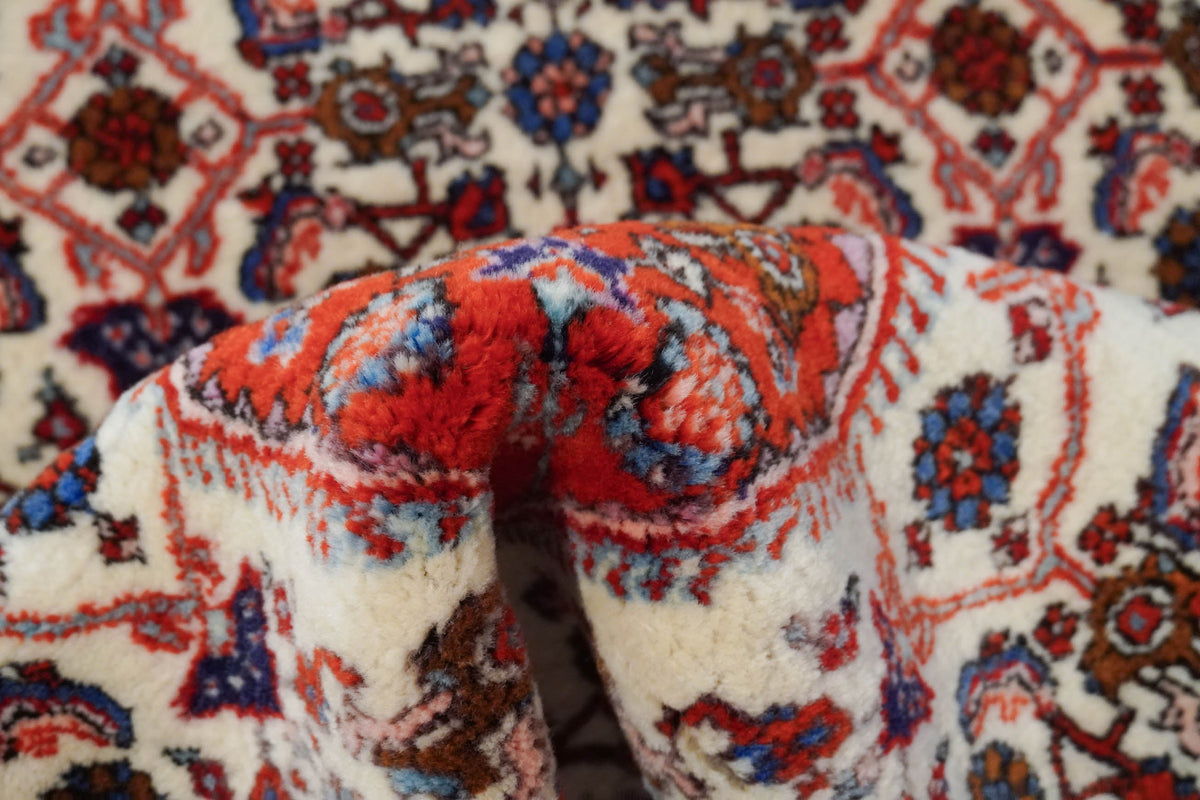
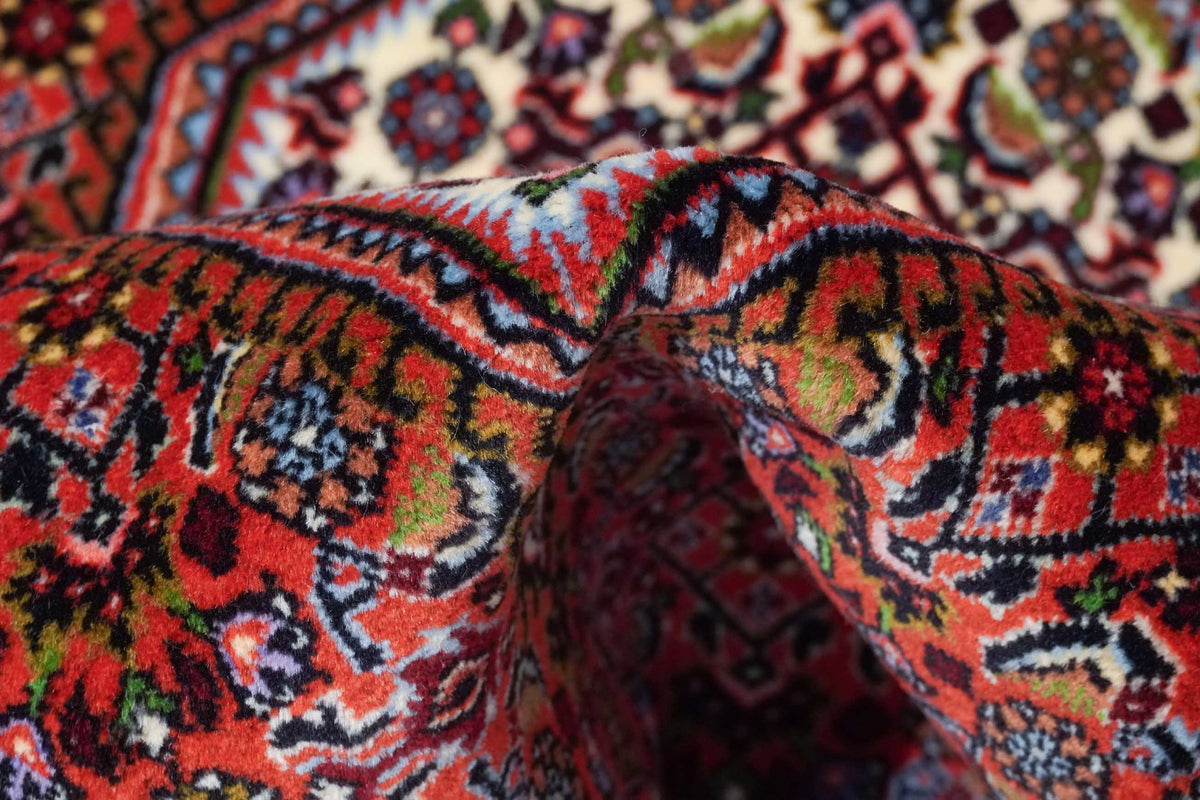
In the Kurdish Bijar rug, a particularly thick weft yarn, which is extremely hard, is beaten in. The result is a board-stiff rug that is exceptionally hard-wearing. Younger Bijar rugs in particular are decorated with the typical Herati pattern, which is also called the fish pattern (or Mahi pattern) .
Rugs from Bijar
Once around the world
Sarough (Re-Import)
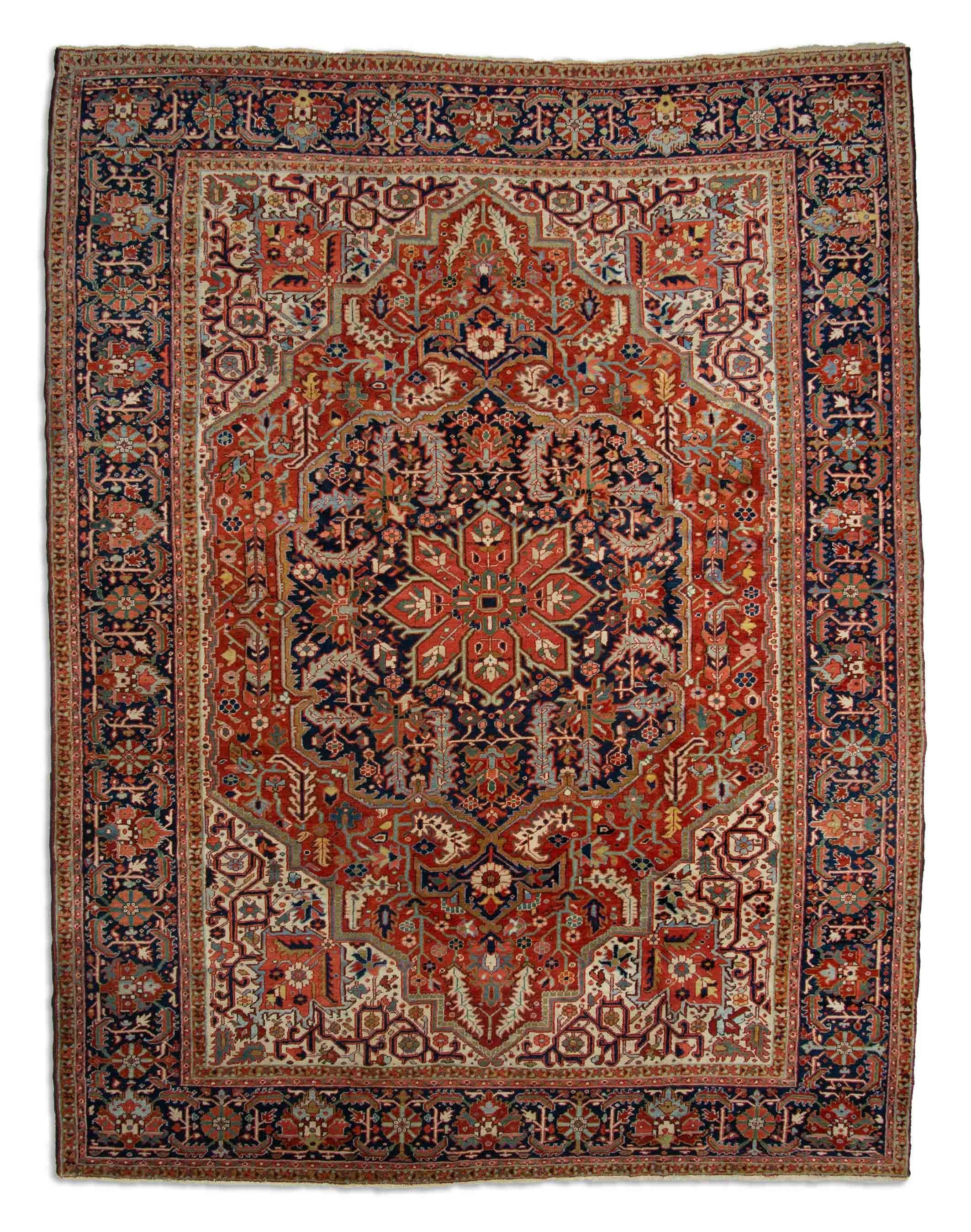
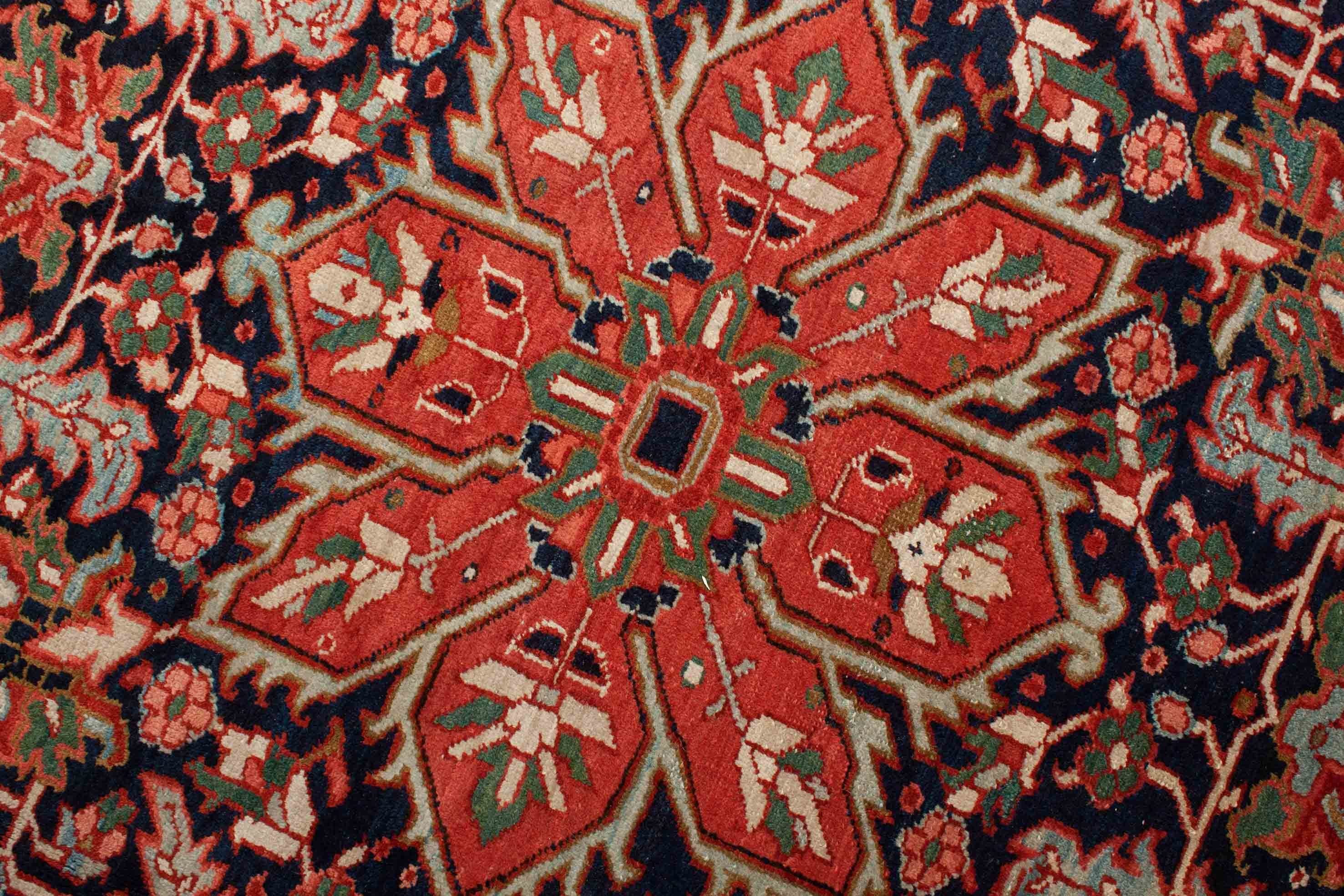
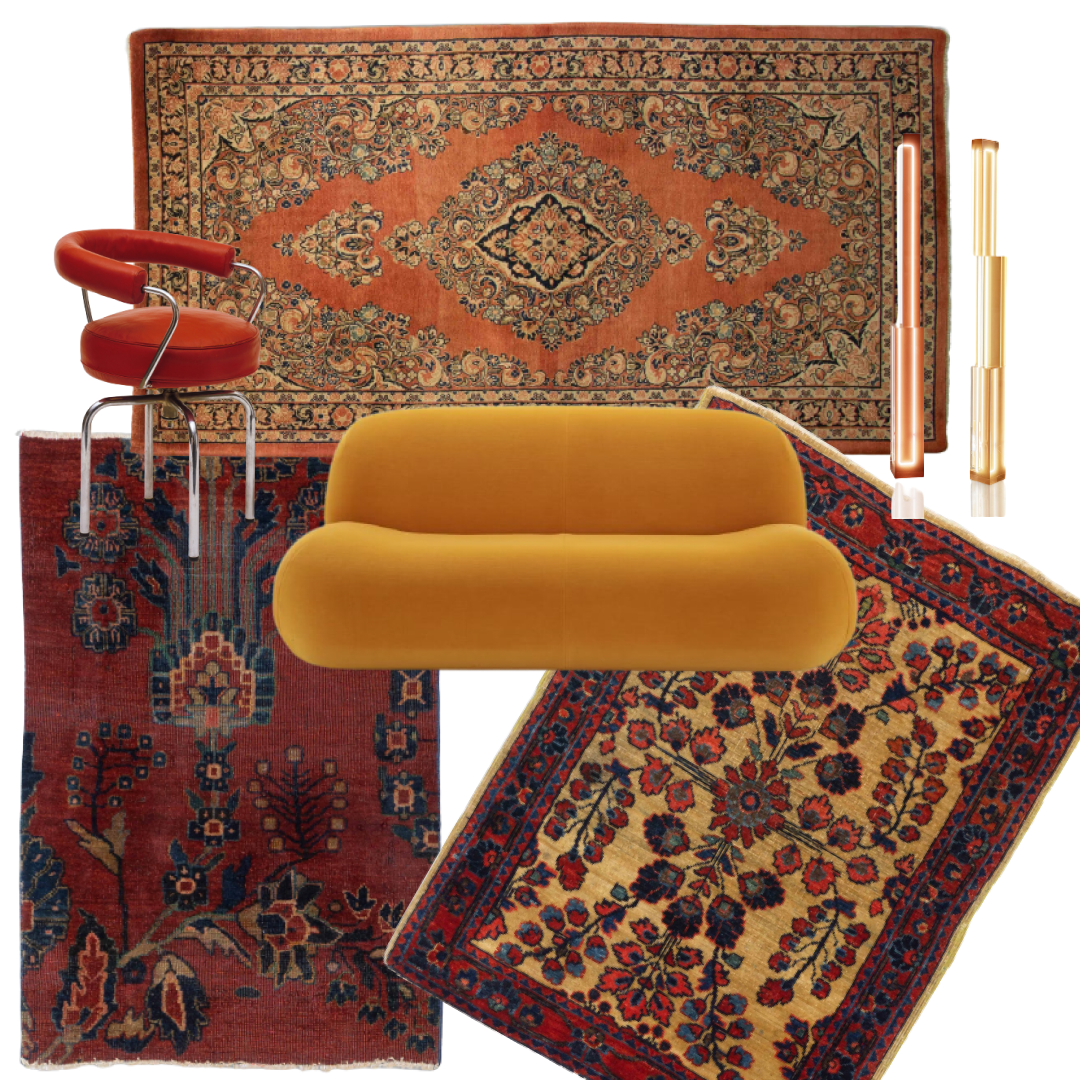
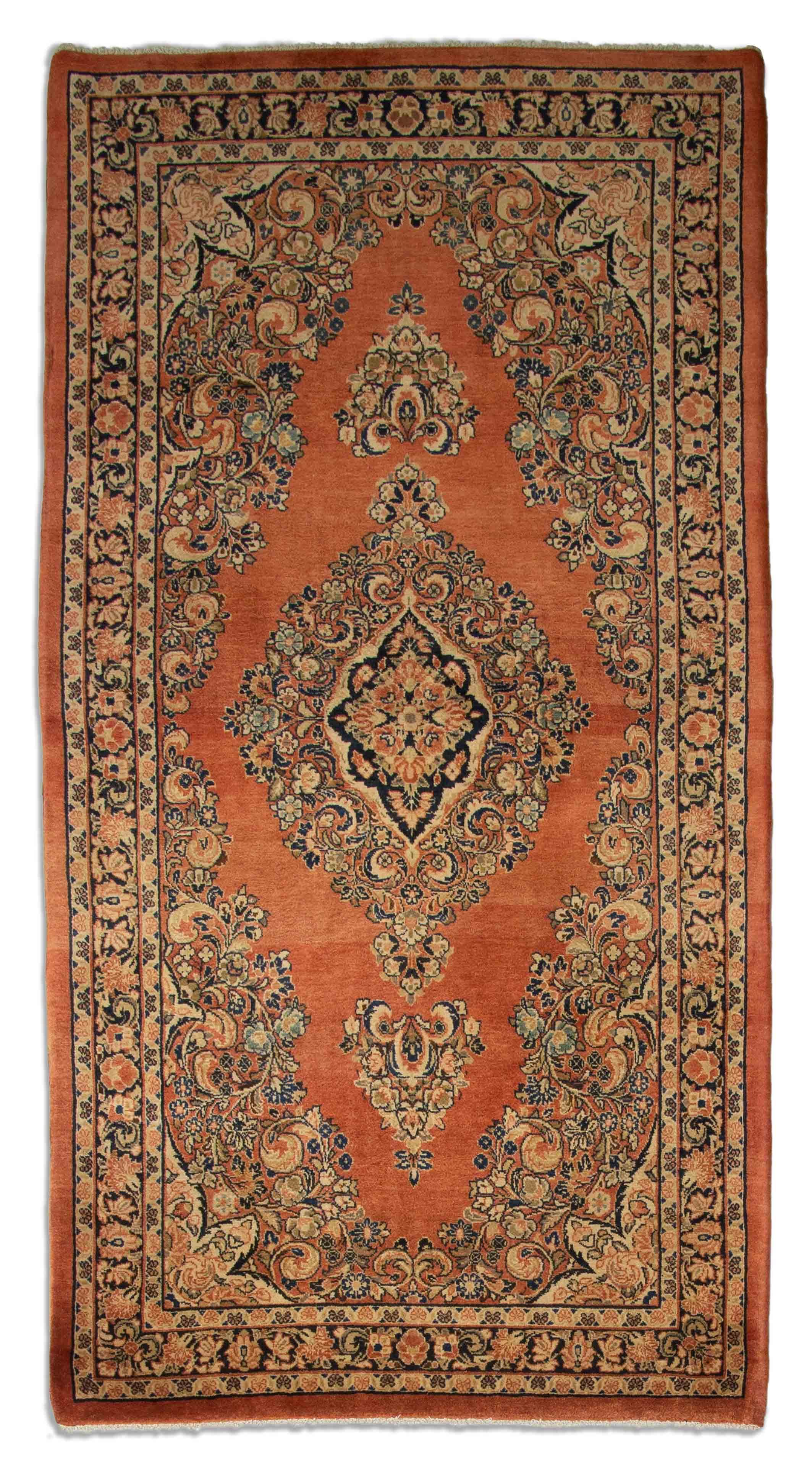
Sarough (also Sarouk, Saruk or Sarogh) is one of Iran's best-known rug-knotting regions. Located in the west Persian province of Aarak, it takes in the provenances of Arak, Djozan, Ghiasabad, Mahal, Malayer, Mohajeran, Sultanabad and Wiss. In Sarough, Persian patterns of every kind are knotted, some of them to the customer's own specifications. Weavers are especially fond of the neighbouring Farahan designs as well as their own Sultanabad designs and the so-called Mir-i-Boteh pattern made up of paisley motifs. Typical of this type of rug is the very good wool quality of the pile, since the new wool comes from the Persian highlands. The foundation – warp and weft – is usually cotton, however. On old and antique rugs you will often find a blue weft thread. The knotting is very fine and the pile relatively high.
A special case in Iran's art of rug knotting are the so-called American Saroughs, which were knotted between 1900 and 1940 especially for the American market. The colours of the American Saroughs are limited to rust, red, blue and a few brown and beige tones, and they carry a floral pattern that usually does without a central medallion. In the 1970s these pieces became very popular in Iran as well, and were re-imported. Hence the name. Only a very few pieces made their way from Iran on to Europe. That is why the pieces first re-imported into Iran are particularly rare.
Enough back and forth, this one stays with you
Enough back and forth, this one stays with you
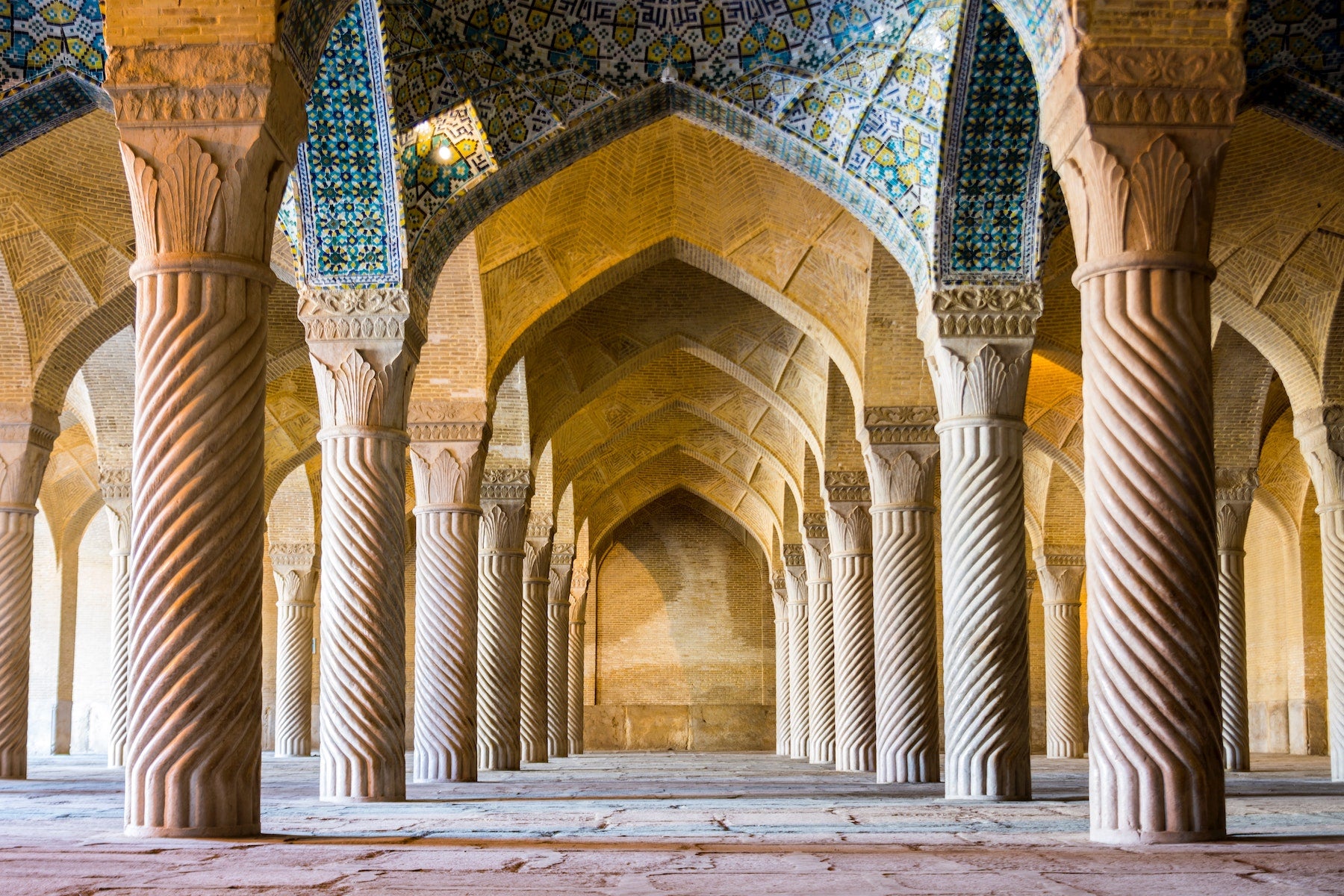
Iran = Persia
Until 1934, Iran officially bore the name Persia.
At various times in history the country formed a bridge between East and West. The caravans on the Silk Road running through Persia carried not only rugs, fabrics and spices but also new ideas. Iran is the cradle of rug knotting and still its stronghold.
All Persian rugs