

Beni Berber | 292 x 198 cm | Nr. 359847

|
1-3 Werktage Lieferzeit (deutschlandweit) |

|
14 Tage Probelegen |

|
Kostenlose Lieferung & Retoure innerhalb der EU |
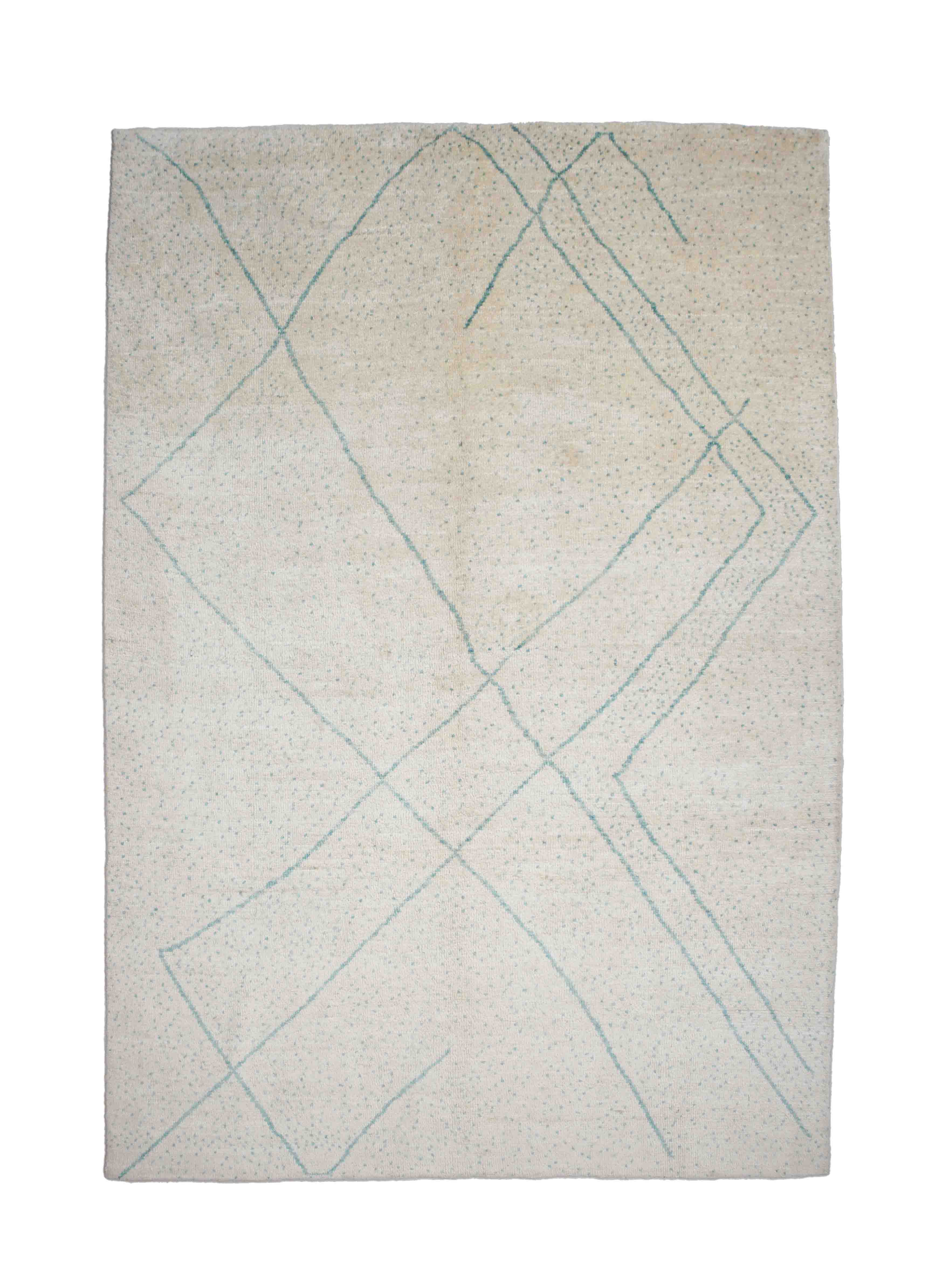
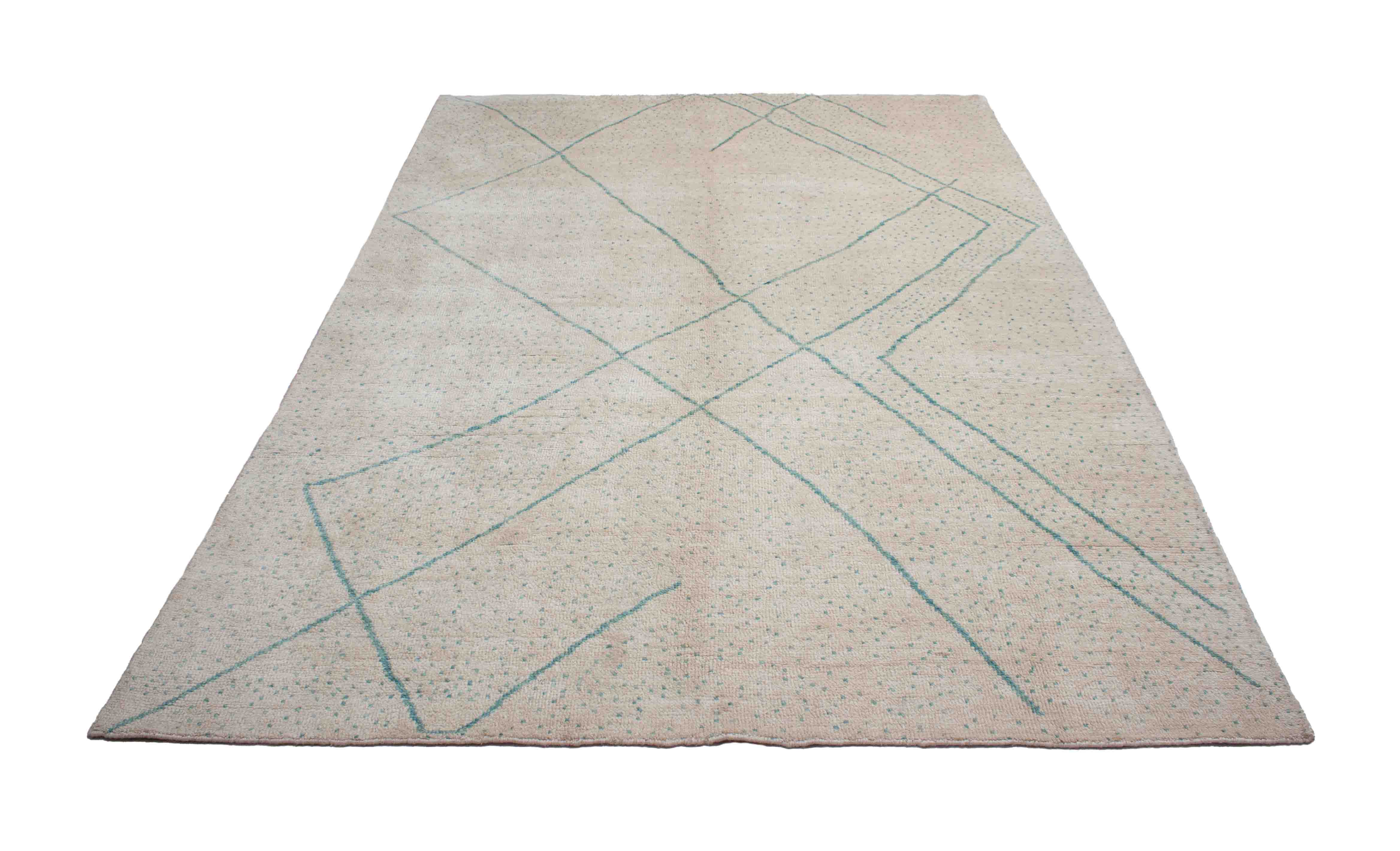
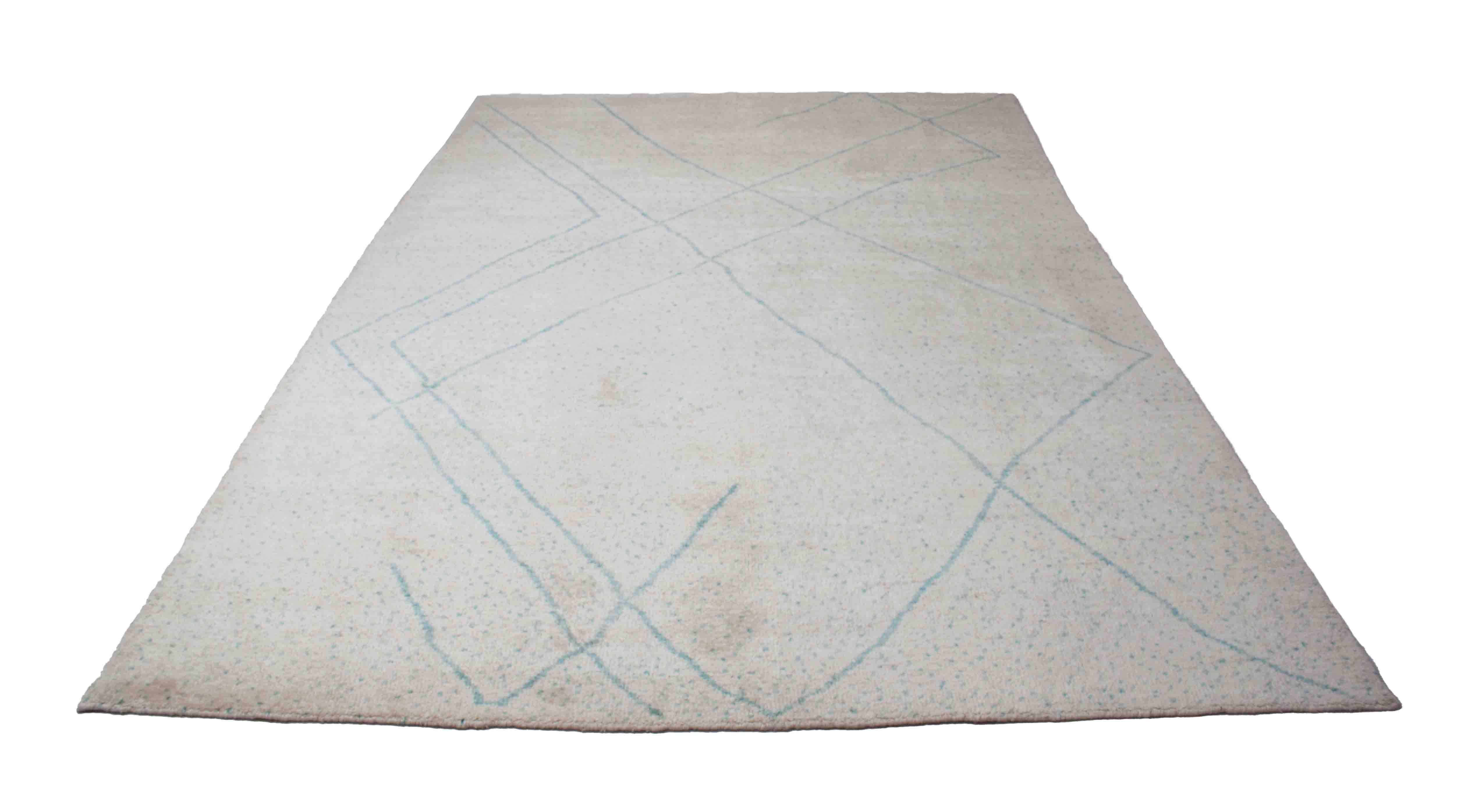
Mottled Beni Berber, cream white
| Origin |
|
| Dimensions | 292 cm x 198 cm (= 5.78 m²) |
| Construction | hand-knotted |
| Material |
Pile: wool (hand-spun, natural dyes)
|
| knots per m²2 | 90.000 |
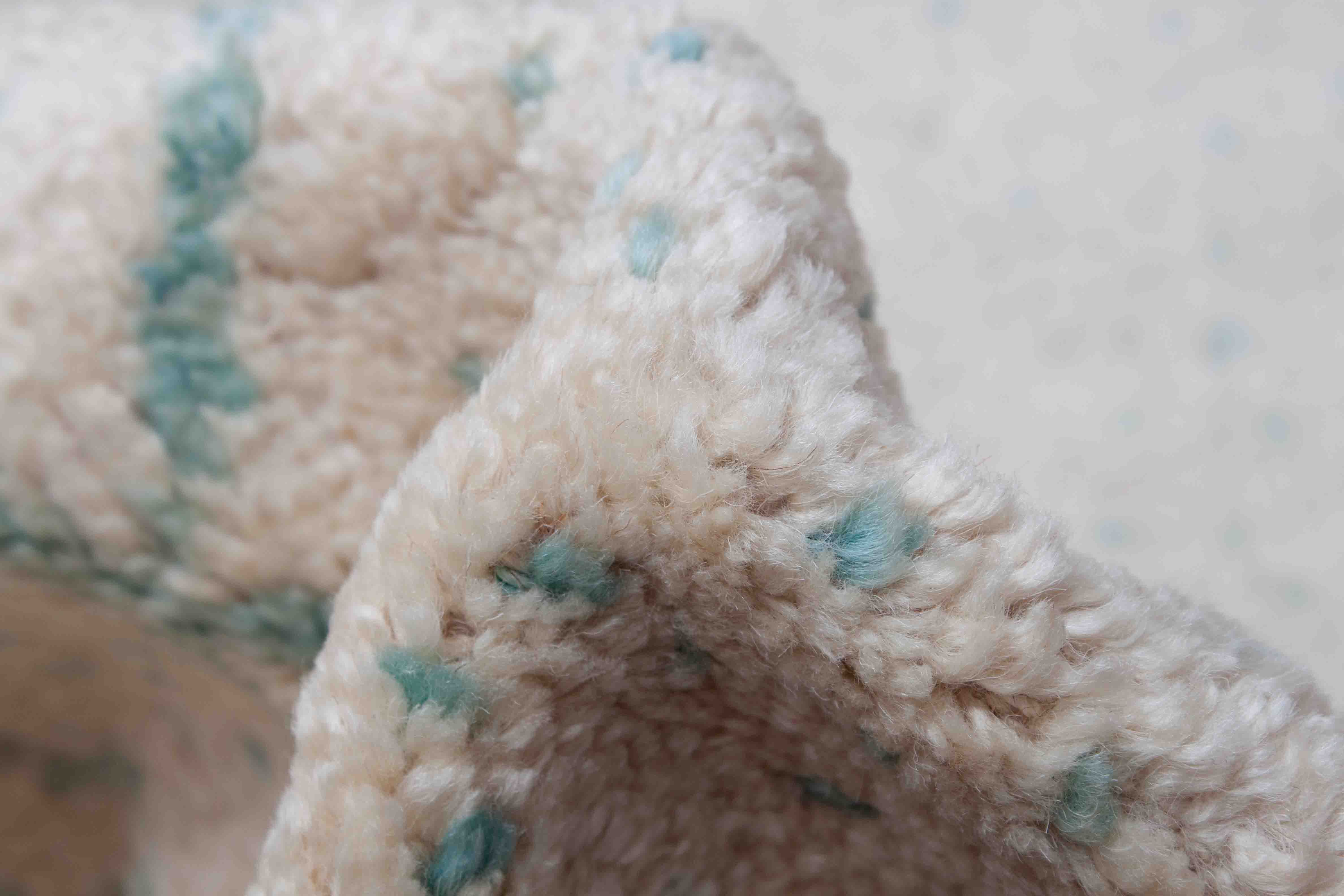
| Pile height | 10mm |
| Condition | new |
| Colour | Cream white, light blue |
| Edition | one-of-a-kind piece |

Origin
Berber rugs were traditionally knotted for use in the home. The weavers, mostly women, played freely and spontaneously with shapes and colours – without any pattern templates – following their own ideas and their individual intuition. That is why the traditional pattern of Moroccan Berber rugs typically consists of geometric, sometimes colourful, abstract shapes and lines on monochrome backgrounds. Designers such as Alvar Aalto, Le Corbusier, Charles and Ray Eames, Frank Lloyd Wright, Marcel Breuer and Arne Jacobsen prized the naive, clear design of these high-pile Moroccan nomad rugs. Their powerful artistic expression has an extraordinary presence and makes Berber rugs quite unlike anything else – even leaving aside how wonderfully soft they feel.
Pattern
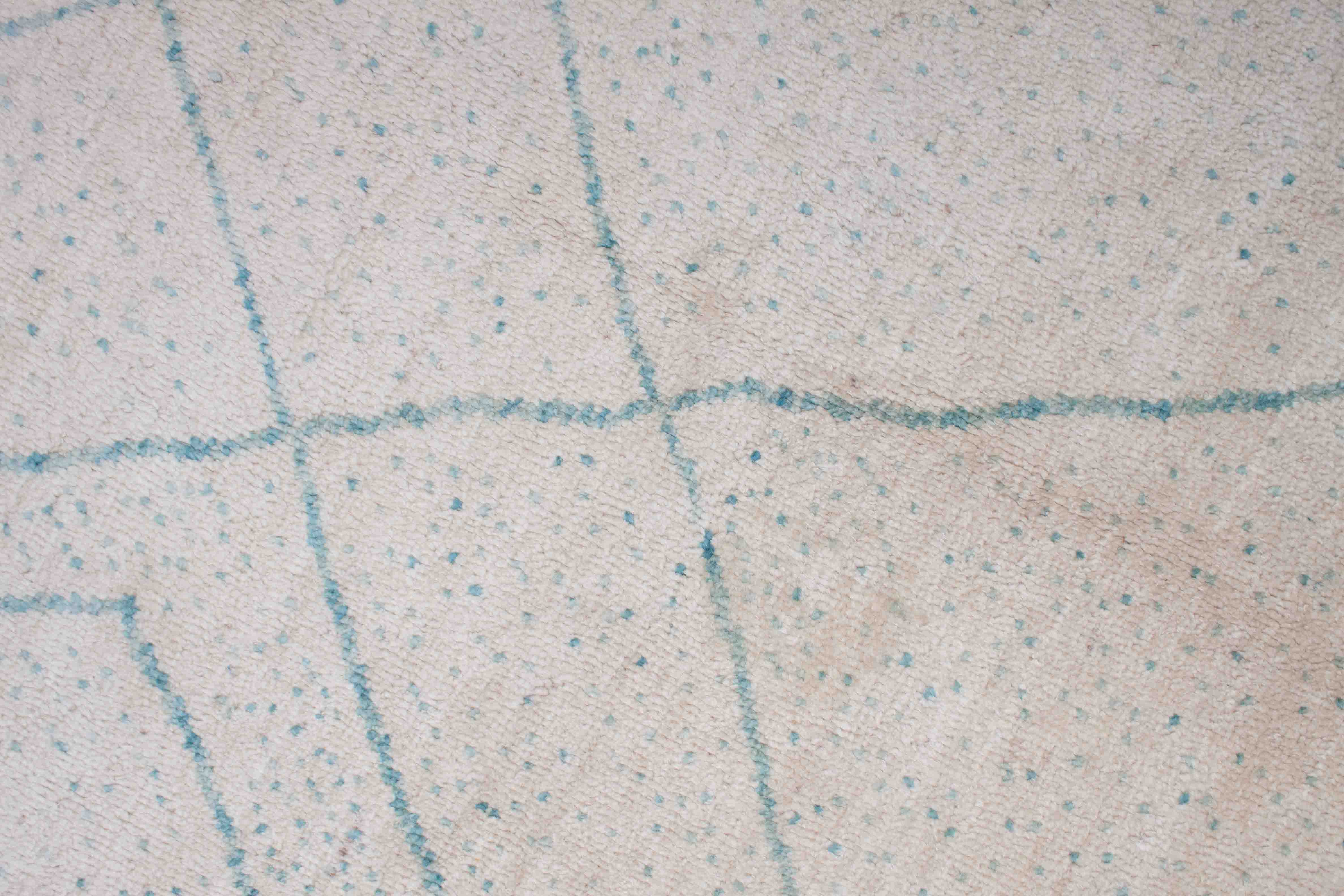
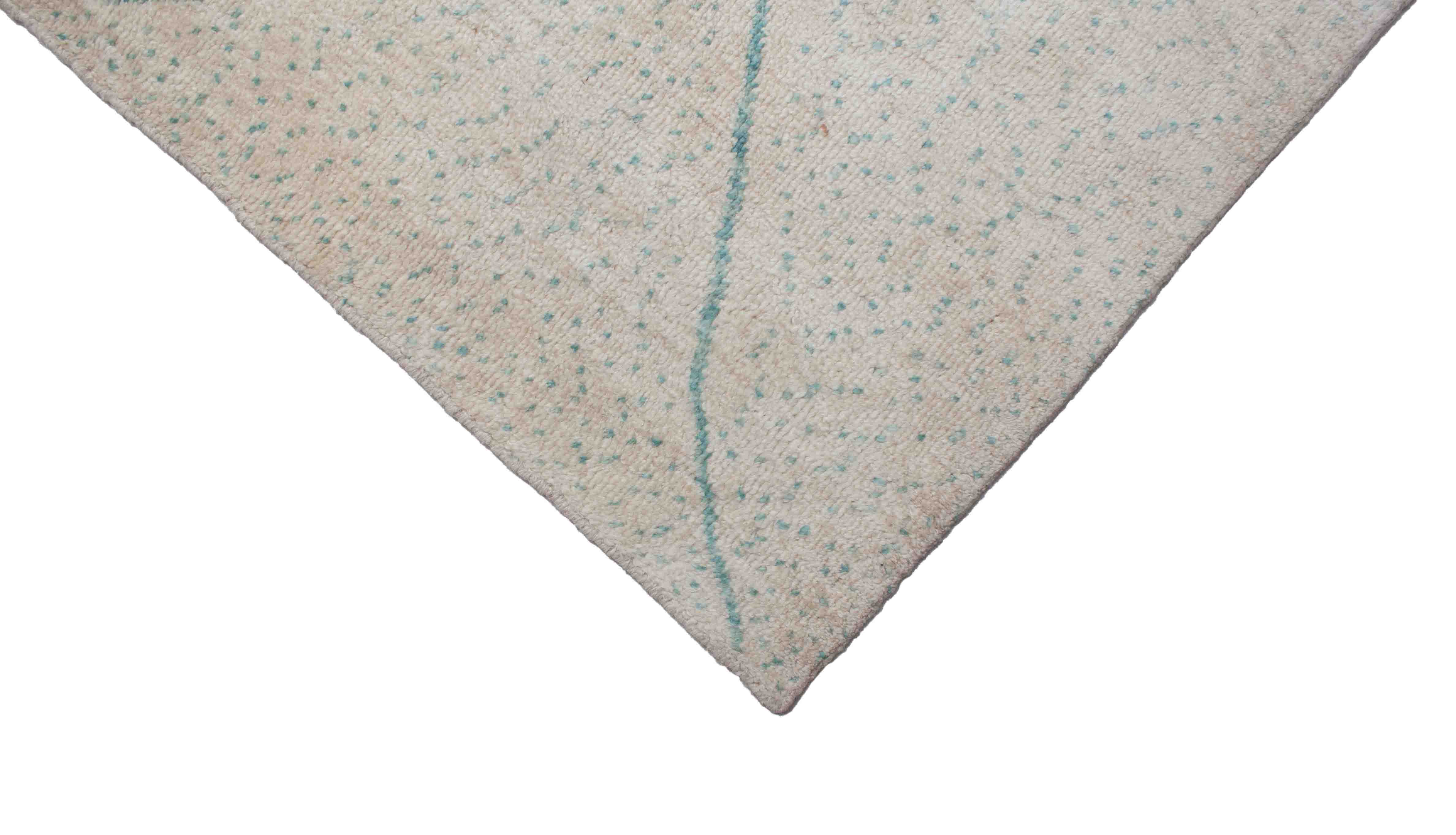
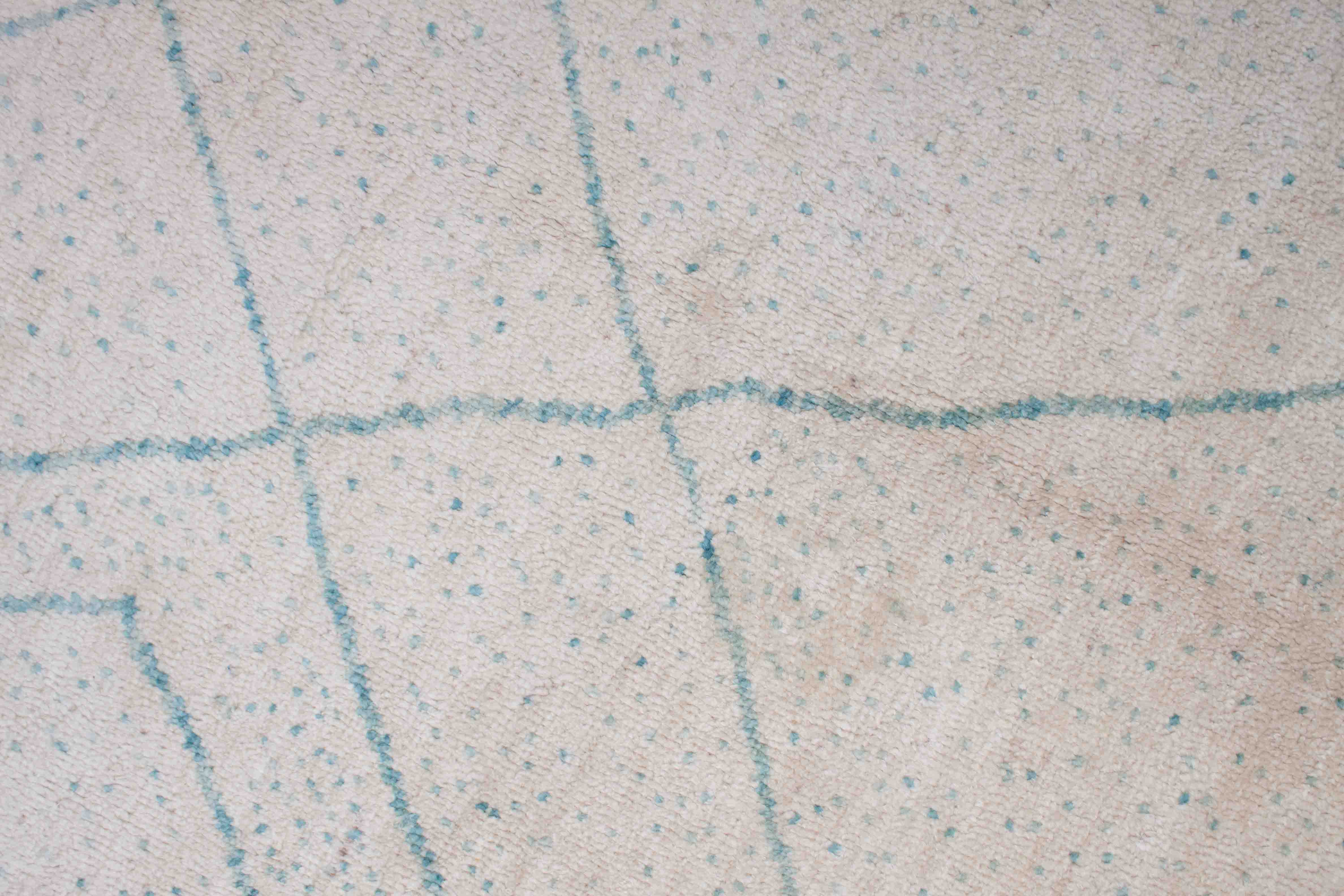
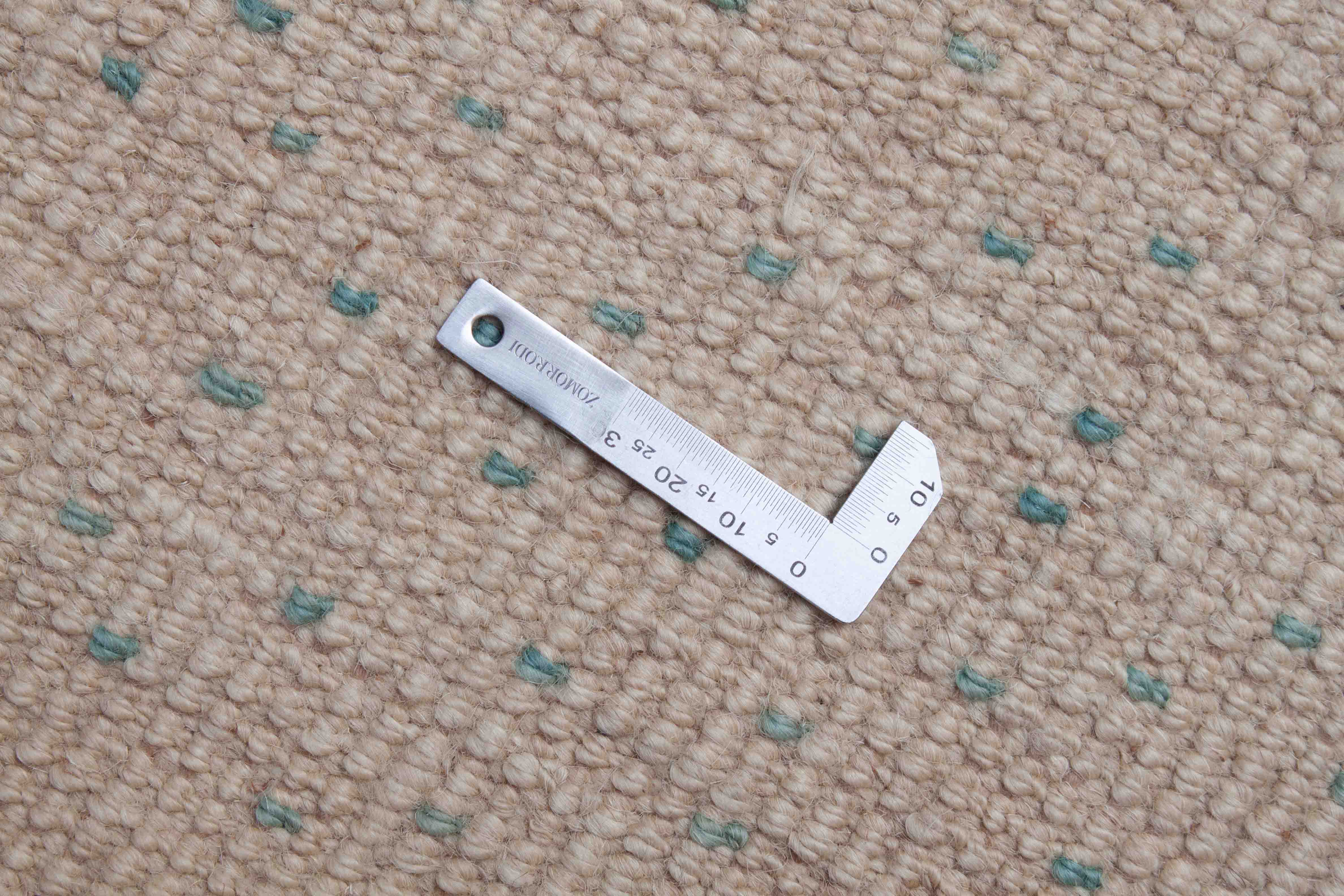
The surface of this Beni Berber has a mottled look. The shifts in tone and the light-and-dark shading of the pile yarn make the colours shimmer and keep the rug forgiving of dirt. These so-called colour jumps, known as abrash, give the rug a livelier feel. The mottling comes about because the wool of this Beni Berber was hand-spun. During dyeing, the natural dyes are taken up unevenly.
The clear, abstract design of this contemporary rug speaks especially to people who love simple, modern interiors and architecture. The design idea for this rug comes from Europe. Free from the rules of traditional rug patterns, it was developed for Western art and interior styles. That is not an entirely new development, though. The roots of European rug design go back to Art Deco rugs, which were made to Western specifications between the late twenties and the fifties.
The background of this Beni Berber is cream white.
Material
This hand-knotted Berber rug has a dense, fairly high pile. That makes it very cosy and hard-wearing. Traditionally, Berber rugs – like Lori or Gabbeh rugs – were used for sleeping on. They invite you to sit and sprawl in the living room, but they are also excellent for hallways and dining areas. The warp and weft yarns of this Berber rug are cotton; the pile is wool that is dyed with natural dyes and hand-spun. The hand-spun wool is what gives the Loris their soft surface. The weft and warp threads of this Beni Berber are cotton. This versatile material is tear-resistant and elastic and therefore particularly well suited to a hard-wearing foundation.
A note on the photos
Child labour? No thanks.
Child labour? No thanks. Children belong in school, not at a knotting frame or a loom. For us it therefore goes without saying that we only offer rugs made under fair conditions and without child labour.
We attach particular importance to humane working conditions and tolerate no child labour at any of our producers. Thank you for helping us to ensure fair conditions.
That is why we support the initiative Care & Fair against child labour in the rug trade.

Choose options
|
|
1-3 Werktage Lieferzeit (deutschlandweit) |
|
|
14 Tage Probelegen |
|
|
Kostenlose Lieferung & Retoure innerhalb der EU |