
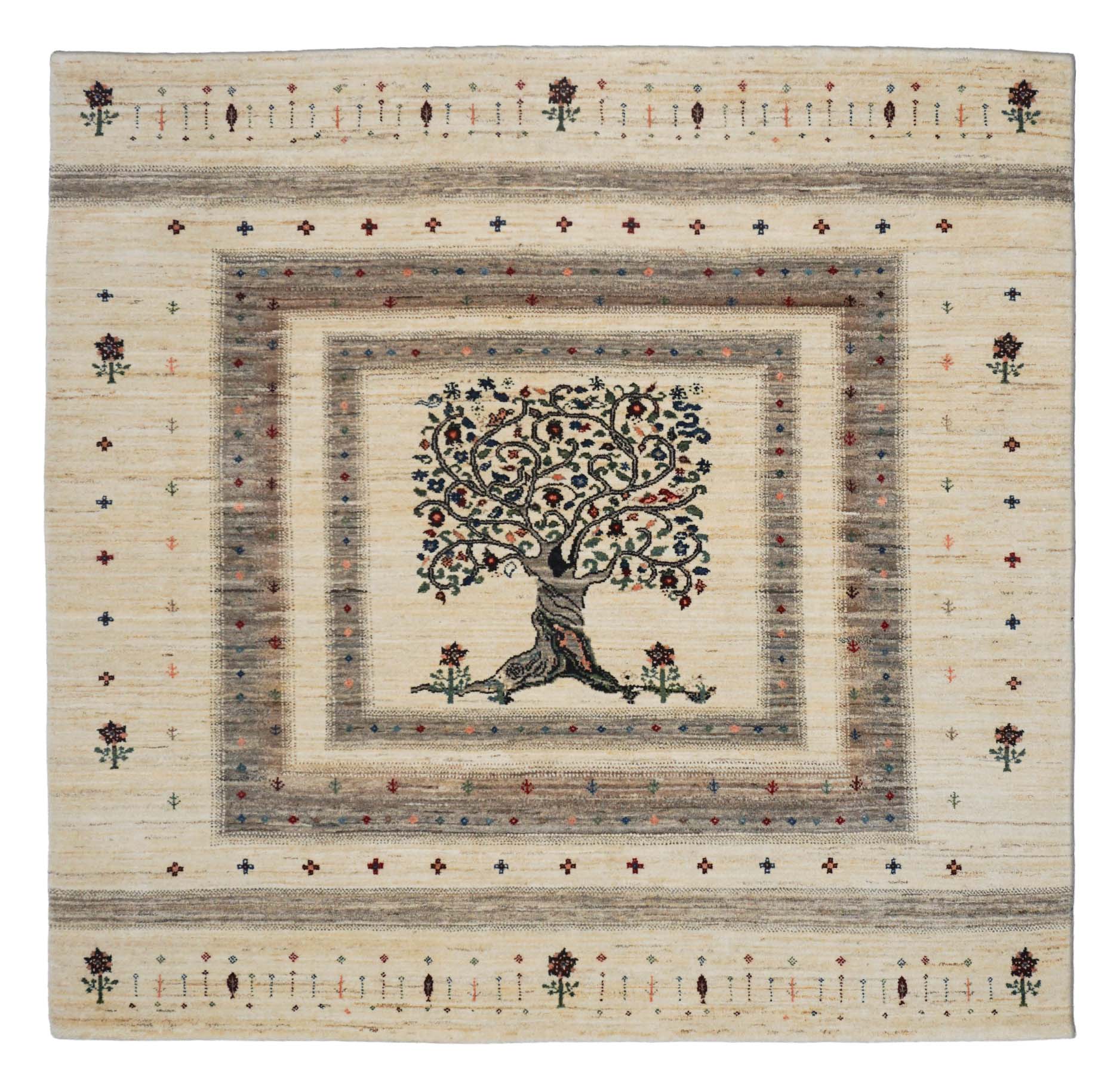
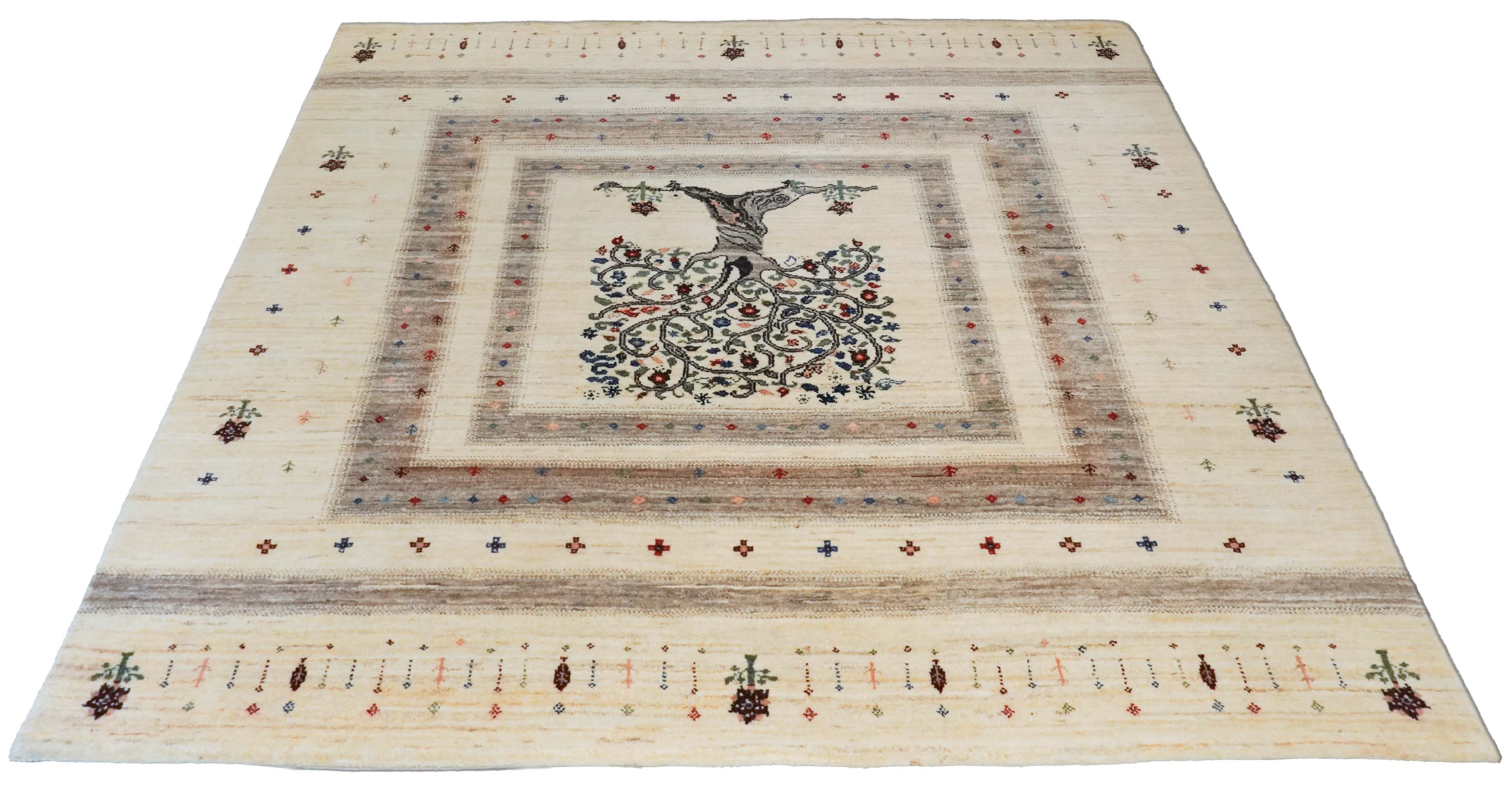
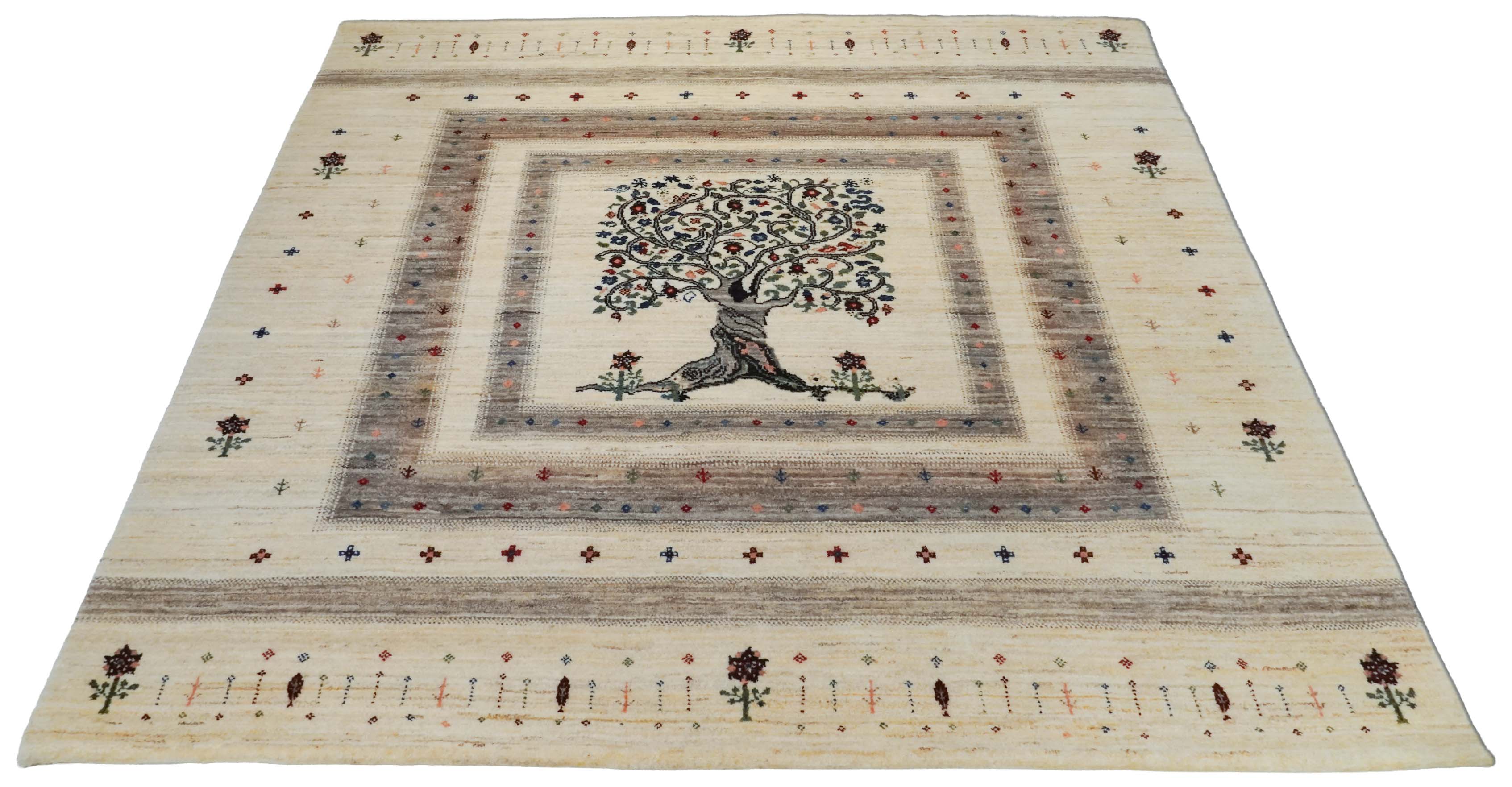
Indian Gabbeh | 200 x 193 cm | Nr. Z-4599

|
14 Tage Probelegen |

|
Kostenlose Lieferung & Retoure innerhalb der EU |
Mottled Indian Gabbeh, beige
| Origin |
|
| Dimensions | 200 cm x 193 cm (= 3.86 m²) |
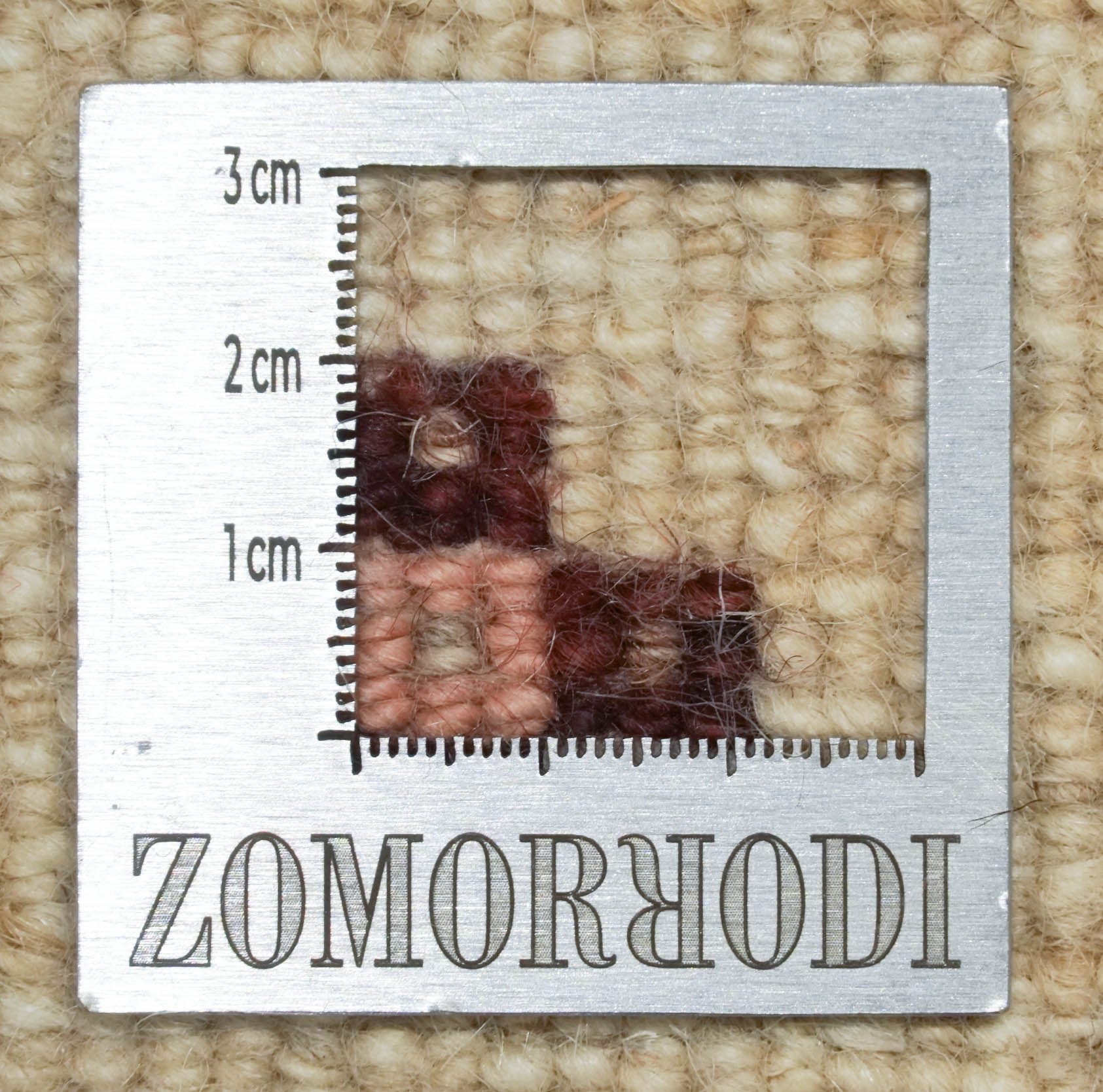
| Construction | hand-knotted |
| Material |
Pile: wool (hand-spun, natural dyes)
|
| knots per m²2 | 95.000 |
| Pile height | 15mm |
| Year of manufacture | 2026 |
| Colour | Beige, Light grey |
| Edition | one-of-a-kind piece |

Origin
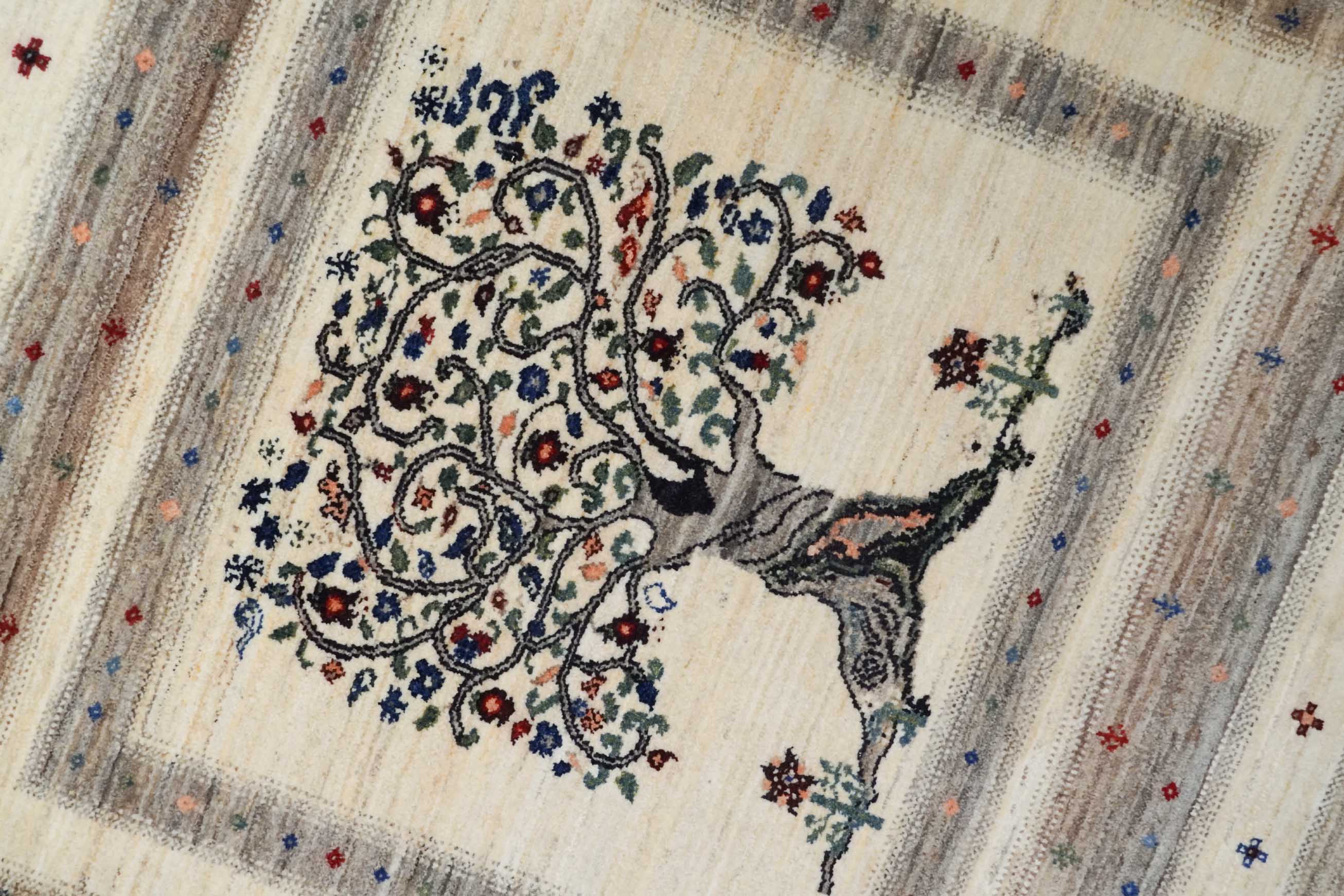
The pattern of this rug is inspired by the patterns of classic Gabbeh. This rug, however, was knotted in India.
Exactly when rug production began in India is unknown. The first rugs were probably made in India during the cultural flowering of the Mughal dynasty in the middle of the 16th century. In the middle of the 19th century, with the decline of the Mughal dynasty, Indian rug production fell into crisis. European companies whose sole aim was export to the West took the place of the traditional court workshops. Very similar rugs were produced in different towns and standardisation set in. Today the designs of hand-knotted Indian rugs can hardly be attributed to individual regions any more. Instead, the workshops have specialised in executing European and traditional Iranian designs adapted to Western taste. In terms of quality, rugs from India benefit from the long tradition of craftsmanship and the high quality of Indian materials. Gabbeh rugs are knotted by nomads who live in the province of Fars near the city of Shiraz. In Persian, Gabbeh is the name for high-pile rugs that were slept on. Classic Gabbeh have imaginative, naive geometric patterns and are very colourful. Modern Gabbeh today mostly come in plain and monochrome designs. Even now, though, you'll still find stylised motifs from the nomads' daily life in the rugs, such as goats, camels, dogs, plants or people. Gabbeh rugs usually have natural cream, brown and grey tones, but you can also find lively yellow, red or blue.
Pattern
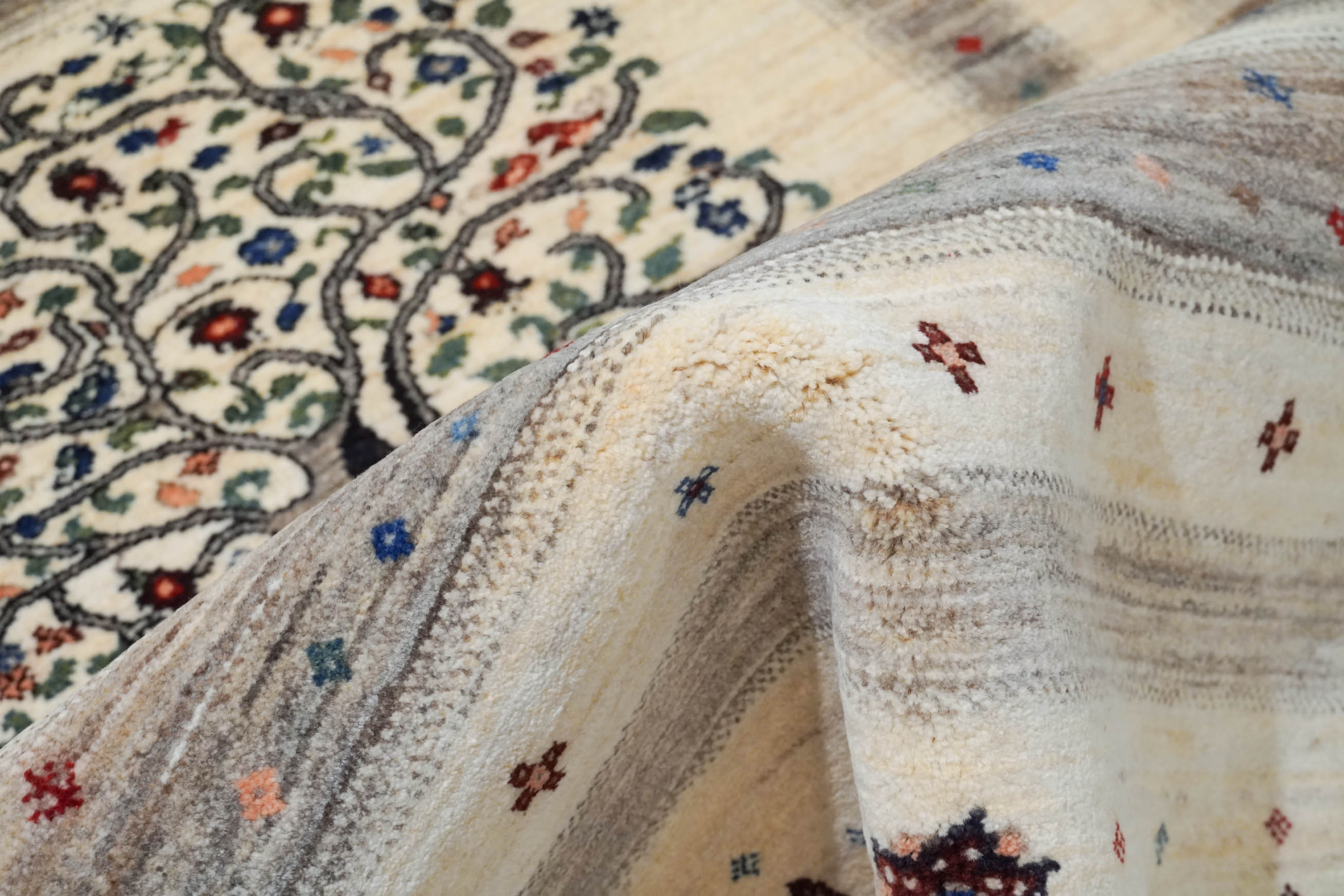
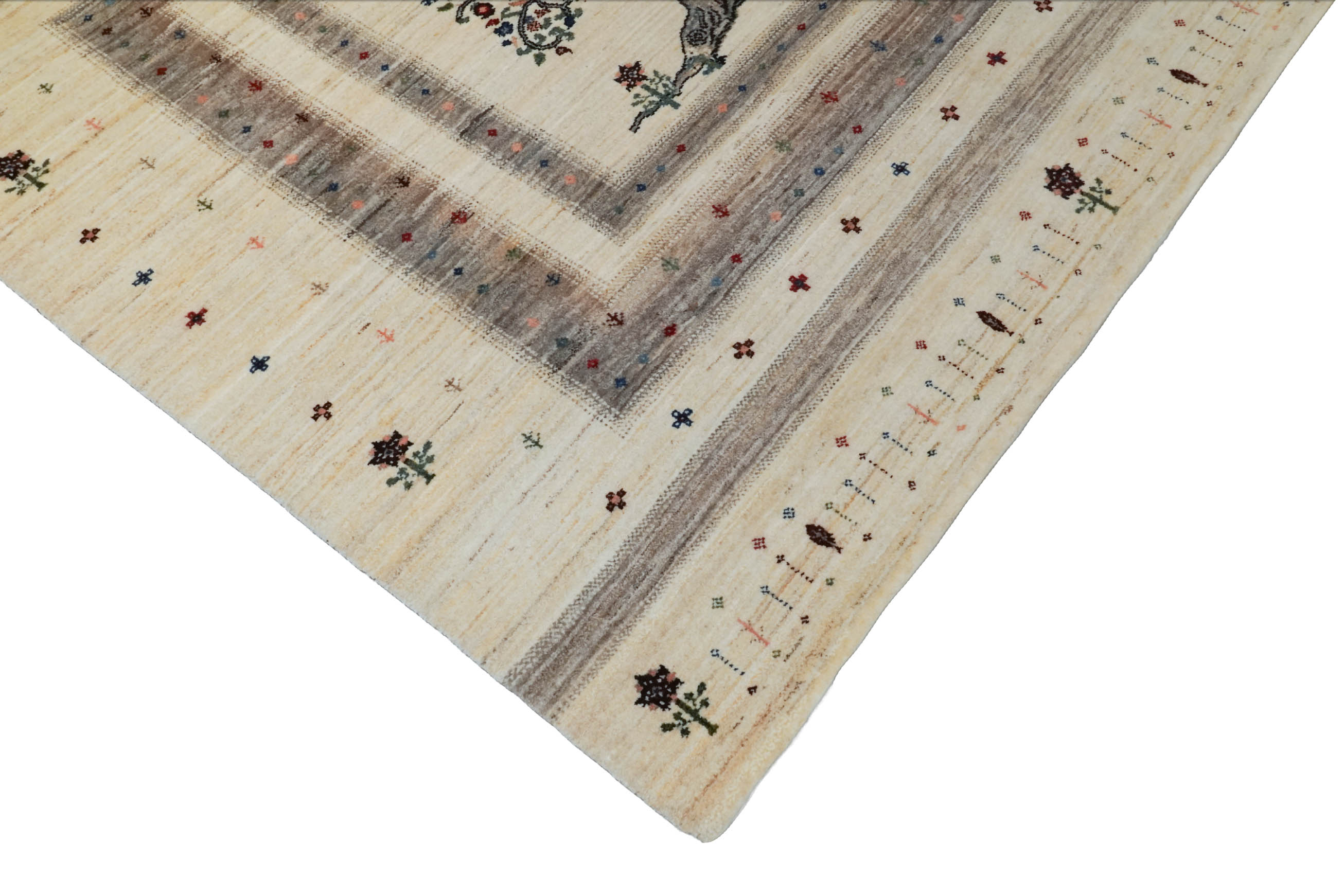
The surface of this Gabbeh has a mottled look. The shifts in tone and the light-and-dark shading of the pile yarn make the colours shimmer and help the rug hide soiling. These so-called colour shifts, known as abrash, give the rug a livelier character. The mottling occurs because the wool for this Gabbeh was hand-spun. During dyeing, the natural pigments are absorbed to varying degrees.
The background of this Gabbeh is beige.
Material
Gabbehs are knotted by hand from hand-spun wool and dyed with natural colours. The hand-spun wool gives the rugs a grainy yet soft surface. Traditionally, Gabbeh rugs were used for sleeping. They invite you to sit and lounge about in the living room, but they are also excellent in hallways and dining areas.
Hand-spun wool is always a little irregular. During dyeing, the natural dyes are absorbed to differing degrees. The rug looks livelier for it, with so-called abrash, colour shifts between lighter and darker shades. These changes in the shade of the pile yarn always run across the length of the Gabbeh and make the rug forgiving of dirt. The weft and warp threads of this Gabbeh are made of cotton. This versatile material is tear-resistant and elastic, which makes it especially suitable for a hard-wearing foundation.
A note on the photos
Child labour? No thanks.
Child labour? No thanks. Children belong in school, not at a knotting frame or a loom. For us it therefore goes without saying that we only offer rugs made under fair conditions and without child labour.
We attach particular importance to humane working conditions and tolerate no child labour at any of our producers. Thank you for helping us to ensure fair conditions.
That is why we support the initiative Care & Fair against child labour in the rug trade.

Choose options
|
|
14 Tage Probelegen |
|
|
Kostenlose Lieferung & Retoure innerhalb der EU |