Sarough Mir | 60 x 40 cm | Nr. Z-4636

|
14 Tage Probelegen |

|
Kostenlose Lieferung & Retoure innerhalb der EU |
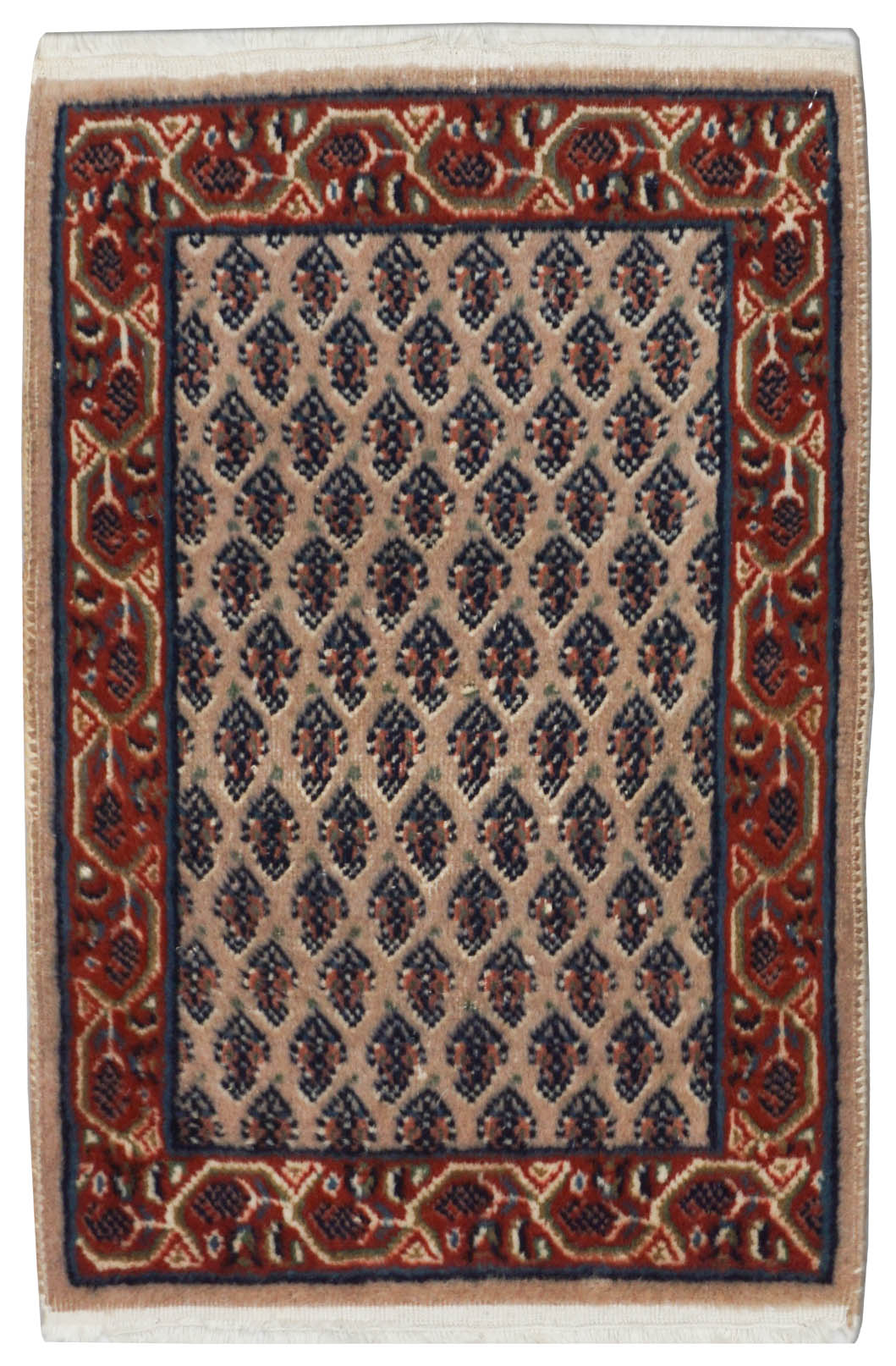
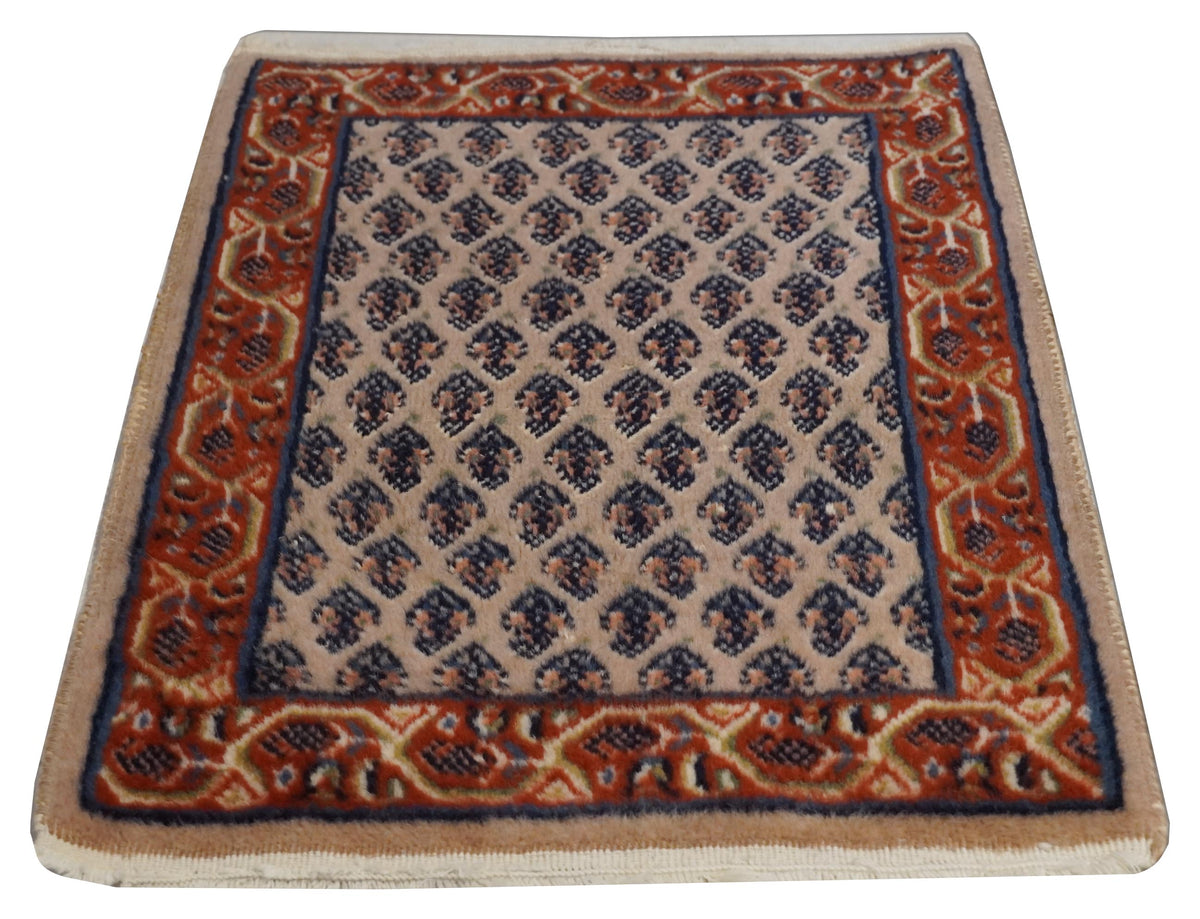
Sarough Mir, light brown with border and all-over pattern (finely detailed)
| Origin |
|
| Dimensions | 60 cm x 40 cm (= 0.24 m²) |
| Construction | hand-knotted |
| Material |
Pile: wool (hand-spun, natural dyes)
|
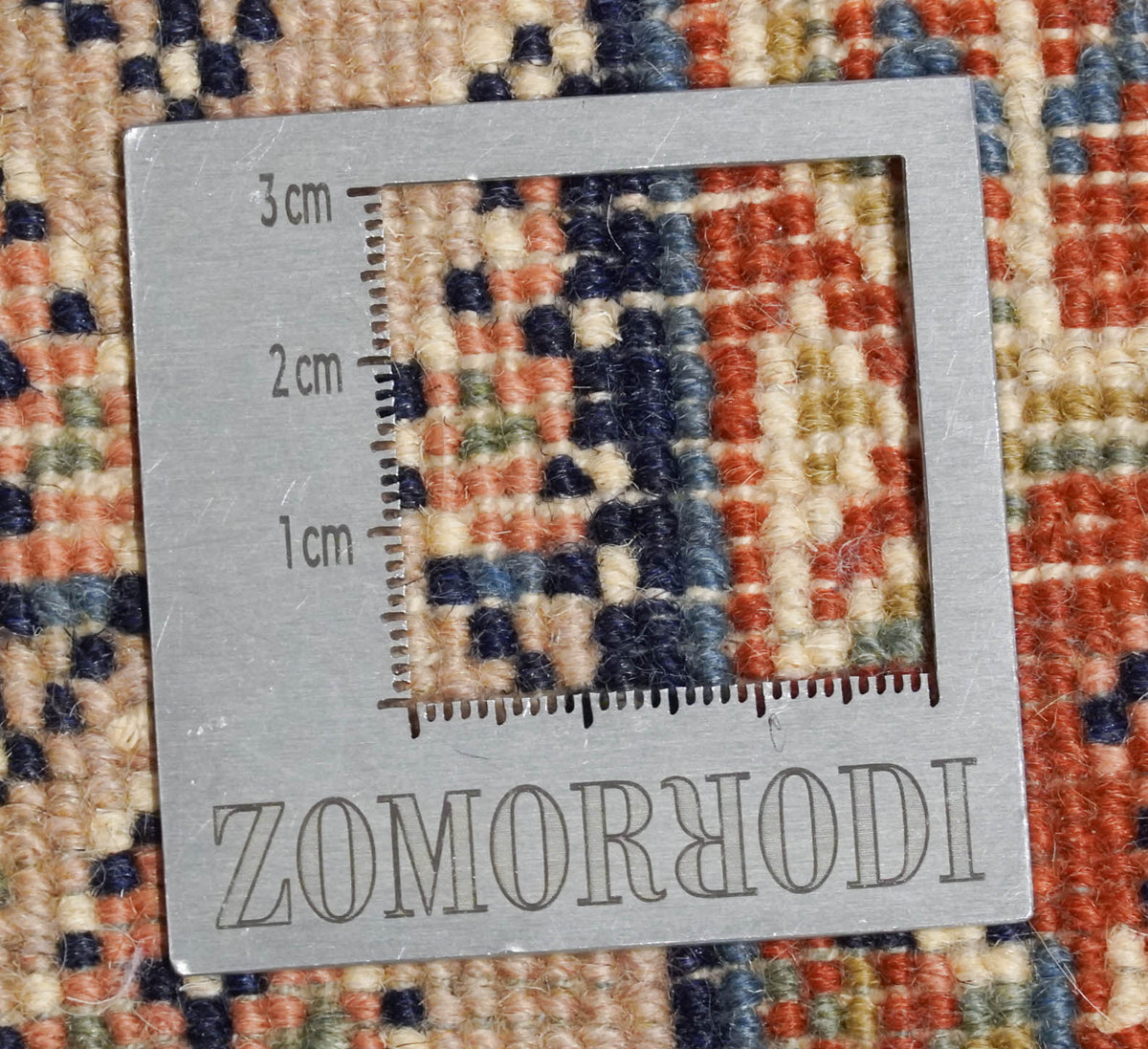
| knots per m²2 | 160.000 |
| Pile height | 5mm |
| Year of manufacture | 2005 |
| Colour | Light brown, rust red |
| Edition | one-of-a-kind piece |
Origin
This rug comes from Sarough (also written Sarouk, Saruk or Sarogh). Sarough is one of Iran's best-known rug-knotting regions. Situated in the west Persian province of Aarak, it takes in the provenances Arak, Djozan, Ghiasabad, Mahal, Malayer, Mohajeran, Sultanabad and Wiss. In Sarough, Persian patterns of every kind are knotted, in some cases to the customer's own specifications. Typical of this type of rug is the very good wool quality of the pile, as the new wool comes from the Persian highlands. The foundation – warp and weft – is, however, usually cotton. In old and antique rugs you will often find a blue weft thread. The knotting is very fine and the pile relatively high.
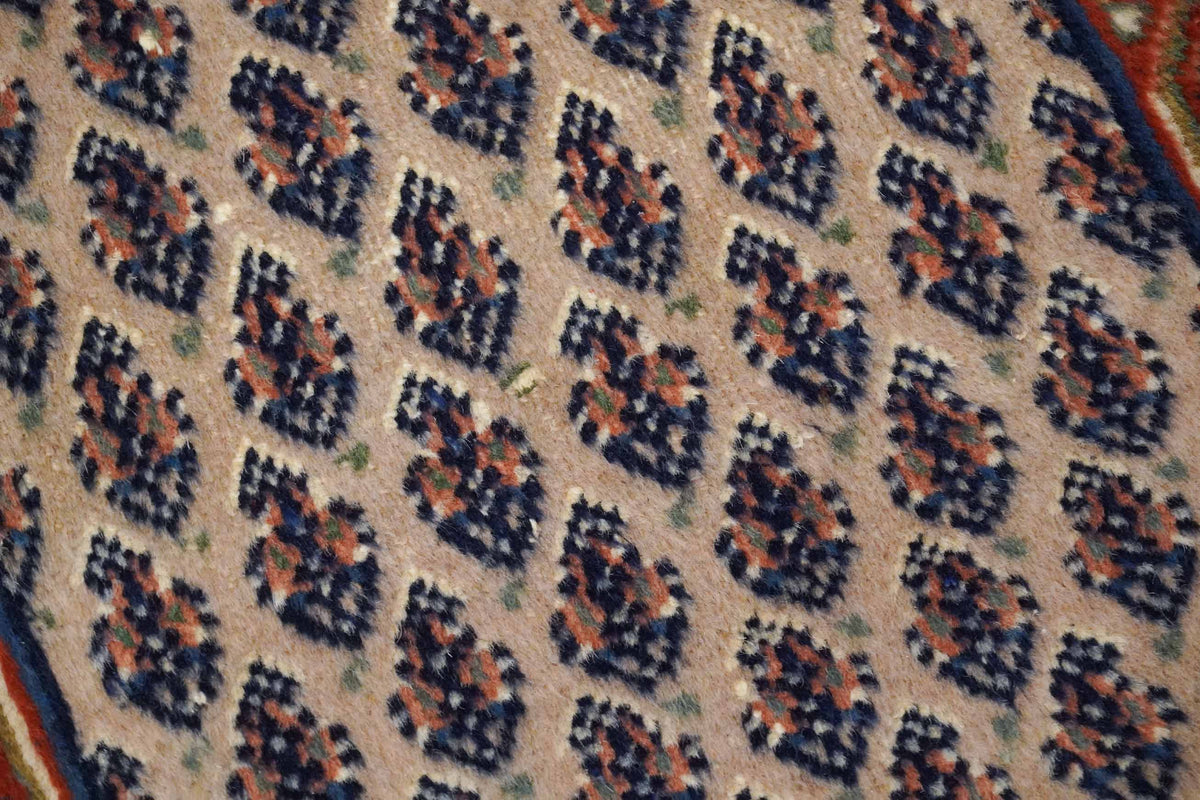
Rugs like this one are known as Sarough Mir. Framed by a border, the all-over patterned field is adorned with the so-called Mir-i-Boteh pattern. The Mir-i-Boteh pattern consists of a curved almond motif that stands upright and forms a repeating row. Rendered naturalistically or abstractly, it is instantly recognisable by its bent tip. The shape has often been described as a flame – linked to the fire cult of the Parsees, followers of Zarathustra's teachings – or as a bent palm leaf. It is considered likely that the pattern was inspired by cypress trees. In Europe, the almond-shaped element of the pattern is known as the paisley pattern.
Pattern
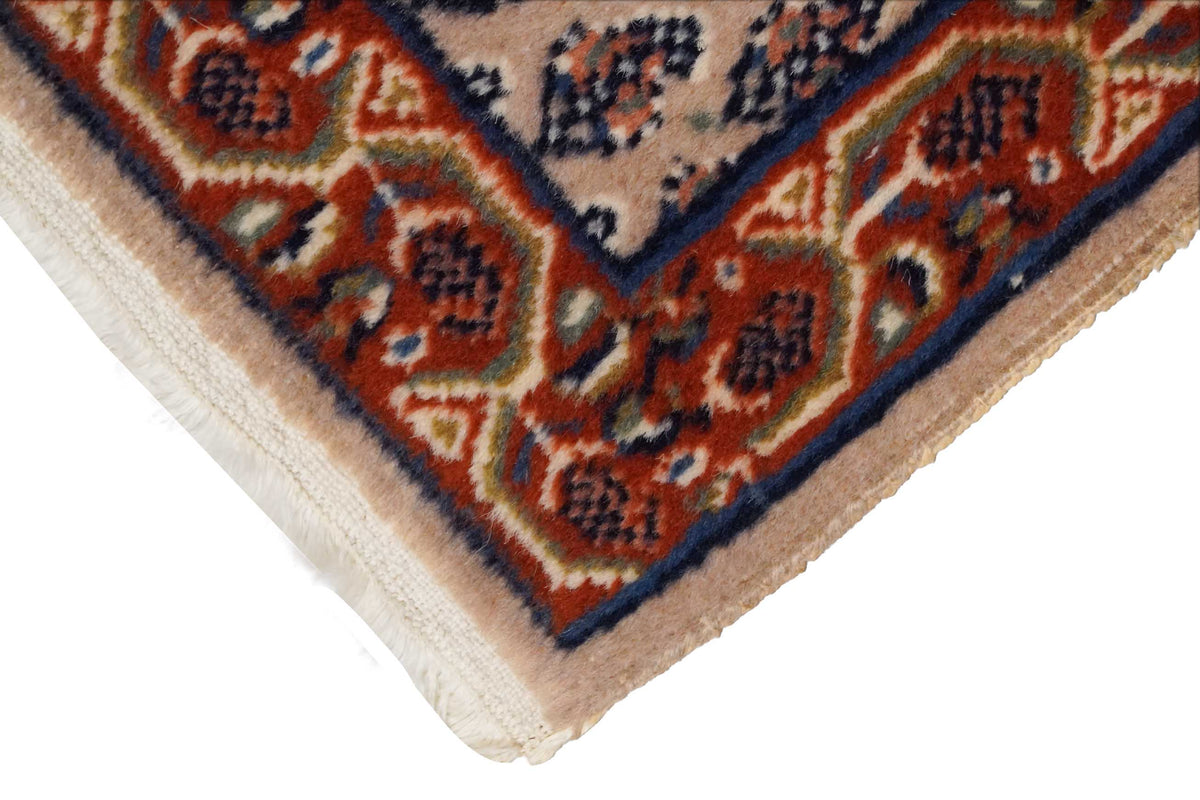
The ornate border forms a wonderful contrast with the centre and shapes the transition at the edge of the rug.
This Sarough Mir has an enormous amount of character. The intense, richly detailed pattern is almost hypnotic to look at. The repeating elements in the central field of this Sarough Mir rug have no specific centre (what is known as a repeat pattern). The recurring pattern feels calming without ever becoming dull. Rugs with this repeat pattern are also described as all-over patterned.
The background of this Sarough Mir is light brown. The border is kept in rust red.
Condition
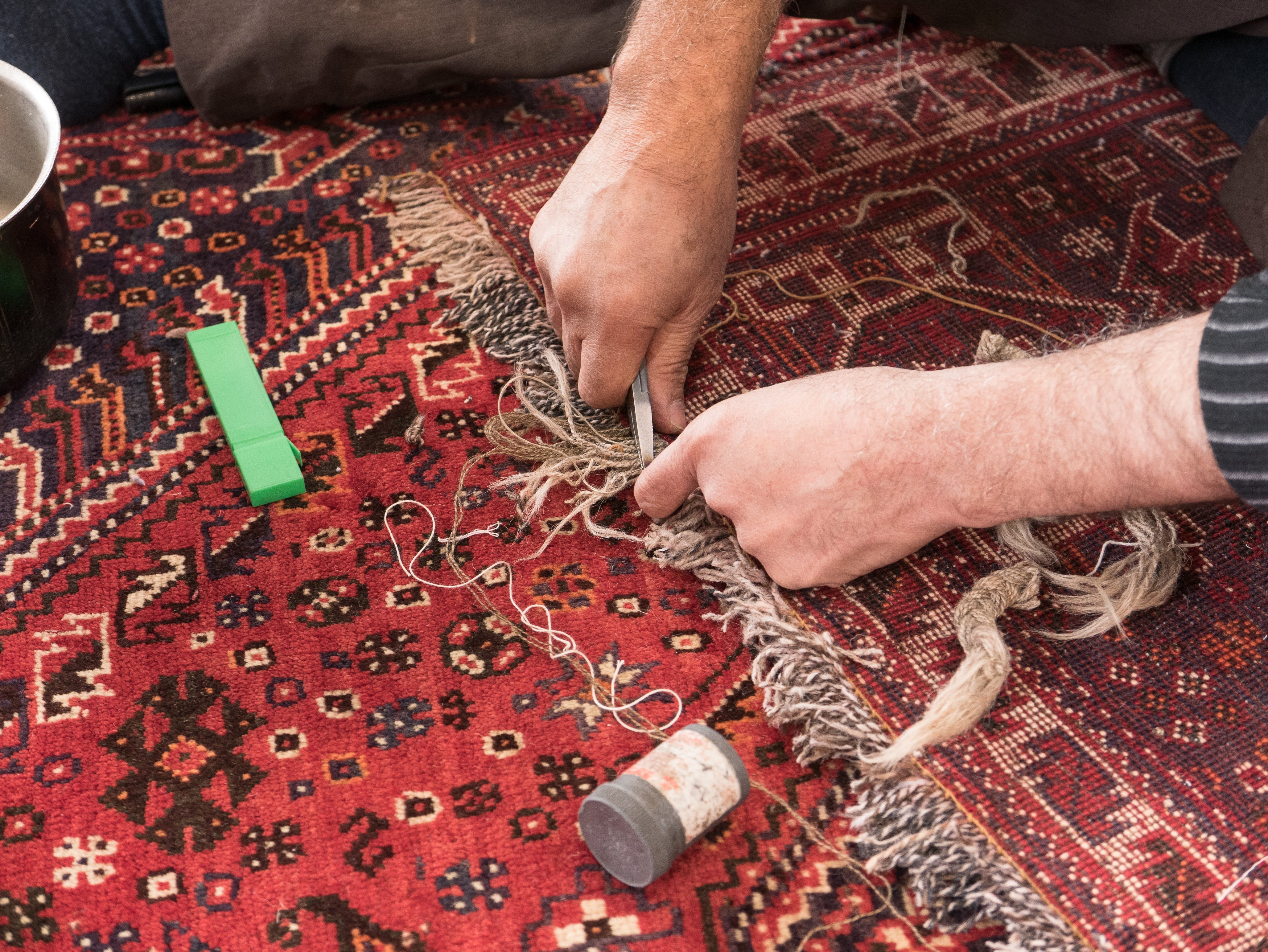
You are not the first to take a liking to this Sarough Mir. It had owners before you who valued it and used it. The fringes could do with a repair.The edges are damaged in parts. The pile is lightly worn. It was hand-knotted around 2005. We have cleaned it thoroughly and lovingly restored it. That is why – despite its age – it is in very good condition.
Material
The technique used to make the materials for the pile of this Sarough Mir is over 200 years old. The wool was dyed with natural colours and spun by hand. Dyeing with natural or plant-based colours is more complicated, more costly and more time-consuming than dyeing with chemical dyes. For a luminous red, for example, you need around one kilo of ground madder root as dyestuff per kilo of wool. For a strong yellow that is not too pale, it even takes two kilograms of the dyestuff weld per kilo of wool. Spinning the wool is time-consuming and labour-intensive as well. On top of that, fewer and fewer people still master spinning wool by hand.
But the effort is worth it: dyeing with natural colours lets the high-quality wool keep its natural lanolin content. Wool that is dyed with natural colours and spun by hand produces fascinating, shimmering patterns. The charm of hand-spun wool, with its slight irregularities and natural shades, comes into its own as a contrast in modern interiors, but just as much in rooms furnished in a more traditional or country-house style. The weft and warp threads of this Sarough Mir are made of cotton. This versatile material is tear-resistant and elastic, which makes it especially suited to a hard-wearing foundation weave.
A note on the photos
Child labour? No thanks.
Child labour? No thanks. Children belong in school, not at a knotting frame or a loom. For us it therefore goes without saying that we only offer rugs made under fair conditions and without child labour.
We attach particular importance to humane working conditions and tolerate no child labour at any of our producers. Thank you for helping us to ensure fair conditions.
That is why we support the initiative Care & Fair against child labour in the rug trade.

Choose options
|
|
14 Tage Probelegen |
|
|
Kostenlose Lieferung & Retoure innerhalb der EU |