
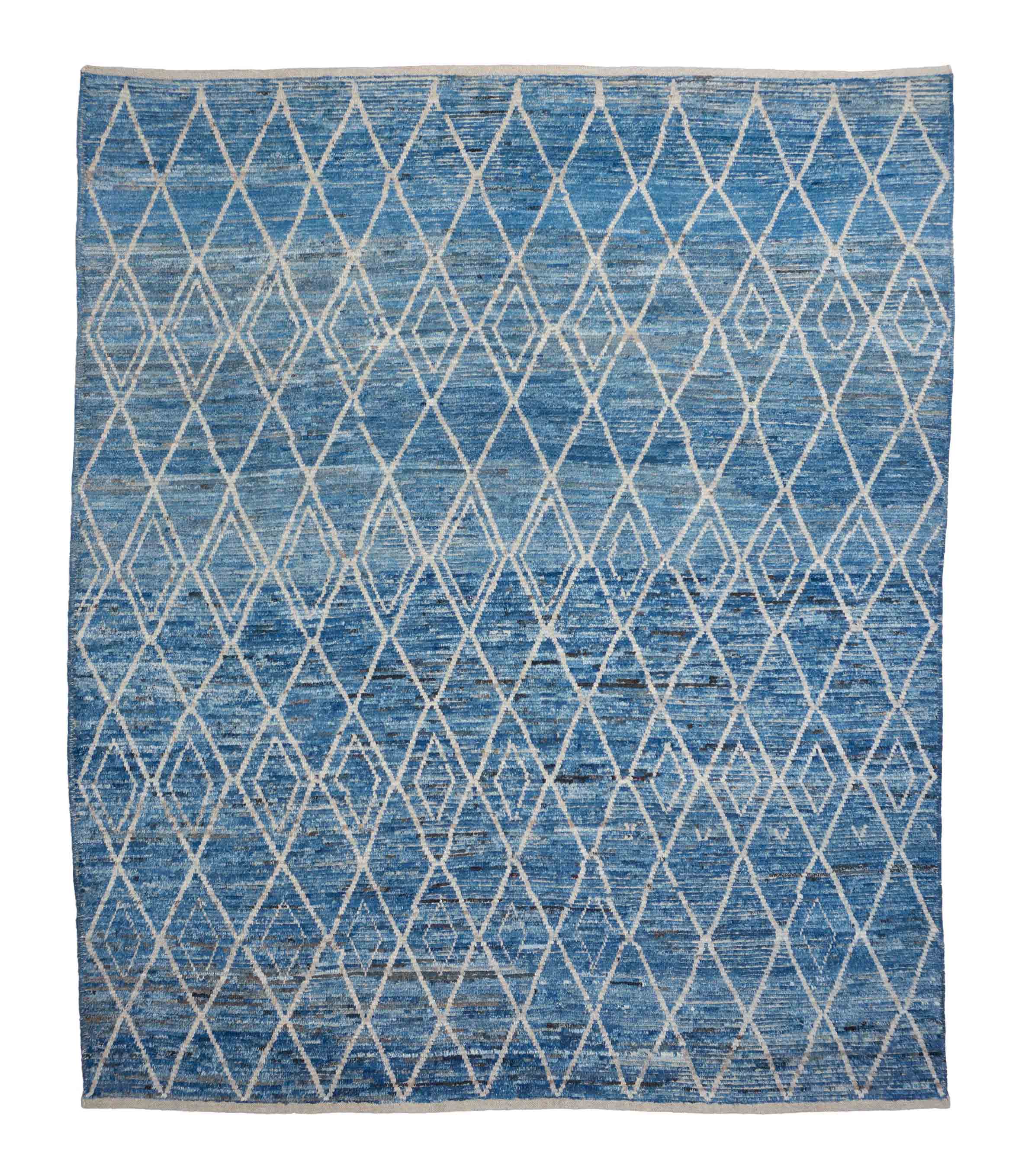
Beni Berber | 301 x 254 cm | Nr. Z-2102

|
1-3 working days delivery time (within Germany) |

|
14-day home trial |

|
Free delivery & returns within the EU |
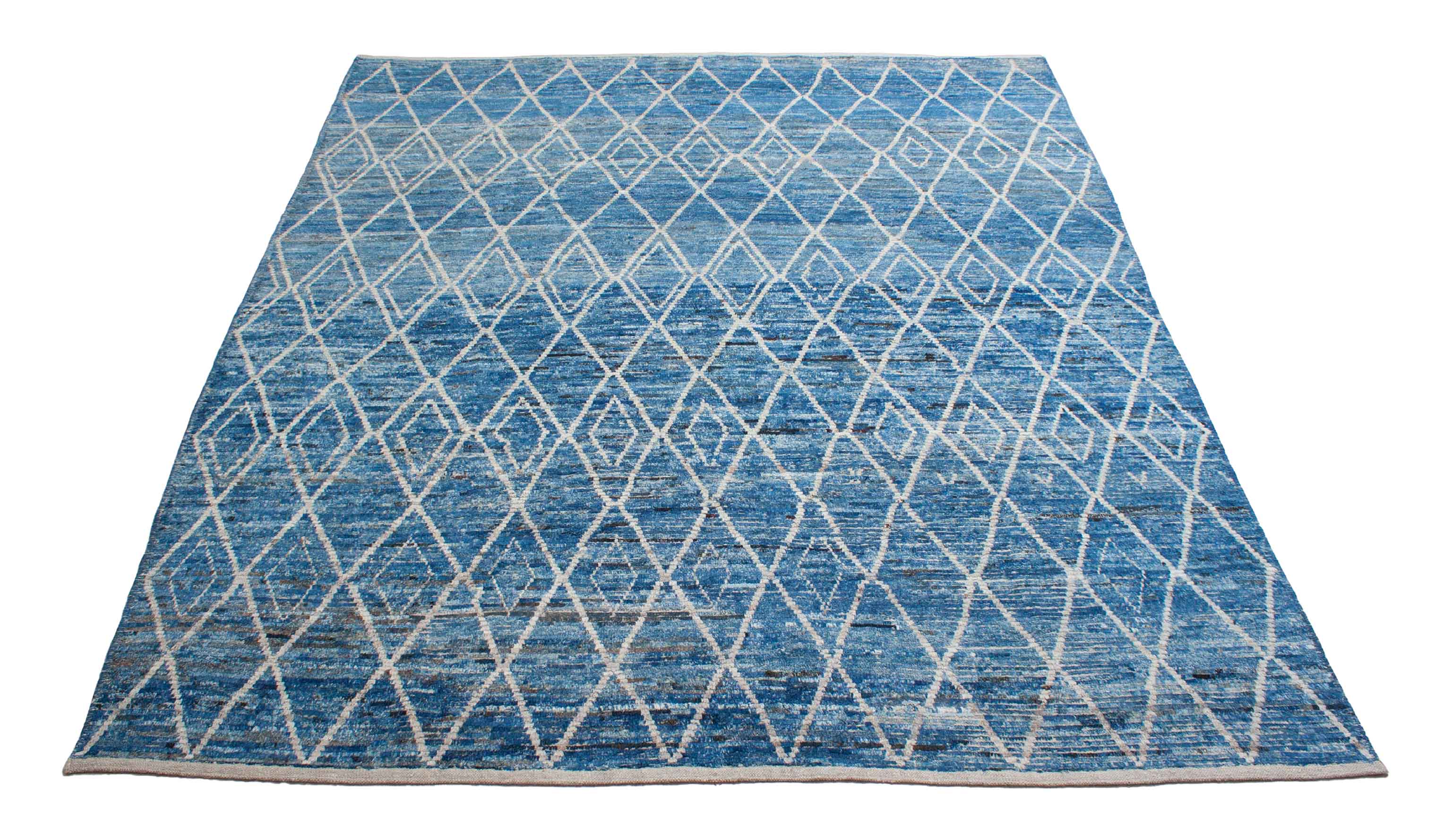
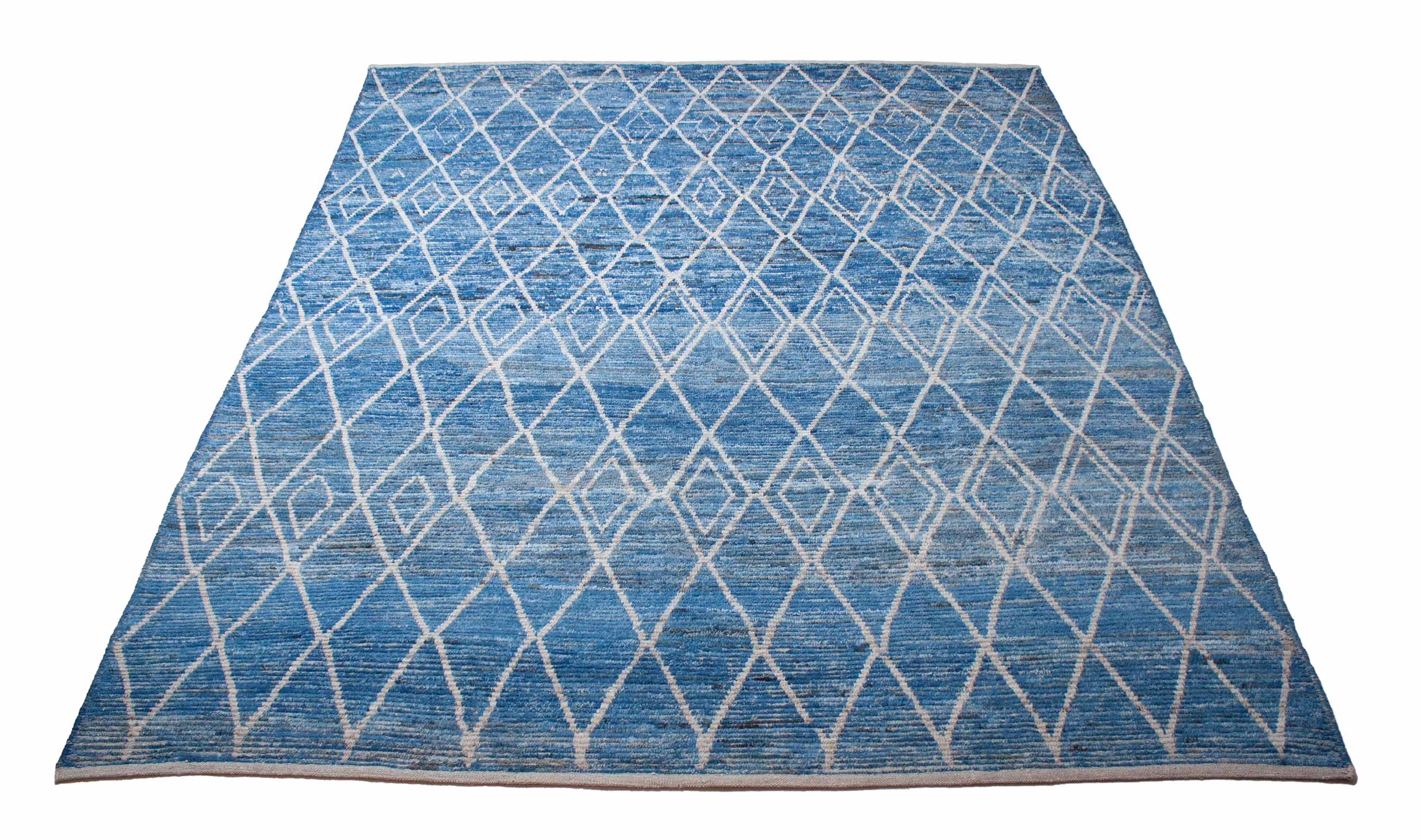
Geometric Beni Berber, dark blue
| Origin |
|
| Dimensions | 301 cm x 254 cm (= 7.65 m²) |
| Construction | hand-knotted |
| Material |
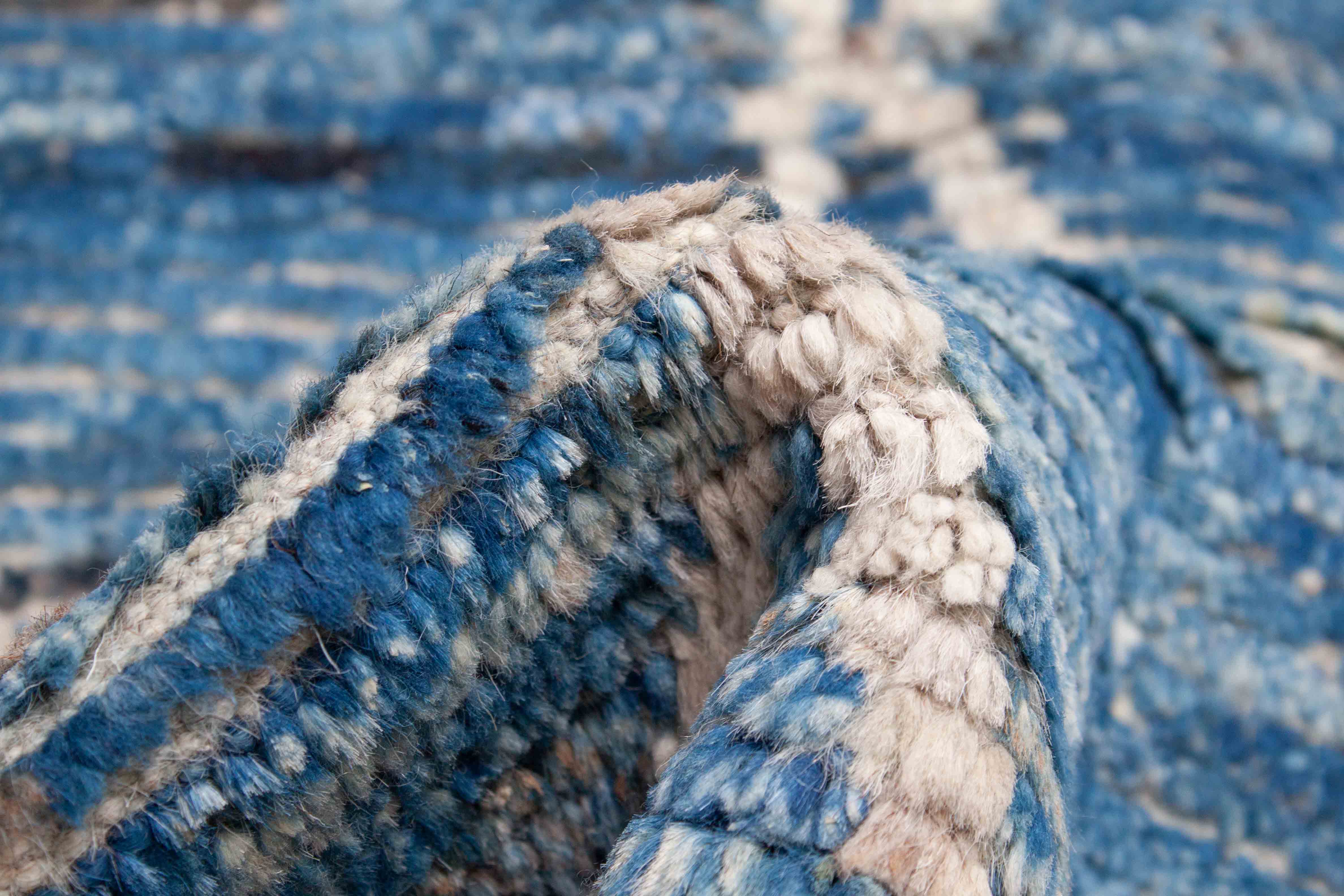
Pile: wool (hand-spun, natural dyes)
|
| knots per m²2 | 120.000 |
| Pile height | 5mm |
| Condition | new |
| Colour | Dark blue, Beige |
| Edition | one-of-a-kind piece |

Origin
Berber rugs were traditionally knotted for use in the home. The weavers, predominantly women, played freely and spontaneously with shapes and colours – without any pattern templates – following their own ideas and their individual intuition. That is why the traditional pattern of Moroccan Berber rugs typically consists of geometric, sometimes colourful, abstract shapes and lines on monochrome backgrounds. Our Beni Berber rugs are inspired by these traditional patterns.
Architects and designers such as Alvar Aalto, Le Corbusier, Charles and Ray Eames, Frank Lloyd Wright, Marcel Breuer and Arne Jacobsen admired the naive, clear design of high-pile Moroccan nomad rugs. That powerful, artistic expression gives them an extraordinary presence and makes Berber rugs one of a kind – quite apart from how soft they feel underfoot.
Pattern
The abstract, geometric composition is what gives this Beni Berber its understated elegance. The pattern flatters the design of the room and never draws attention away from the furniture, the décor or the architectural details. It creates a pleasant atmosphere without dominating the style of the room.
The repeating elements of this Beni Berber rug have no particular centre. The recurring repeat pattern feels calming without ever being dull. Rugs with a repeat pattern are also described as all-over patterned.
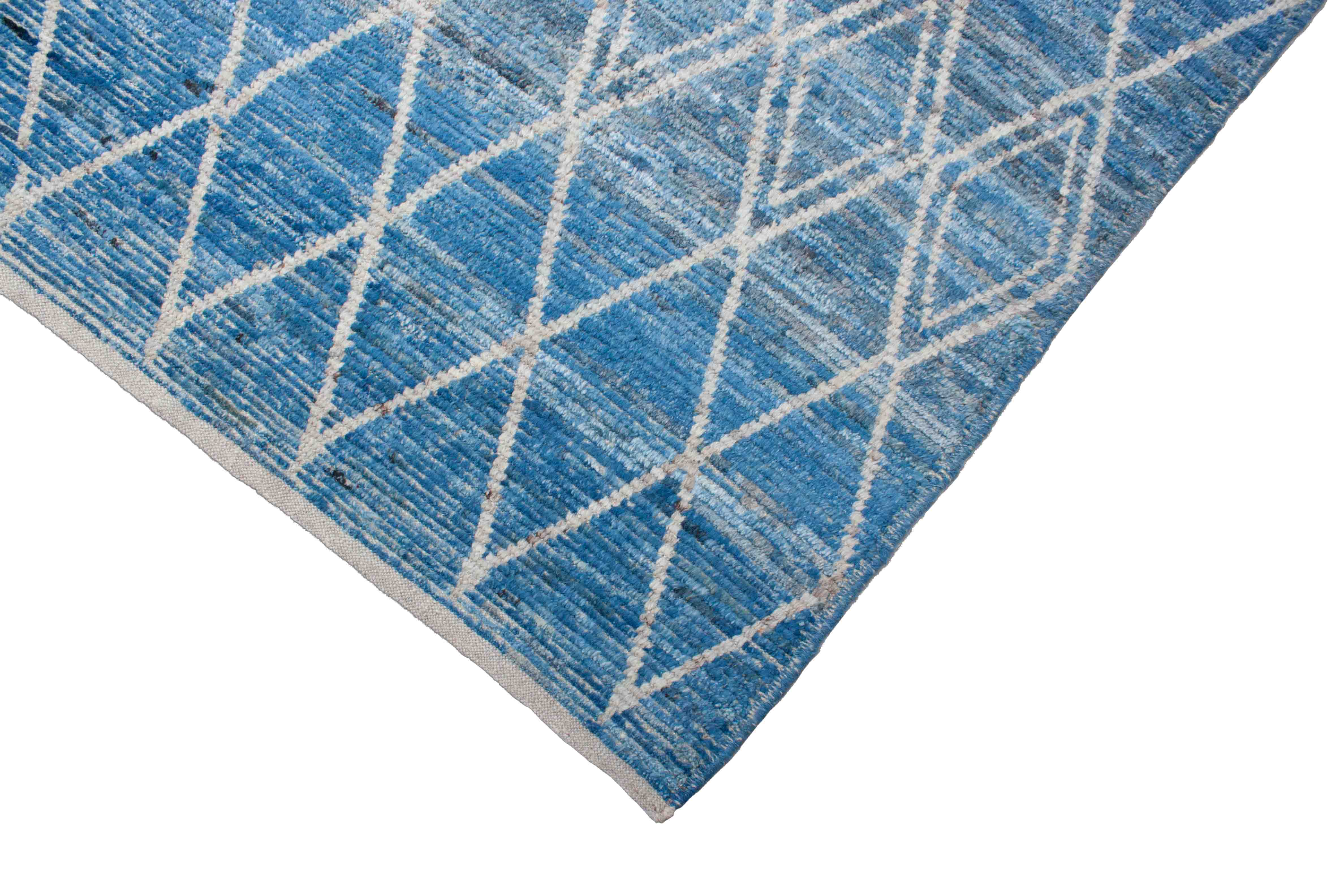
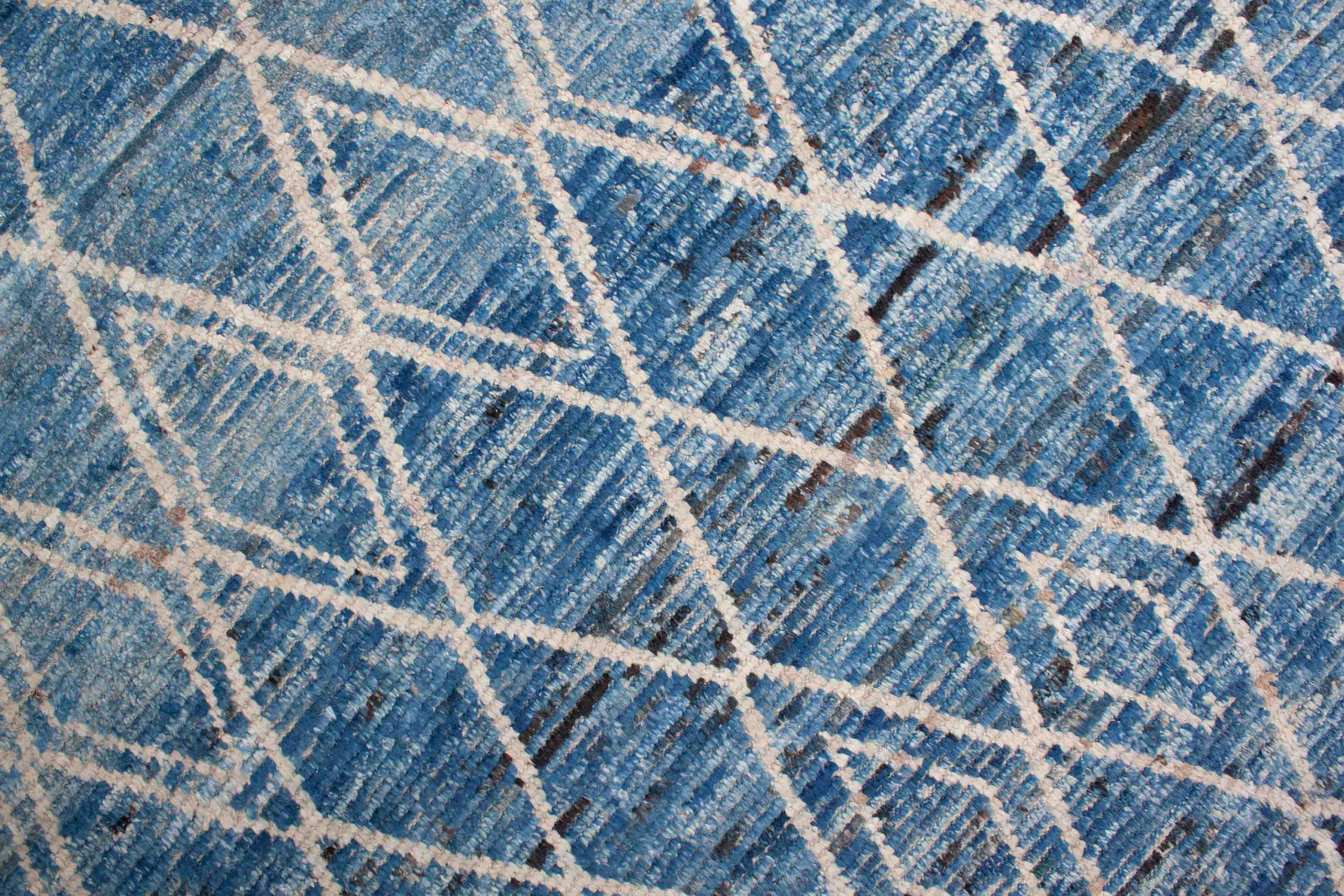
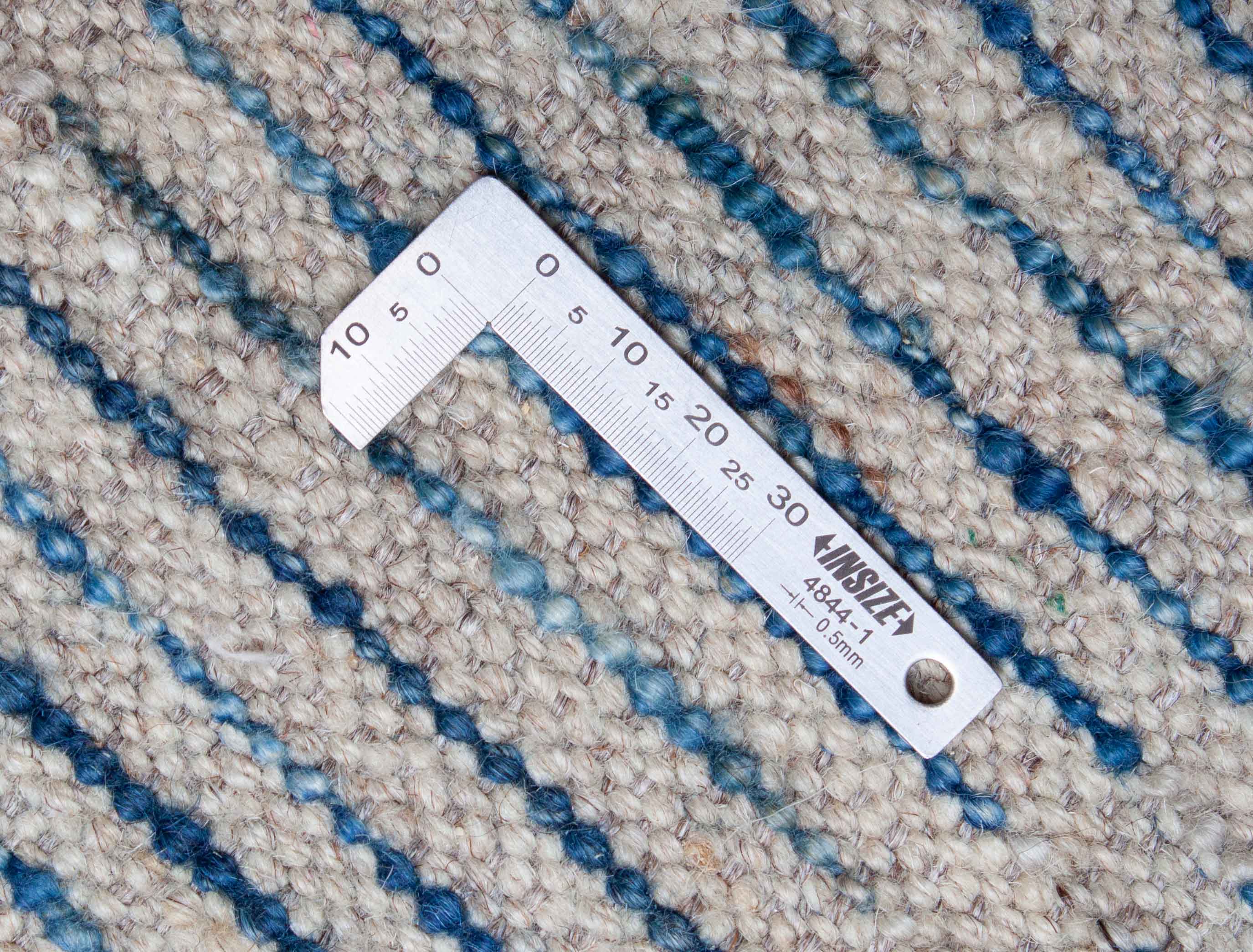
The surface of this Beni Berber has a mottled look. The shifts in tone and the light-and-dark shading of the pile yarn make the colours shimmer and keep the rug forgiving of dirt. These so-called colour jumps, known as abrash, give the rug a livelier feel. The mottling comes about because the wool of this Beni Berber was hand-spun. During dyeing, the natural dyes are taken up unevenly.
The background of this Beni Berber is dark blue.
Material
This hand-knotted Berber rug has a dense, relatively high pile. That makes it wonderfully cosy and hard-wearing. Traditionally, Berber rugs – like Lori or Gabbeh rugs – were used for sleeping. They invite you to sit and lounge about in the living room, yet they are also excellent for hallways and dining areas. The warp and weft yarns of this Berber rug are made of cotton, while the pile is dyed with natural colours and hand-spun. The hand-spun wool is what gives the Loris their soft surface. The weft and warp threads of this Beni Berber are made of cotton. This versatile material is tear-resistant and elastic, which makes it particularly suited to a hard-wearing foundation.
A note on the photos
Child labour? No thanks.
Child labour? No thanks. Children belong in school, not at a knotting frame or a loom. For us it therefore goes without saying that we only offer rugs made under fair conditions and without child labour.
We attach particular importance to humane working conditions and tolerate no child labour at any of our producers. Thank you for helping us to ensure fair conditions.
That is why we support the initiative Care & Fair against child labour in the rug trade.

Choose options
|
|
1-3 working days delivery time (within Germany) |
|
|
14-day home trial |
|
|
Free delivery & returns within the EU |