
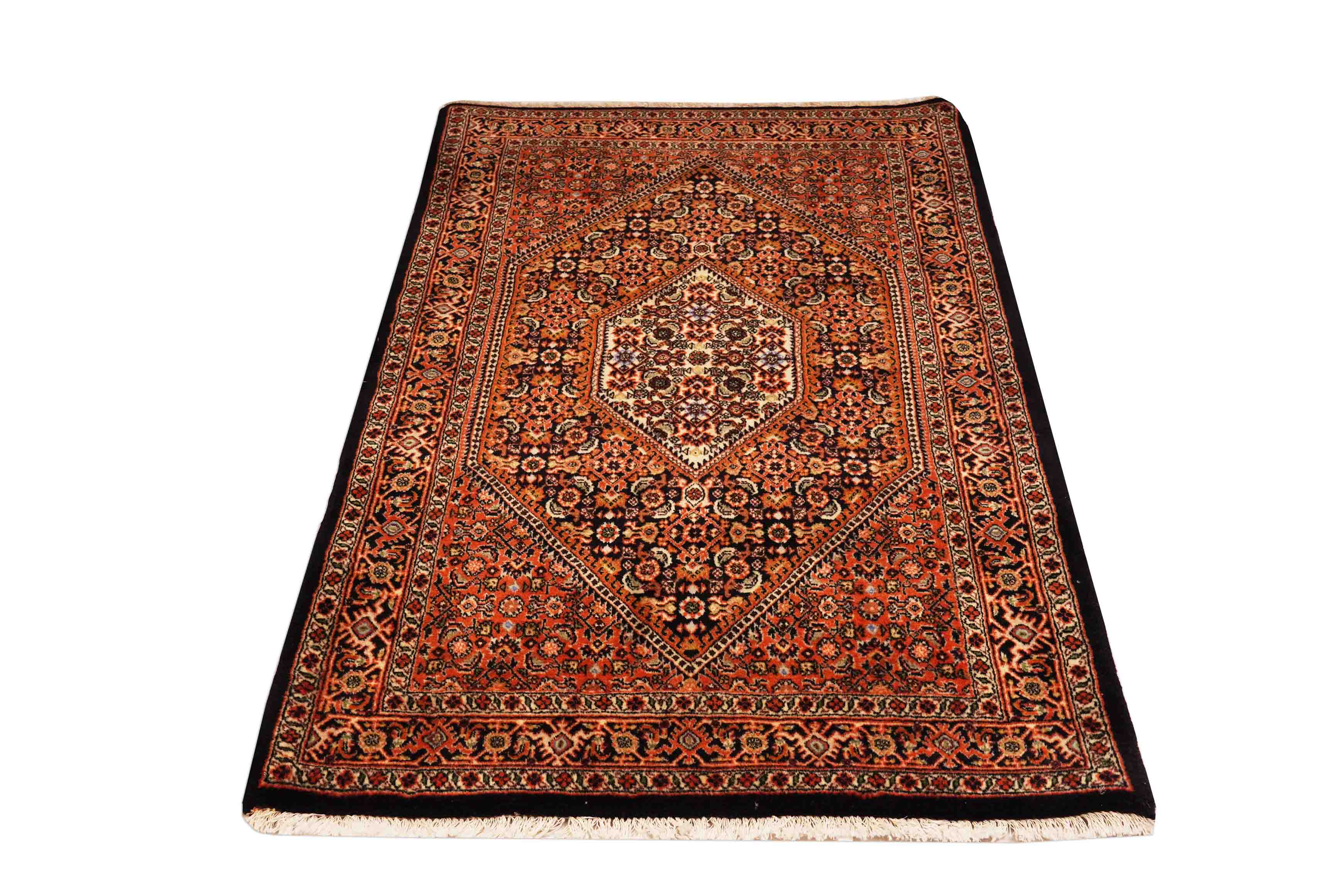
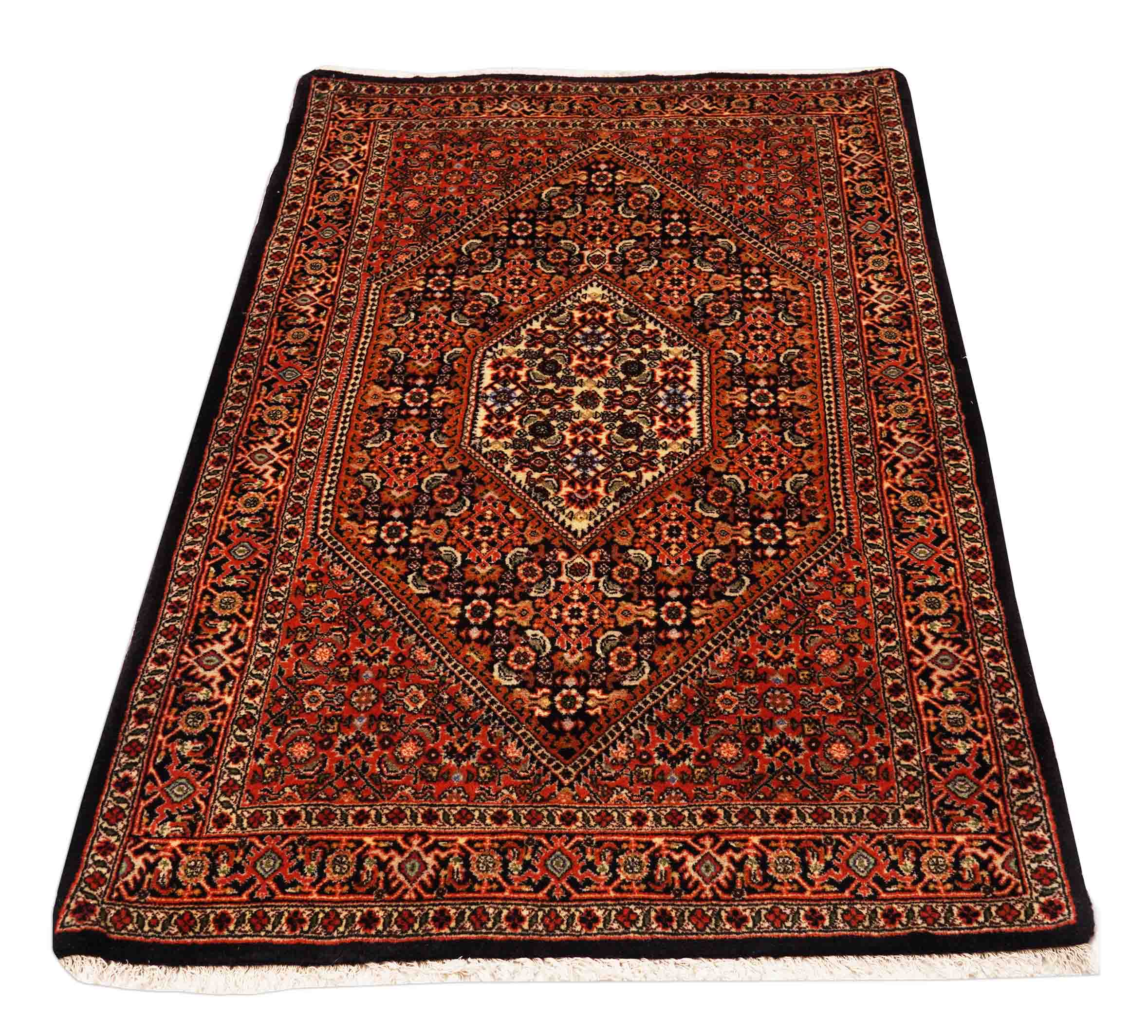
Bijar | 141 x 88 cm | Nr. Z-1312

|
1-3 working days delivery time (within Germany) |

|
14-day home trial |

|
Free delivery & returns within the EU |
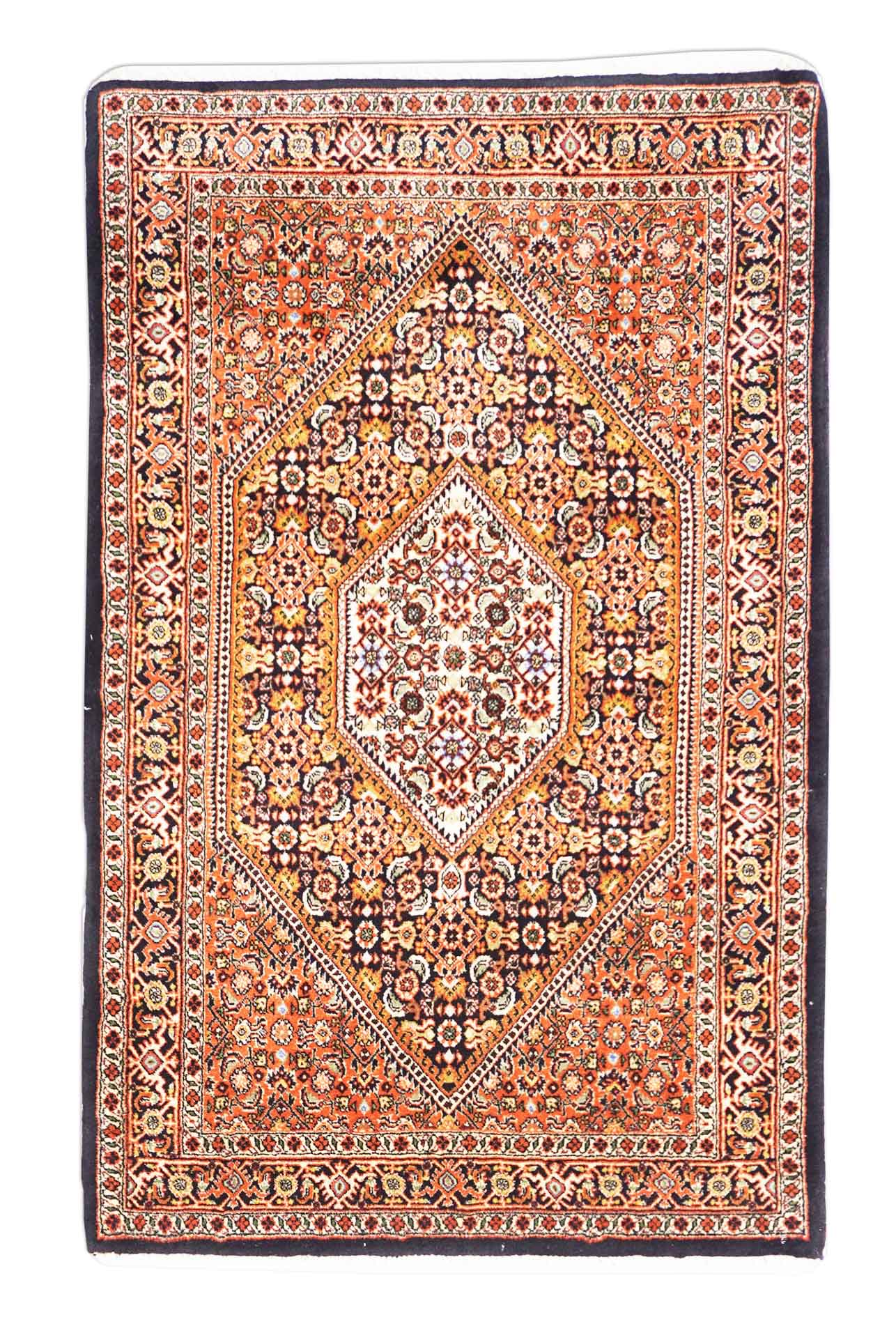
Geometric Bijar, rust red with border, diamonds and medallion
| Origin |
|
| Dimensions | 141 cm x 88 cm (= 1.24 m²) |
| Construction | hand-knotted |
| Material |
Pile: wool
|
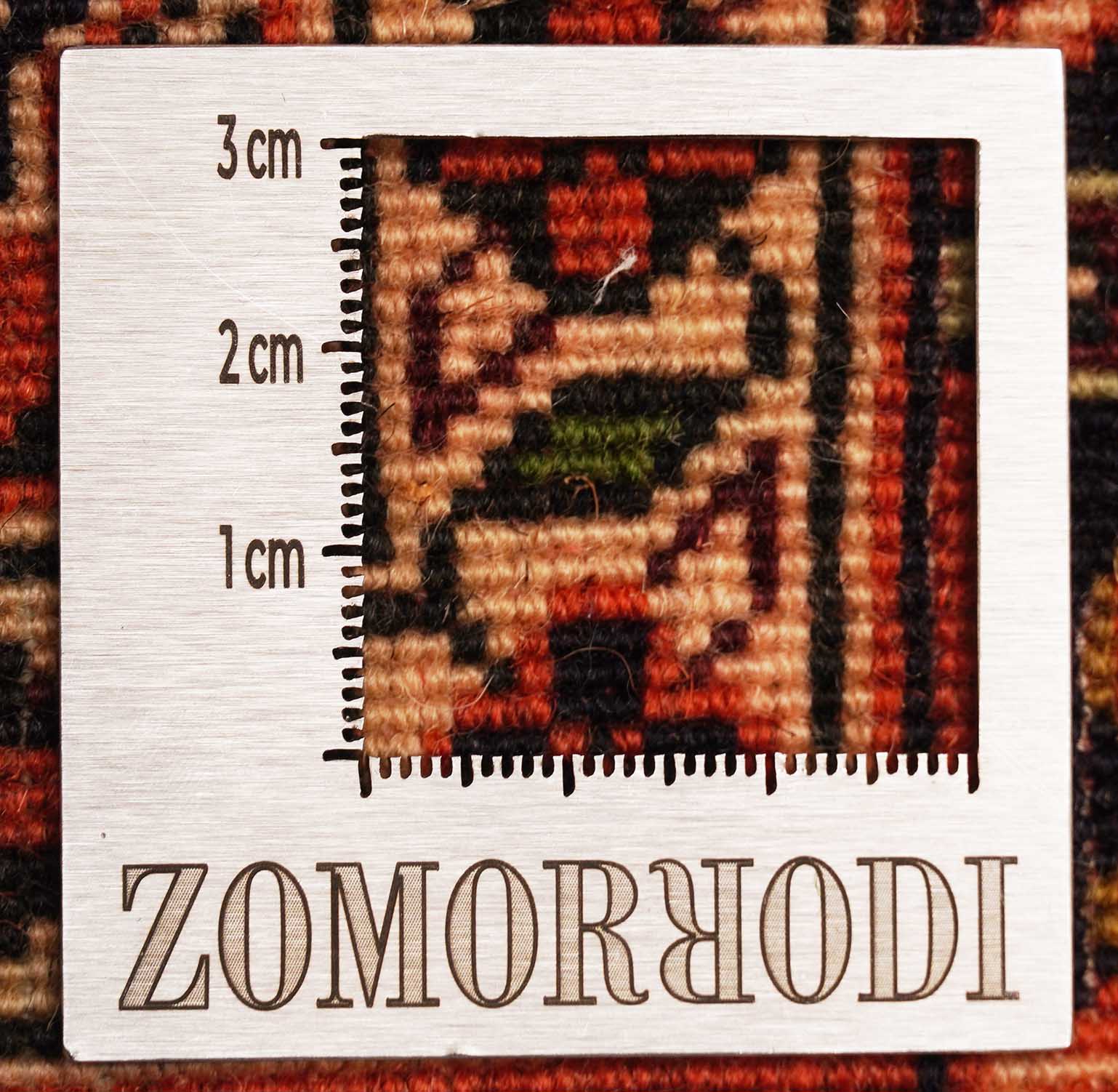
| knots per m²2 | 490.000 |
| Pile height | 10mm |
| Year of manufacture | 1990 |
| Colour | Rust red |
| Edition | one-of-a-kind piece |

Origin
This rug was knotted in Bijar, in the province of Kermanshah in north-western Iran. Bijar rugs are among the sturdiest and finest Oriental rugs. The majority of the population in Bijar are Kurds.
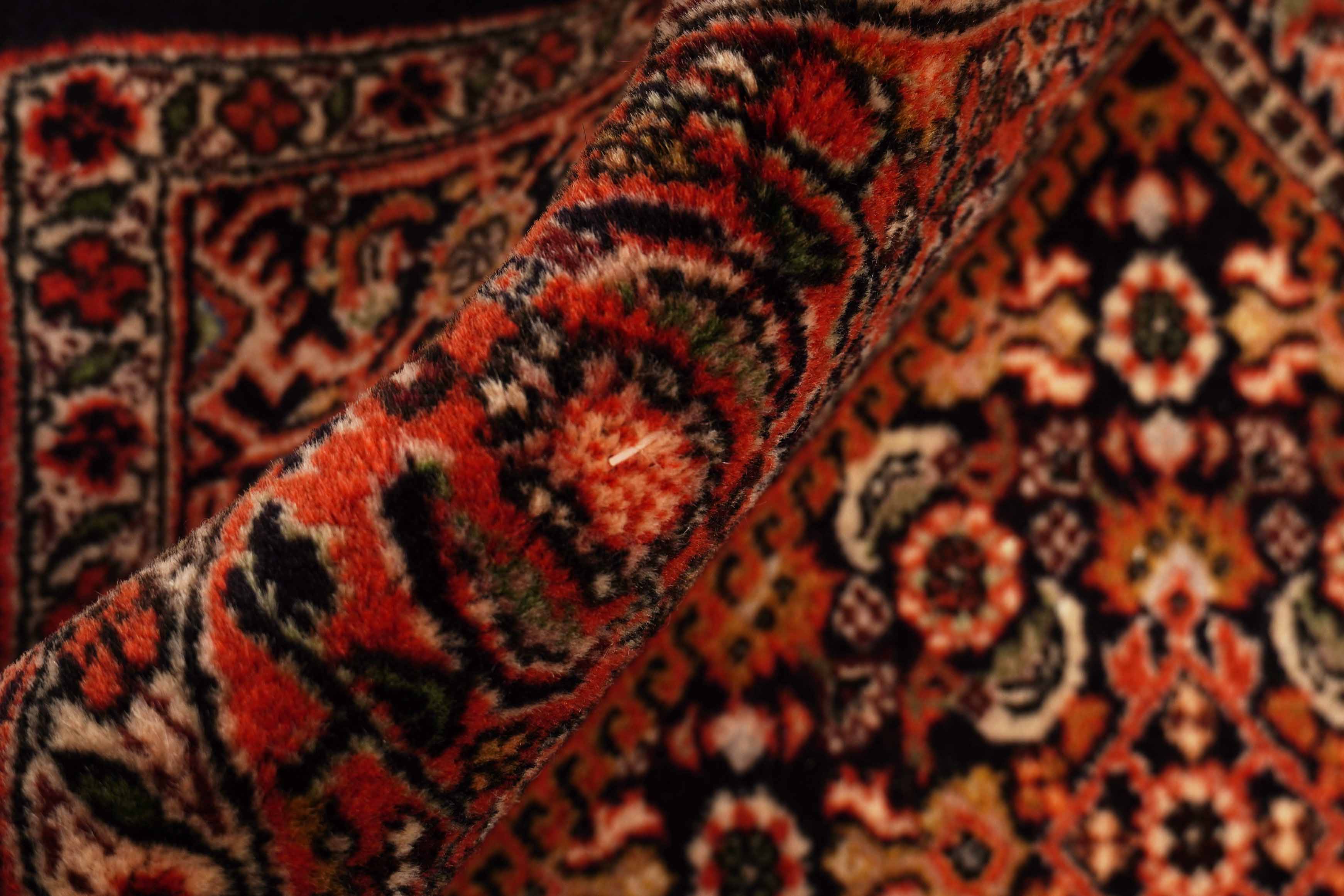
In the Kurdish Bijar, a particularly thick and extremely hard weft yarn is beaten into the weave. The result is a board-stiff rug that is exceptionally hard-wearing. The younger Bijars in particular are decorated with the typical Herati pattern, also known as the fish pattern.
Pattern
The abstract, geometric composition is what gives this Bijar its understated elegance. The pattern flatters the way a room is arranged and never steals attention from the furniture, the décor or the architectural details. It settles beautifully into any setting and subtly rounds out the furnishings of a room.
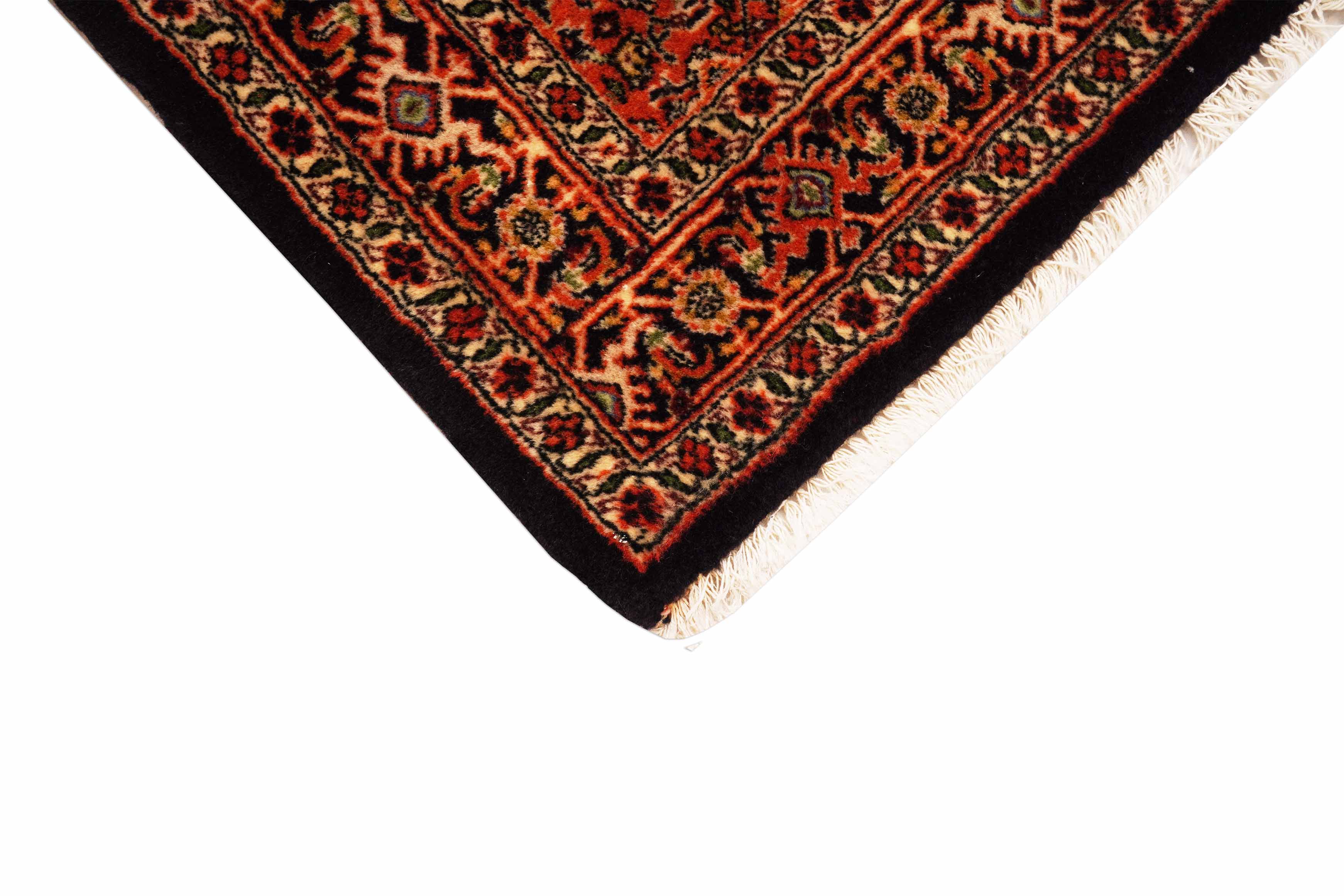
The edge of the rug is graced by a surround (border). The border forms a wonderful contrast to the centre.
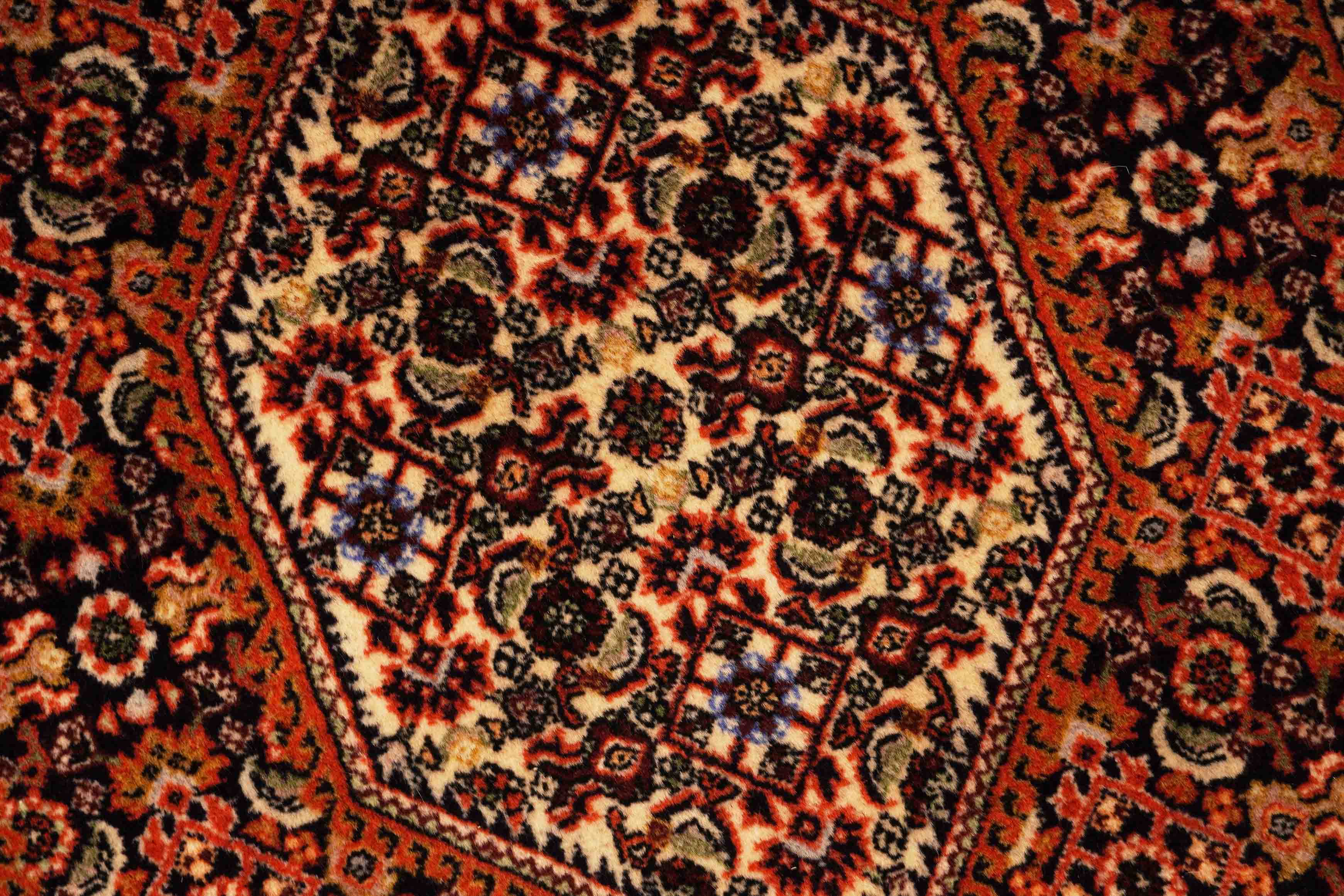
In the pattern of this Bijar it is above all the diamonds that catch the eye. A diamond is a rhombus standing on one of its points, and in an Oriental rug its four equal sides may be serrated, outlined with stitching or set with hooks. The diamond is one of the oldest basic forms in Oriental rugs. In the Islamic world it carries a symbolic meaning: it stands for the immortality of the soul. That is why it appears so often as a filler motif.
In the middle of this Bijar's central field lies the symmetrical centre, also known as the medallion. The design of the field is subordinate to the medallion, so that the medallion appears to float on the field.
The overall impression is dominated by rust red. The border is worked in black and rust red.
Condition
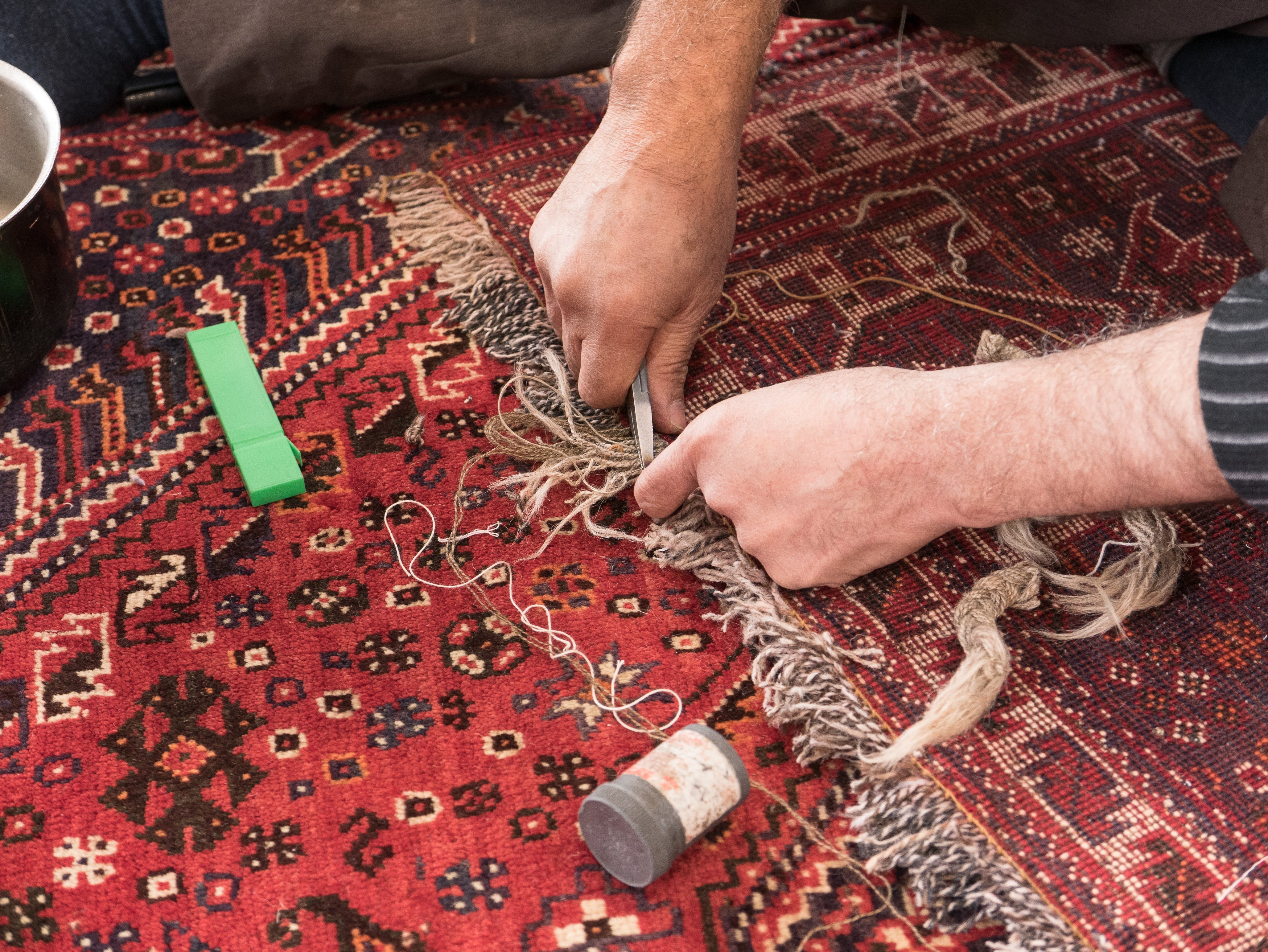
You are not the first to take a liking to this Bijar. It has had owners before you who valued and used it. It was hand-knotted around 1990. We have cleaned it thoroughly and restored it with care. Despite its age, it is therefore in very good condition.
Material
The pile of this Bijar was hand-knotted from high-quality new wool. New wool is obtained by gently shearing sheep. New wool is a renewable, natural raw material with a number of impressive properties: thanks to the natural lanolin content of the wool, the surface repels droplets of water and is therefore naturally protected against dirt. Wool also offers excellent thermal insulation, helps to regulate the indoor climate and dampens sound. The weft and warp threads of this Bijar are made of cotton. This versatile material is tear-resistant and elastic, which makes it particularly well suited to a hard-wearing foundation.
A note on the photos
Child labour? No thanks.
Child labour? No thanks. Children belong in school, not at a knotting frame or a loom. For us it therefore goes without saying that we only offer rugs made under fair conditions and without child labour.
We attach particular importance to humane working conditions and tolerate no child labour at any of our producers. Thank you for helping us to ensure fair conditions.
That is why we support the initiative Care & Fair against child labour in the rug trade.

Choose options
|
|
1-3 working days delivery time (within Germany) |
|
|
14-day home trial |
|
|
Free delivery & returns within the EU |