

From yarn to craft: how a handmade rug comes into being
A rug is far more than just a piece of fabric under our feet. It tells stories, carries centuries of tradition within it and is made with remarkable patience – step by step, knot by knot.
In this blog post we take you along on a journey through the whole process of making a handmade rug.

1. Choosing the materials
Before a single knot is tied or a thread woven, everything begins with choosing the right materials . They determine the quality, longevity and character of the rug.
🐑 Sheep's wool
🌱 Viscose or bamboo silk
🌾 Cotton
🐛Silk
🟡 Jute
🌿 Hemp
In our blog post: Materials and dyeing you can learn more about the advantages of each material and find out how the yarn is dyed with natural materials.

2. Woven or knotted?
The first handmade rugs came about in Central Asia, for quite practical reasons. Nomads lived with their flocks of sheep in the mountains and wove the first rugs from their wool, looking for comfort, warmth or even shade. The rugs provided warming insulation on the cold floors of tents and made sitting and eating on the ground cosy. On very sunny days, though, rugs were also hung on tents as protection from the hot sun.
Before long, though, they became more than just a practical companion – they grew into precious, decorative works of art that brought together beauty, tradition and trade.
Handmade rugs essentially fall into two groups: woven and knotted rugs .
By now there are several other production methods (tufting or loom, for example), which emerged in response to falling expectations of a rug's durability and quality. Here, though, we focus on the two most original and traditional kinds of rug.
With the right material in hand, the actual making begins. There are two central techniques for this: weaving and knotting
Rug weaving
Rug weaving is one of the oldest methods of making rugs.
Compared with knotting, weaving takes considerably less material and time.
That is why woven rugs were widespread very early on and are seen as the forerunners.

In weaving, the warp threads – the vertical base threads that give the rug its firmness – are first stretched onto a loom.
The weft thread – the thread that determines the rug's pattern and its stability – is then guided by hand alternately over and under the warp threads.

A distinctive feature of hand-woven rugs is that they have no pile have – which means that, unlike hand-knotted rugs, they have no raised, fluffy surface but feel rather flat and coarse.
Depending on the province and the intended use of the rug, various weaving techniques have developed.
Traditional weaving creates a flat, firm pile, which usable on both sides is, as the front and the back look exactly the same.
This is exactly what creates a Kelim rug - you're bound to have heard of one before!
Alongside this best-known classic among woven rugs, there are several other wonderful types of woven rug, such as Aubusson / Gobelin, or Soumak rugs.
Knotting
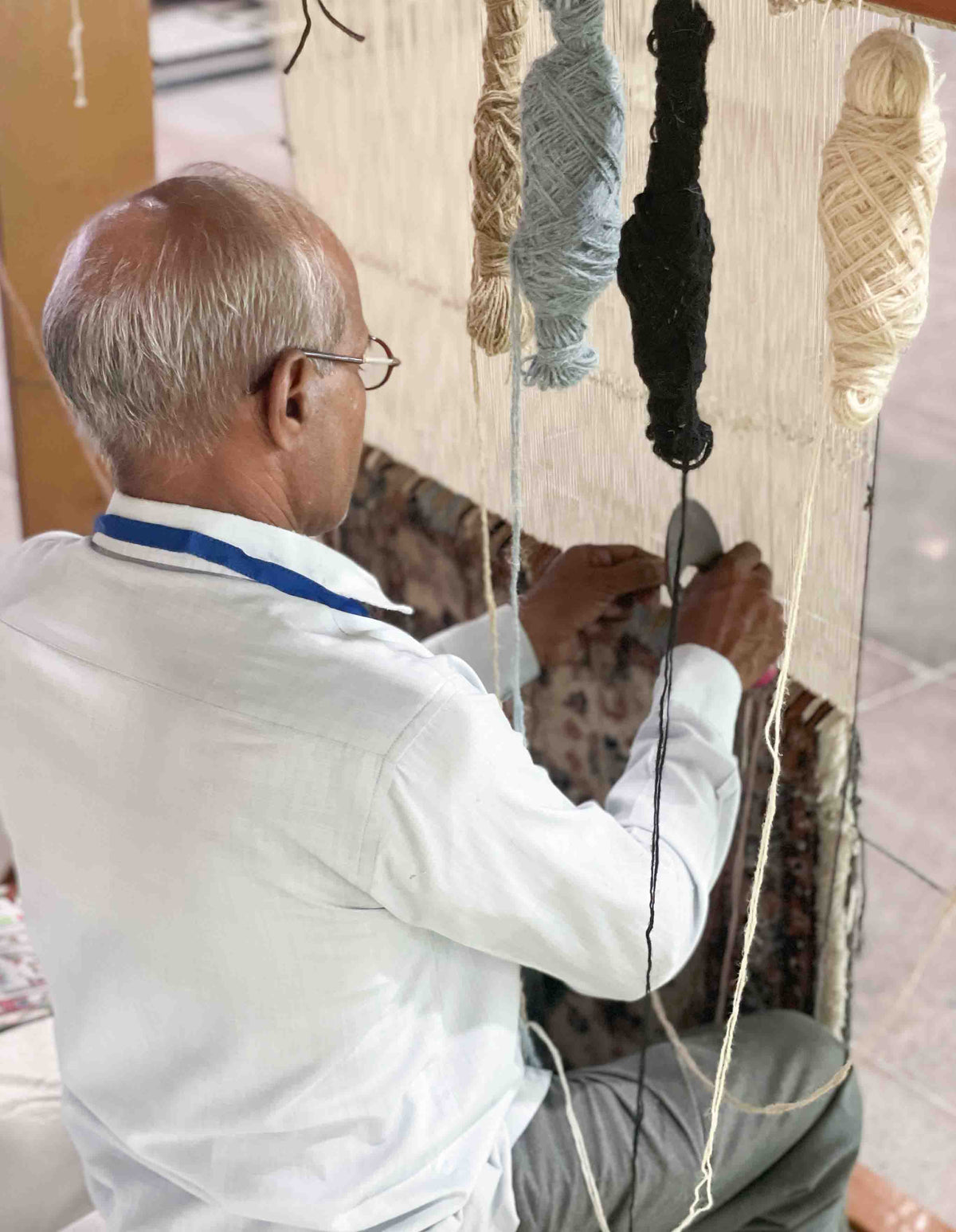
Hand-knotted rugs are made on a special frame, the so-called knotting loom . Depending on the width the rug is meant to have, it is set up individually every single time.

The pile thread is knotted into the warp threads – each knot a pixel in the emerging pattern. Once a row is finished, the weft thread is drawn through and pressed down firmly with a metal comb.Just as in weaving, the first step is the vertical warp threads are first mounted on the knotting loom and pulled taut. It is very important that they stay tight, so the rug does not develop waves or uneven patches later on.
Now comes the most important step:
The actual pile yarn – the part that later forms the surface of the rug – is knotted in by hand. Every single knot is pulled tight, and knot by knot the desired pattern takes shape, following a design exactly or improvised entirely freely.
As soon as a row has been knotted all the way across, the weft thread is woven in - passed alternately over and under the taut warp threads and then, with a metal comb pressed firmly against the knots. This ensures that the knots sit straight and firmly in the right place and that a dense structure is formed. The warp thread gives the knots, and thus the emerging rug, additional hold and stability.
 Depending on the province, the design and the intended use, different types of knot have developed.
In our Blog post: all about knotting we have already described the knot types, the techniques and their distinctive features on this subject.
3. The design – between tradition and modernity
In the past, you could tell a rug's country of origin, its city or even its village from certain patterns and symbols.
Traditionally, patterns were drawn on special templates – so-called pattern boards – by hand and then knotted, and they were often passed down from generation to generation.
Simpler nomadic rugs, such as a Gabbeh, were also knotted entirely freely, following individual creativity without any pattern template.
Today, by contrast, rug patterns are mostly designed digitally, printed and mounted behind the loom as a knotting template.

Here we have already written in detail about the most common patterns and their meanings.
4. The finishing touches – now the true beauty comes through
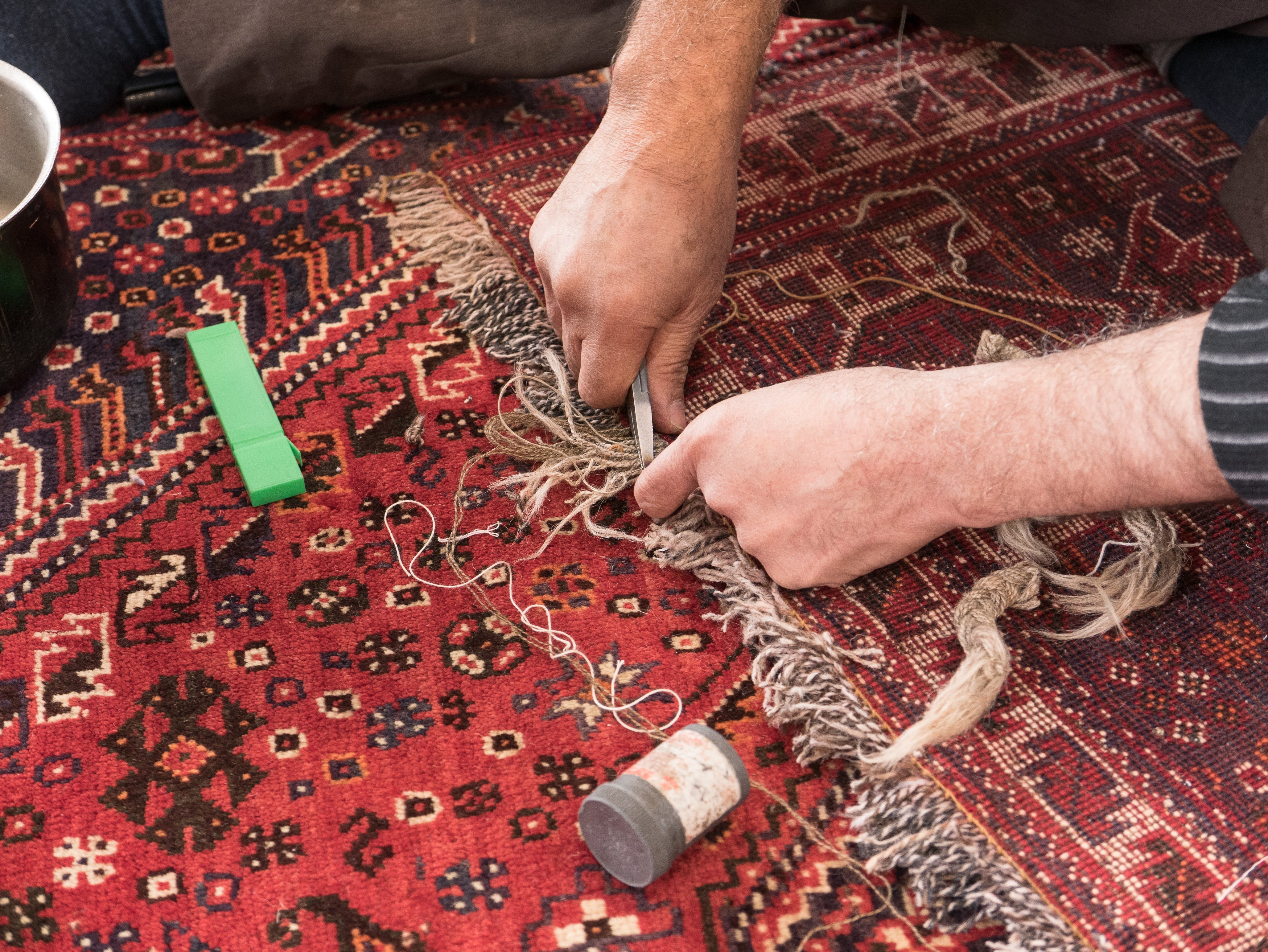
Once the rug has been cut from the loom, the edges are overcast and the fringes knotted. This keeps the rug from unravelling again.
The Finishing is the last and most important step in making a rug, yet its importance often goes unrecognised.
Only now does the rug's true character, its true beauty, come to light.
First the pile is sheared evenly to the desired pile height, because during knotting the yarn is left fairly long so that it can be tied into knots.
The rug is then given at least one nourishing natural-soap wash.
The rug is then laid out in the sun to dry and to set the colours.

In the final step, certain parts of the pile are trimmed by hand with scissors, depending on the design and style. This brings out accents in the pattern and gives the rug's pile a fascinating feel and texture.
You can discover this special kind of finishing in our designer rugs in particular.